As an Amazon Associate, this website earns from qualifying purchases.
Japan’s charming rural villages offer authentic experiences through traditional homes like kominka, farmstays, and local markets. Travelers can explore mountain hamlets with scenic forest walks or participate in craft workshops showcasing local skills. By planning ahead and choosing registered accommodations, visitors can enjoy cultural performances, regional cuisine, and immersive farm-life activities such as WWOOFing. If one moves further, they’ll discover even more ways to embrace Japan’s timeless countryside and authentic village life.
1. Discover Authentic Rural Villages in Japan and What Makes Them Special
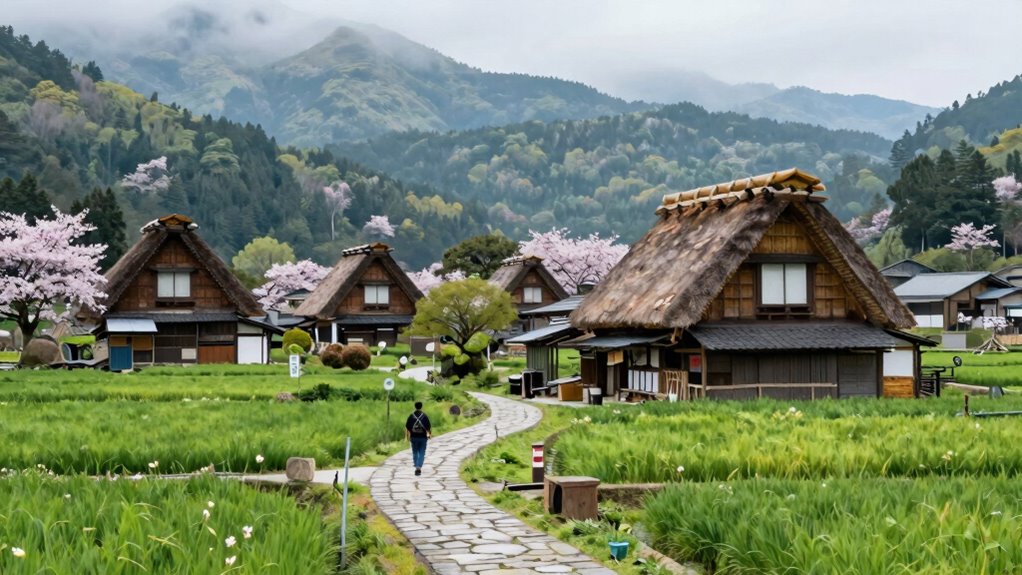
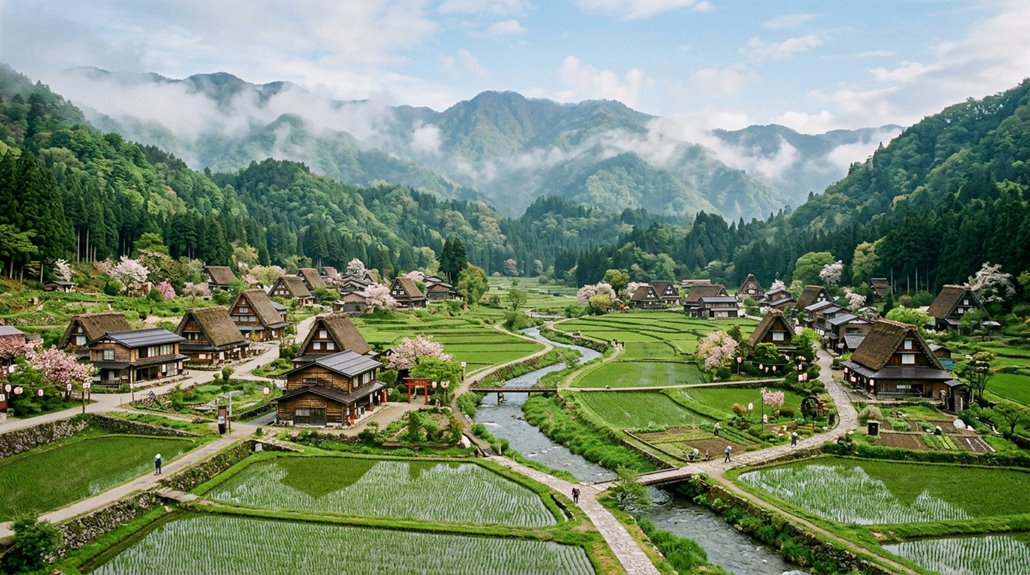
Ever wondered what makes rural villages in Japan so uniquely charming? These villages are full of traditional houses called kominka, which showcase classic Japanese architecture and history. Visitors can explore farmstays that offer authentic experiences, where staying in a traditional house feels like stepping back in time.
These farmstays often include different room types, sometimes with fees that cover cleaning, and many are operated legally through sites like Airbnb or STAY JAPAN. What makes these villages special is their warm community vibe and connection to nature. Guests can enjoy peaceful surroundings, seasonal local food, and a glimpse into rural life.
To truly appreciate this, it’s best to plan ahead, choose registered accommodations, and respect local customs for a memorable experience.
2. Experience Traditional Farming and Craftsmanship in Japan’s Countryside
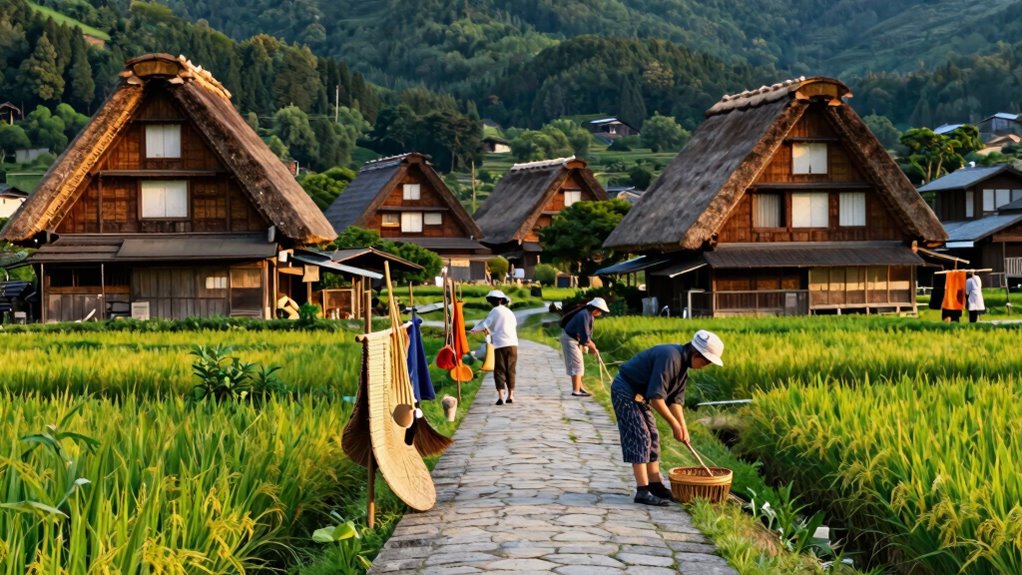
Many visitors who appreciate the charm of rural Japanese villages find that experiencing traditional farming and craftsmanship offers a deeper connection to local culture. Staying in minpaku accommodations—homely, often historic houses—can enhance this experience, providing cozy surroundings and insight into local life.
Nouhaku experiences, which include farm stays and participating in traditional crafts, allow guests to live alongside host families, learning their skills firsthand. For those seeking an immersive adventure, WWOOFing connects travelers with organic farms across rural Japan. Volunteers work on farms in exchange for room and board, gaining practical farming skills and cultural understanding.
Planning ahead is wise, especially considering weather and transportation. These authentic activities create meaningful memories and foster true appreciation for Japan’s rural heritage.
3. Explore Scenic Mountain Hamlets and Highland Life in Japan
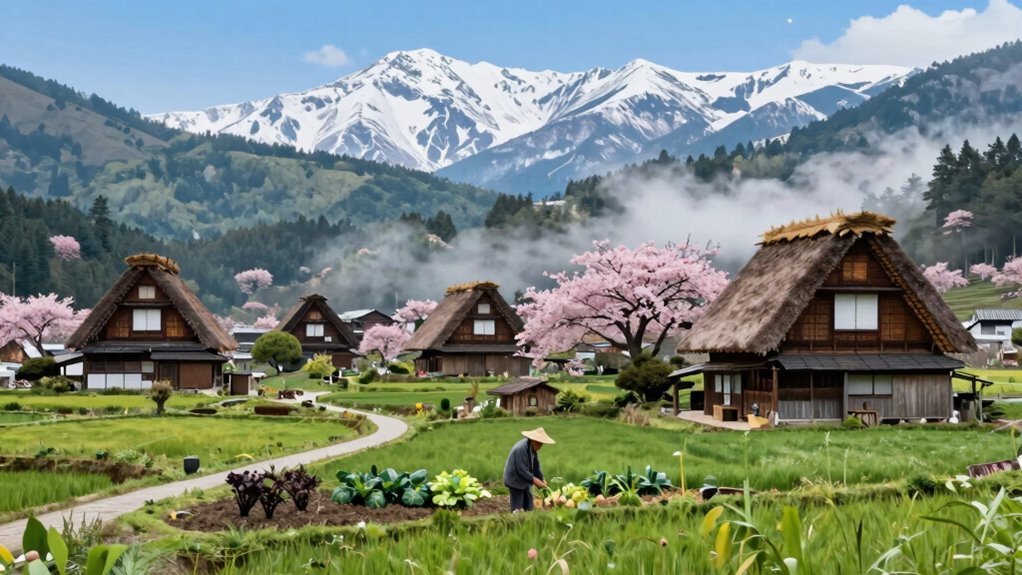
What makes the mountain hamlets and highland villages of Japan so captivating is their untouched beauty and the sense of stepping back in time. These mountain villages, nestled among rugged coastlines and lush forests, showcase rural Japan’s peaceful pace. Visitors can explore areas like Iwate’s scenic mountain hamlets, where forest walks and nature tours highlight the region’s natural charm.
Highland life here often revolves around traditional wooden houses, seasonal changes, and ancient farming practices. In places like Nantan City, life revolves around mountain farming and hunting, offering a glimpse into rural Japan’s heritage.
These villages preserve their cultural roots through simple, time-honored ways of living, making them perfect for those seeking tranquility and authentic experiences deep within Japan’s mountainous landscapes.
4. Enjoy Unique Cultural Activities and Traditional Performances in Rural Towns
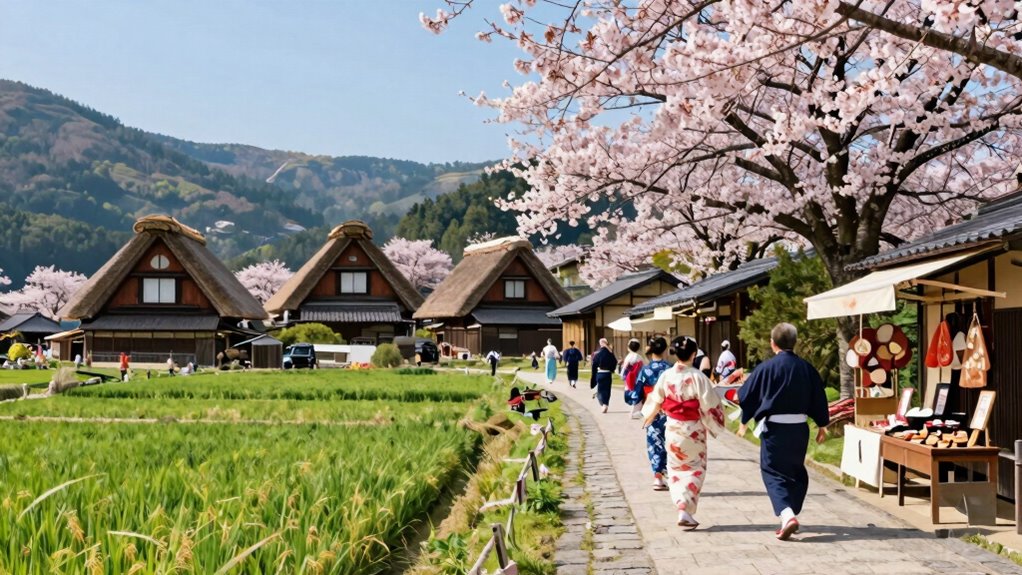
In rural towns across Japan, visitors can immerse themselves in a rich tapestry of cultural activities and traditional performances that bring the area’s history and customs to life.
In towns like Takayama, visitors often encounter traditional performances such as folk dances or local music that showcase centuries-old traditions.
These rural villages are also known for craft demonstrations, where artisans display skills in creating lacquerware or earthenware.
For example, at Takayama’s Old Town, visitors can watch artisans at work or participate in hands-on craft workshops.
In Shirakawago, traditional performances may include local storytelling or dance that reflect the village’s heritage.
These cultural activities provide an authentic glimpse into rural Japan’s vibrant traditions, making each visit both educational and memorable.
5. Savor Local Cuisine and Market Delights in Japan’s Countryside
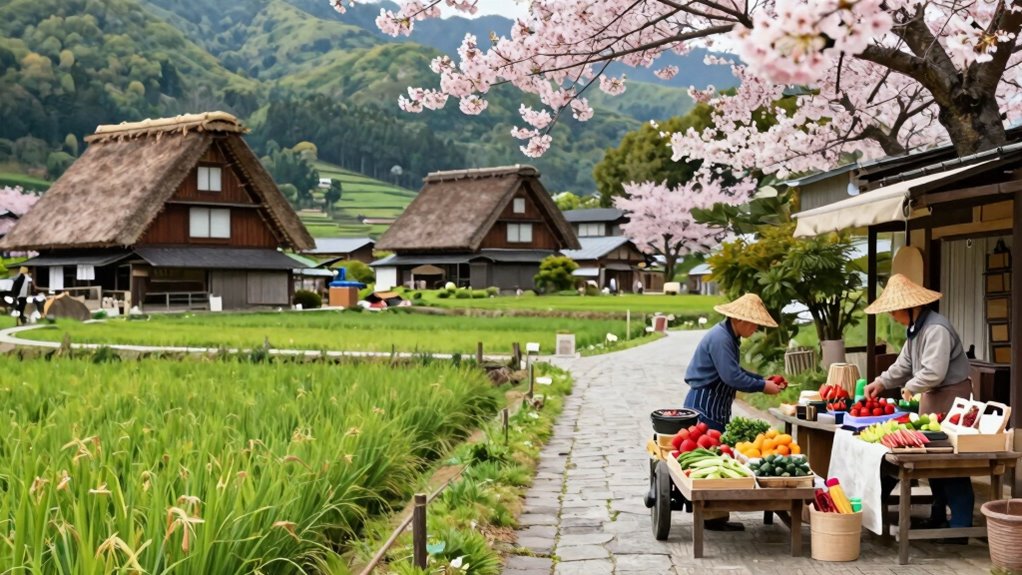
Have you ever wondered how traveling through Japan’s countryside offers more than just scenic views? It’s a chance to savor authentic local cuisine that’s often farm-to-table, meaning ingredients come straight from nearby farms. Countryside markets burst with fresh seasonal produce, homemade pickles, and local delicacies that reflect regional flavors. Visitors can explore vibrant markets where vendors sell everything from freshly caught fish to handmade sweets, creating a sensory feast.
Staying in traditional minpaku accommodations or participating in nouhaku stays allows travelers to enjoy meals prepared with ingredients from local farms, deepening their cultural experience. These markets and farm-fresh foods connect visitors directly with rural communities, offering a taste of Japan’s rich culinary heritage. Such experiences make exploring Japan’s countryside truly memorable and delicious.
6. Find Practical Tips for Planning Your Rural Japan Adventure
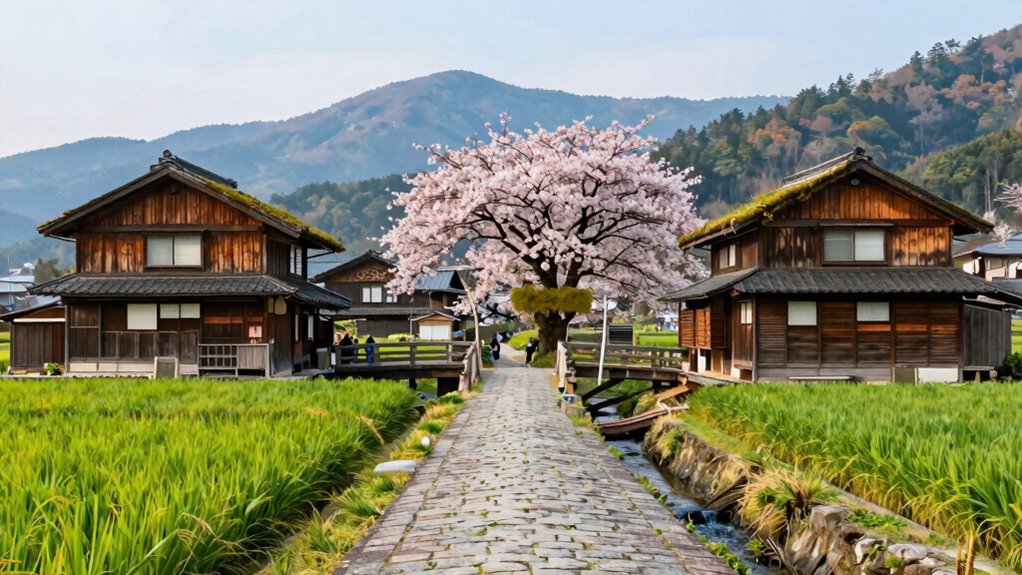
Planning a rural Japan adventure can be both exciting and a little intimidating, especially for first-time visitors. Practical planning is key to making the most of the experience.
For accommodations, Minpaku options—ranging from city stays to traditional countryside kominka—are often roomier and more affordable than hotels, sometimes with inclusive cleaning fees. When considering a Nouhaku experience, guests can immerse themselves in traditional life by staying on farms, historic houses, or renting a house with friends or family.
For a deeper connection, WWOOFing offers stays on organic farms in exchange for work, linking visitors directly with local communities. Practical tips include preparing for weather impacts, limited winter heating, insects, and scarce transportation. This might require renting a car or relying on host shuttles.
7. Learn How to Choose the Best Village Destinations Based on Your Interests
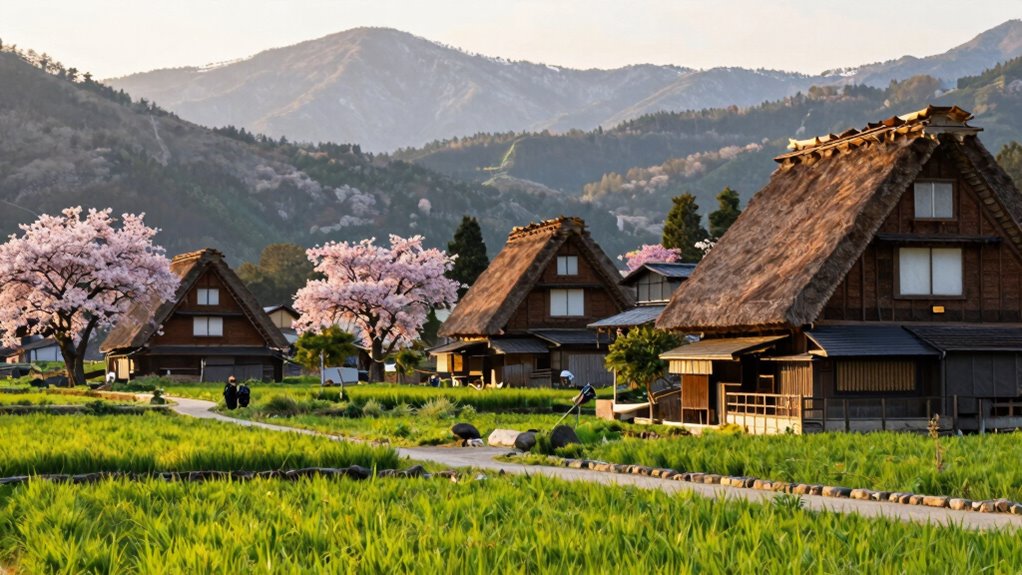
Choosing the right village destination in rural Japan depends largely on a traveler’s interests and what kind of experience they seek. For those seeking comfortable, affordable stays, minpaku accommodations offer spacious rooms and often include helpful amenities, perfect for a relaxed visit.
If immersing oneself in traditional life is the goal, nouhaku experiences provide farmstays and historic houses where visitors can try farming, cooking, or forestry alongside local hosts. For travelers eager to work and learn, WWOOFing connects guests with organic farms, offering hands-on experiences and deeper cultural understanding. The online WWOOF network makes finding hosts easier, especially in remote areas.
Ultimately, selecting a destination aligned with personal interests—be it cozy stays, cultural immersion, or farm work—ensures a memorable rural Japan adventure.