As an Amazon Associate, this website earns from qualifying purchases.
Adapting to life in Italy involves practical steps and patience. First, securing necessary documents like the Codice Fiscale, residence permit, and proof of income helps avoid legal issues. Learning basic Italian phrases can make daily interactions smoother, especially for ordering or asking directions. Embrace the slower pace, valuing leisurely lunches and social time, which are central here. Setting up reliable housing, utilities, and building connections through expat groups eases the transition. With a little effort, you’ll find Italy’s charm unfolds gradually—continue to explore the details, and you’ll become more comfortable each day.
Prepare Your Documents and Permits Before Moving

Before moving to Italy, it’s important to get your documents in order. A key starting point is obtaining a Codice Fiscale, which is essential for opening bank accounts, renting a home, and accessing services. To register your residency, you’ll need a long-term housing contract—Airbnb alone isn’t enough—and proof of your address.
The residency registration process, called Anagrafe, usually takes about 45 days and may include an unannounced home visit.
For stays longer than three months, a Permesso di soggiorno is required; this residence permit also provides a residency card.
When applying, remember to bring photocopies of all documents and gather proof of income or a work contract, especially if self-employed.
Proper preparation makes settling in Italy much smoother.
Learn Basic Italian Phrases for Daily Life

Have you ever found yourself stuck trying to ask for directions or order a coffee in a foreign country? Learning basic Italian phrases can make daily interactions smoother and more enjoyable. These simple expressions help with errands and social exchanges, and locals appreciate polite greetings like Buongiorn o or Grazie. To build confidence in language learning, consider enrolling in a beginner’s course or using language apps.
- Practice common phrases daily, such as “Dove è…?” (Where is…?) for directions.
- Memorize polite expressions for ordering food or thanking someone.
- Rehearse small talk to feel more comfortable in conversations.
- Reinforce your memory by practicing before and after interactions.
Mastering basic Italian phrases opens the door to warm, genuine connections.
Understand the Local Work–Life Balance and Cultural Norms

Understanding how Italians balance work and leisure is key to settling in comfortably. Italians prioritize a healthy work-life balance, valuing riposo, midday breaks, and social time after work. In cities like Milan and Rome, longer lunch breaks and socializing are common, shaping how expats plan their day.
To adapt, it helps to embrace local leisure activities and connect with expat communities, which offer advice on navigating Italian work hours and social norms. Setting clear boundaries, such as turning off work notifications after hours and creating a dedicated workspace, supports balance. Recognizing that taking time for rest and socializing is part of Italy’s culture helps expats feel more at home.
Find Reliable Housing and Set Up Utilities in Italy
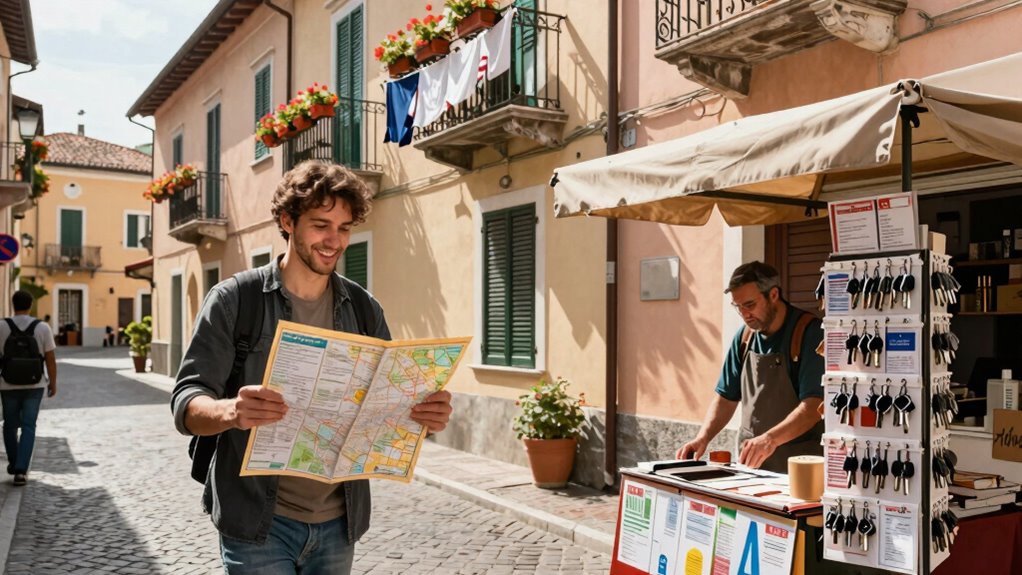
Finding reliable housing in Italy can feel overwhelming at first, but understanding the basics makes the process smoother.
When searching for a rental, be aware that rental contracts usually last 3+2 or 4+4 years, with agencies charging fees like one month’s rent or 10% of the yearly rent.
To secure utilities setup, residents typically pay around €550 for three months of services, including trash fees of €120 quarterly.
Key steps include:
- Signing a rental contract and registering it with tax authorities.
- Providing a Codice Fiscale, a unique tax code needed for many official processes.
- Ensuring the landlord supplies a registered copy of the contract.
- Setting up utilities, which requires a Codice Fiscale, passport, and a foreign credit card.
These steps help create a smooth transition into Italian living.
Navigate Italian Bureaucracy and Paperwork Effectively

How can expats navigate the often complex bureaucracy of Italy with confidence? First, obtaining a permesso di soggiorno is essential for stays longer than three months. This card, along with proper documentation, allows legal residence. The Anagrafe, the local registry office, processes registration requests within 45 days.
During this time, expats may face unannounced home visits to verify their address, so keeping your documentation, such as housing contracts, ready is key. It’s important to bring photocopies of all documents and ensure names on marriage certificates match Italian records.
For non-EU residents, residency depends on a points system, which includes attending adaptation courses and passing language tests. Staying organized and patient helps demystify Italy’s bureaucracy, making your transition smoother.
Embrace Local Customs and Social Practices in Italy
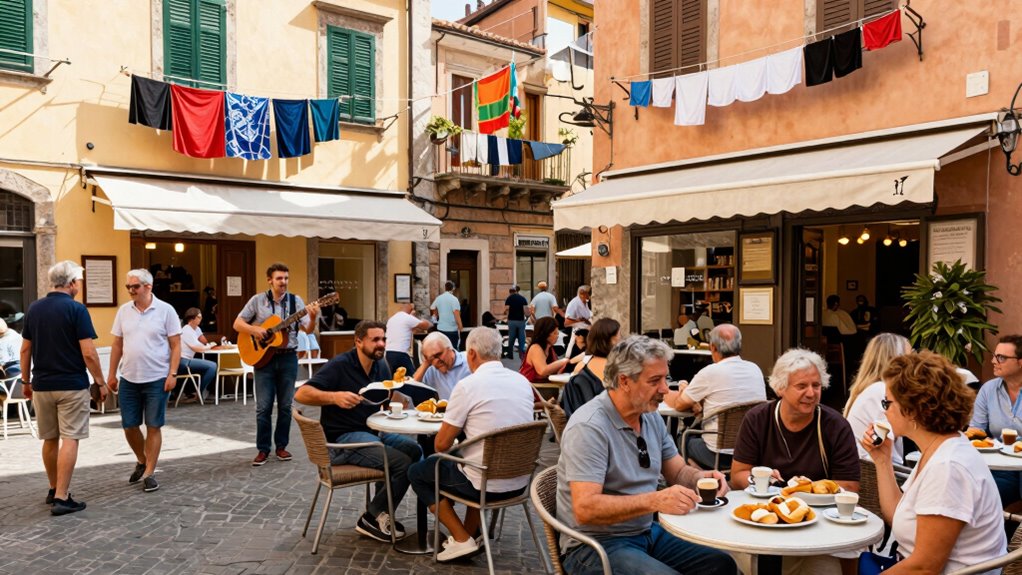
What makes settling into life in Italy truly enjoyable is embracing its rich tapestry of local customs and social practices. Italian social customs highlight warmth and friendliness, making daily interactions more meaningful. Participating in local festivals allows expats to experience authentic traditions firsthand, from lively street parades to traditional food events.
Engaging in extended coffee chats, where conversations flow during leisurely breaks, helps build genuine connections with neighbors and locals. To immerse oneself fully, consider these steps:
- Greet neighbors warmly and regularly, fostering a sense of community.
- Join local festivals to celebrate cultural heritage and meet new friends.
- Practice patience during extended coffee chats that encourage relaxed, informal conversations.
- Visit piazzas and cultural sites, embracing the social life that defines Italian communities.
These customs create a welcoming environment, making everyday life richer and more connected.
Build a Support Network With Expat Communities and Resources

Building a support network is essential for anyone adjusting to life in Italy, and the good news is that there are many friendly ways to connect with fellow expats and locals alike. Expat communities, such as InterNations, offer valuable advice, tips, and shared experiences for living in cities like Milan and Rome. Local networks, including Facebook expat groups, are great for daily life questions and making new friends. These groups often feature public posts that help newcomers find resources and practical solutions quickly.
Additionally, lifestyle blogs like “Girl in Florence” and “An American in Rome” provide firsthand stories and helpful insights. Online forums and local groups serve as central hubs for networking, sharing challenges, and building a sense of belonging, making the transition smoother and more enjoyable.
Practice Patience and Flexibility During Your Transition

Adjusting to life in Italy often requires more than just learning a new language or finding a cozy apartment; it means accepting that things may not always go according to plan. Patience is key, especially when navigating Italy’s bureaucracy, which can be slow and complex. To stay calm, consider these tips:
- Prepare all documents in advance and keep photocopies to avoid delays.
- Plan errands around local shop hours, like the midday riposo and late dinners.
- Seek help from expat communities: persistence and asking questions often lead to solutions.
- Maintain flexibility, understanding that unexpected holdups are part of the process.