As an Amazon Associate, this website earns from qualifying purchases.
Riding trains in Japan is both efficient and friendly when understood step by step. Travelers should know the different train types, like local, rapid, and Shinkansen, which vary in speed and stops. Ticket options include traditional tickets or IC cards like Suica or Pasmo for quick tap-and-go access. Respect train etiquette—offer seats to those in need, keep noise low, and follow signage. Mastering gate use and fare adjustments is simple. Curiosity about more tips will reveal how to travel smoothly every time.
Understanding the Different Types of Trains in Japan
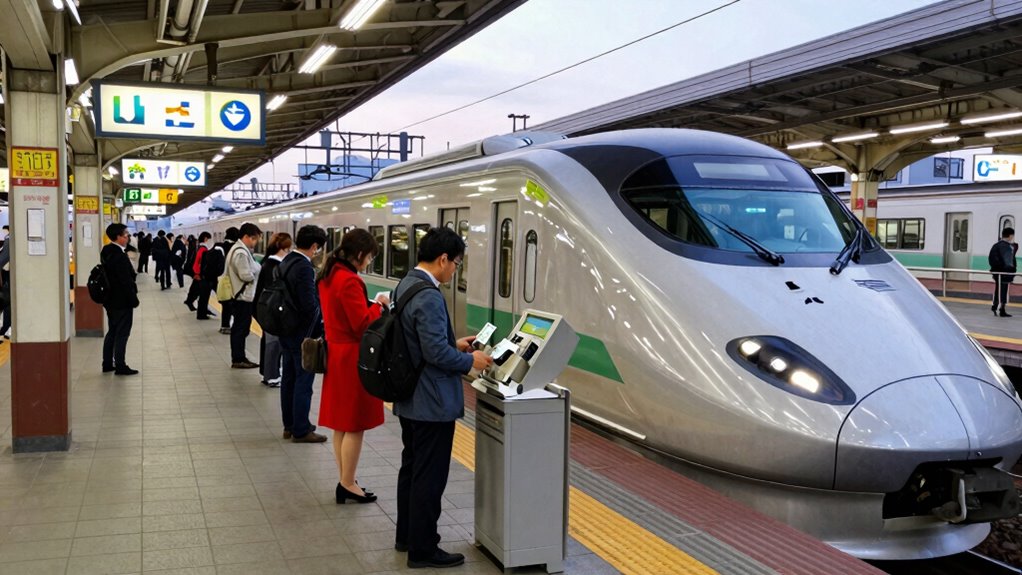
Have you ever wondered why there are so many different types of trains in Japan? It’s because each serves a specific purpose. The Futsudensha, or local train, stops at every station, making it the best option for short, local trips. Faster trains like the Kaisoku (Rapid) and Kyūkō (Express) skip some stations to save time.
The Limited Express (Tokkyū) stops only at major stations and usually requires a small extra fee, called a supplement. Then there’s the Shinkansen, Japan’s famous high-speed bullet train, which runs on special tracks and often needs an additional ticket. Seats on Shinkansen and Limited Express trains can be reserved or non-reserved, with more comfort in Green cars or Gran Class.
How to Choose the Right Seat Category for Your Journey
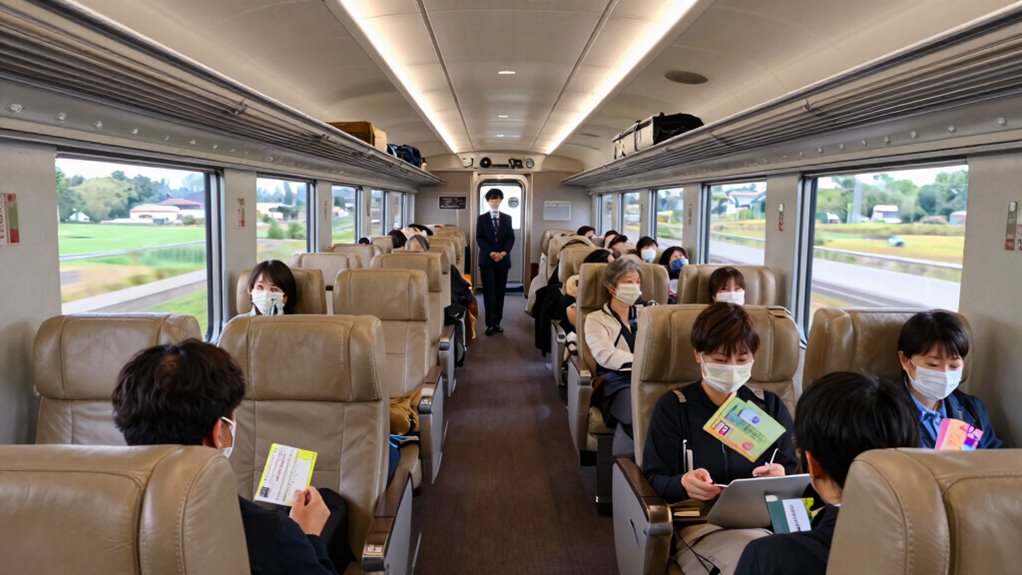
Choosing the right seat category can make a big difference in comfort and convenience, especially on long-distance trains across Japan. For travelers seeking extra space and a quieter environment, Green cars are ideal because they offer more legroom and are often all-reserved, providing peace of mind.
Reserved seating guarantees a specific seat, making it perfect if you want to avoid standing or searching for a spot. Non-reserved seating, available on some trains, allows flexibility but can be crowded during busy times. Some trains also feature Gran Class, offering the most spacious and luxurious experience.
Whether you prefer the comfort of Green cars or the flexibility of non-reserved seats, understanding your options ensures a smoother, more enjoyable journey.
| Green Cars | Reserved Seating |
|---|---|
| More space, less crowding | Guarantees a seat, peace of mind |
| All-reserved options | Costs a bit more, about 300–900 yen |
| Ideal for long trips | Available on many trains |
| Offers comfort and quiet | Perfect for planning ahead |
| Slightly more expensive | Ensures you won’t stand |
The Step-by-Step Guide to Buying Train Tickets in Japan
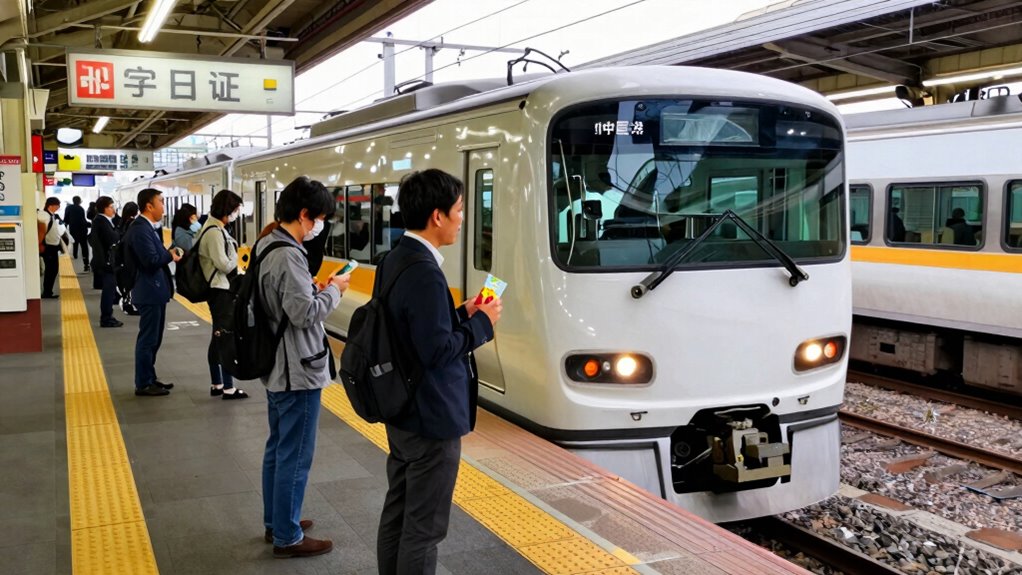
Getting your train tickets in Japan is a smooth process once you know the basics. For short trips, travelers often use IC cards like Suica or Pasmo, which allow quick access through gates—just tap and go. If you prefer traditional tickets, you can buy them at ticket counters or machines near station gates.
These machines display destination costs as a three-digit number, making it easy to select your fare. For longer journeys or Shinkansen, visit manned counters or select machines. Seat reservations are optional or free with a Japan Rail Pass.
If unsure about the fare, purchase the lowest ticket and pay the fare adjustment at the fare adjustment machines or a manned gate. Afterward, simply insert your ticket or tap your IC card to pass through the gates and keep your ticket for exit or fare adjustments.
Using IC Cards Like Suica and Pasmo to Simplify Your Travel
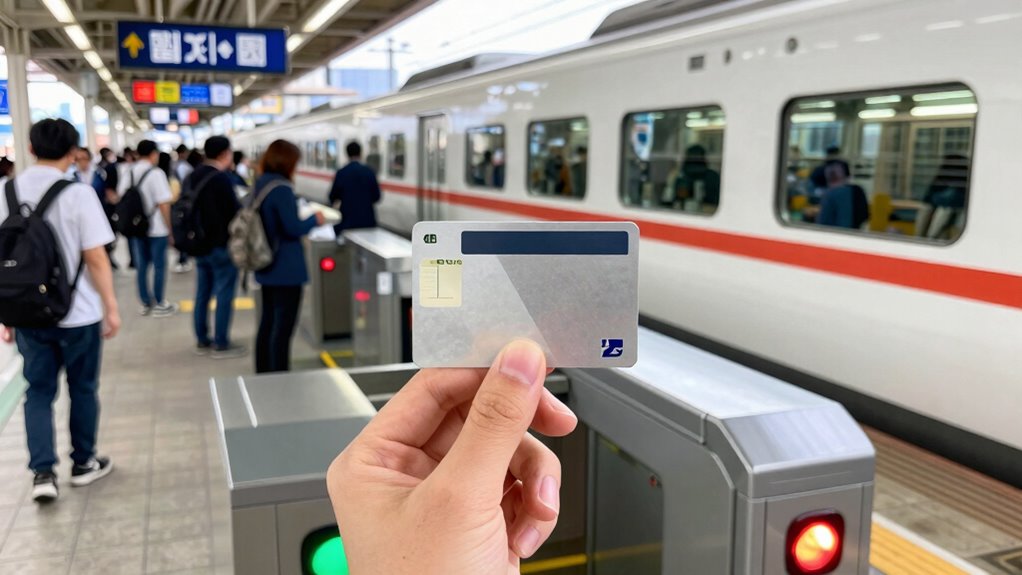
Ever wondered how to make train travel in Japan even easier? IC cards like Suica and Pasmo let travelers tap their way through stations, skipping the hassle of buying single-ride tickets. These prepaid cards work across many transit operators, making transfers smooth and quick. Just touch the reader at entry and exit gates—no fuss. If you accidentally pay too much, fare adjustments are available at certain stations.
To see how versatile they are, consider this table:
| Card Type | Usability | Regions Covered |
|---|---|---|
| Suica | Widely accepted | Tokyo, Japan-wide |
| Pasmo | Transit network | Tokyo area |
| Both | Easy transfers | Major cities |
Using IC cards like Suica and Pasmo simplifies travel, especially for those new to Japan’s trains.
Navigating Ticket Gates and Paying the Correct Fare
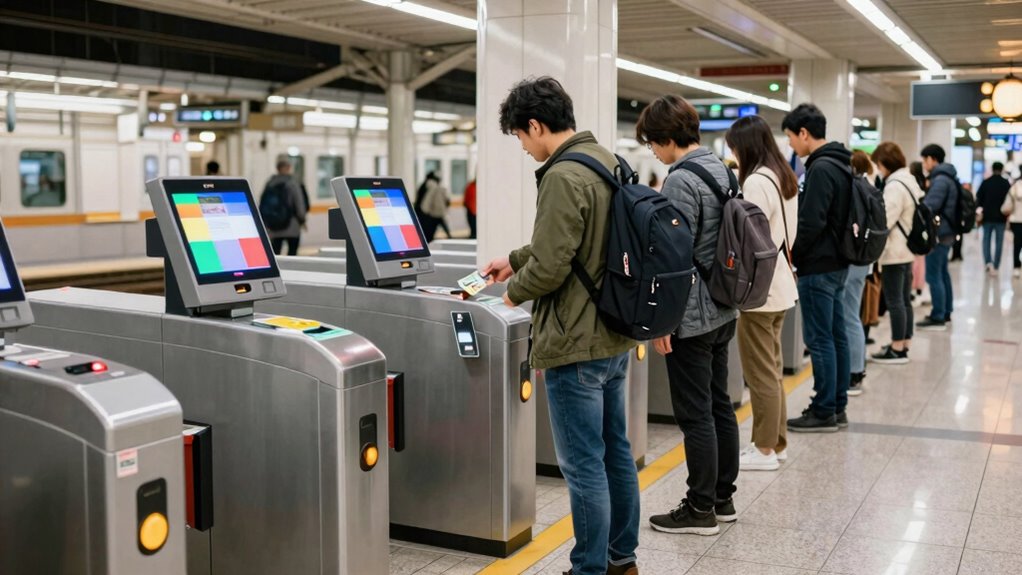
Once a traveler has their ticket or IC card ready, the next step is to smoothly pass through the ticket gates, which are the gateways to Japan’s efficient train system. At these gates, fare adjustment may be necessary if the ticket fare was not enough for the destination.
For IC cards like Suica or Pasmo, simply use the card reader—an easy tap-and-go process—and the system will verify the card through IC card verification. If the gate alarm sounds or access is denied, it likely means the fare was insufficient or the ticket is invalid. In such cases, travelers can use the fare adjustment machine to pay the difference or visit a manned gate for help. Always ensure the correct fare is paid to avoid delays.
Reading Platform Signs and Finding Your Train’s Car and Door
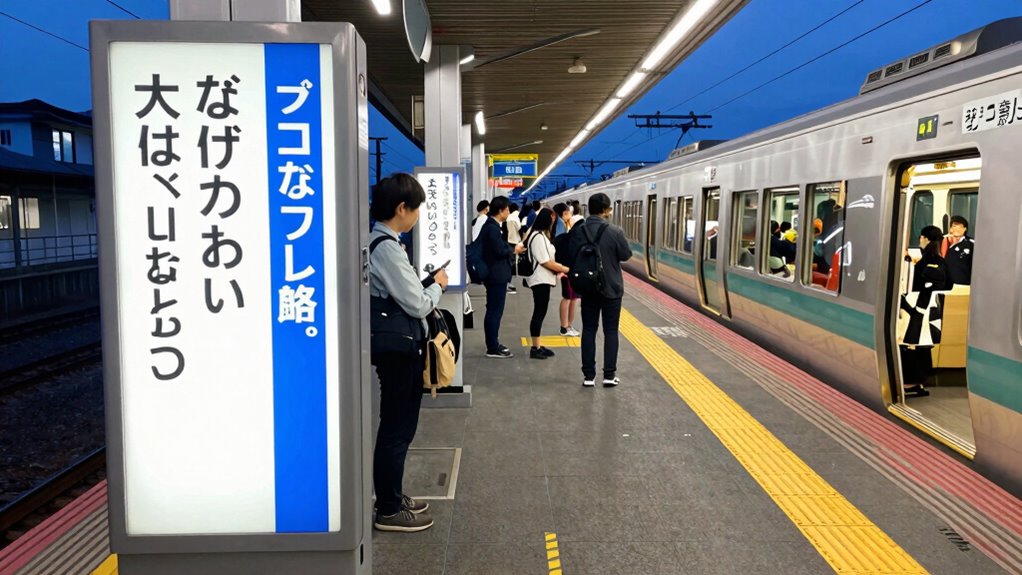
Have you ever wondered how to quickly find your way on a busy Japanese train platform? Platform signage is your best friend here. Signs display the train line, direction, and often multiple languages, including English and Chinese. To identify where to wait, look for markings indicating car and door numbers, which show where passengers should line up. Some platforms serve various train categories, such as local, rapid, or express, and display upcoming trains and stations. For long-distance trains, signs specify car types, such as reserved or green seats, helping travelers choose the correct carriage.
Here’s a quick guide:
| Platform Signage | What It Tells You |
|---|---|
| Car/Door Numbers | Where to line up for your seat |
| Train Categories | Local, rapid, or express |
| Car Types | Ordinary or reserved seats |
| Next Trains & Stations | When and where the train stops |
This clear signage makes boarding easier and stress-free.
Tips for Riding Japanese Trains Smoothly and Respectfully
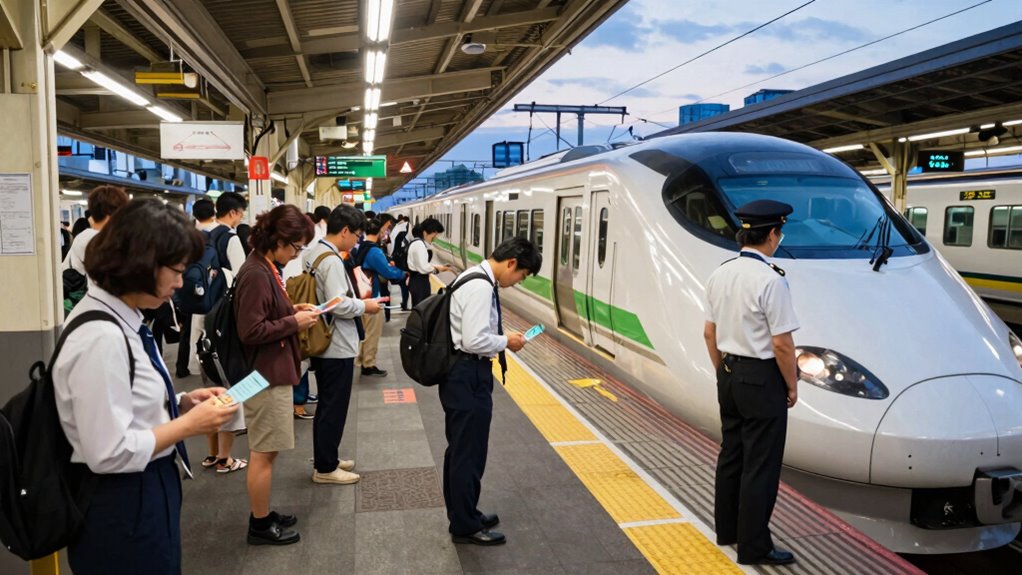
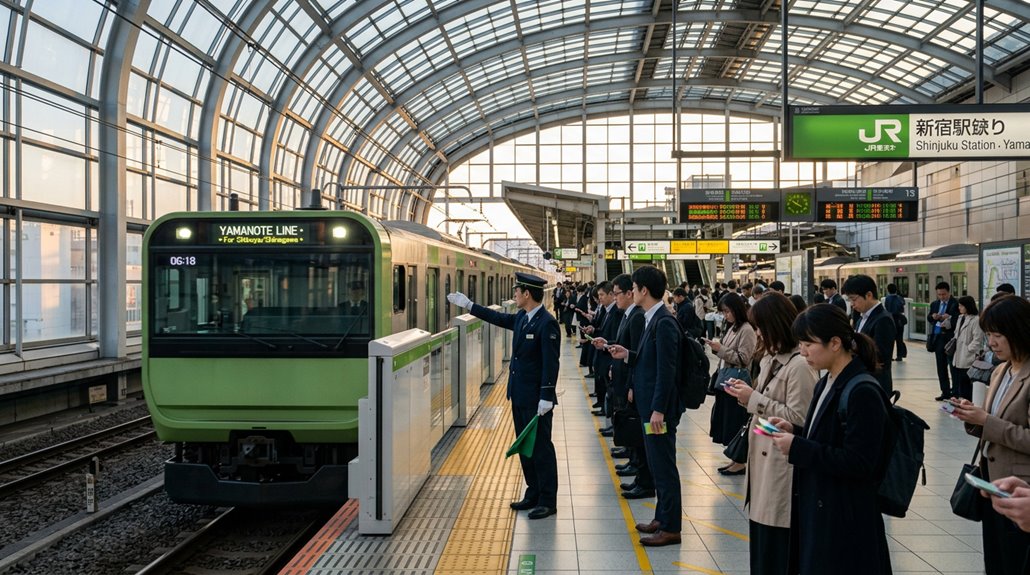
What makes riding Japanese trains smooth and respectful is understanding and following some simple yet important etiquette rules. First, observe the boarding order by lining up at the marked doors and allowing passengers to exit before you board. Second, during peak times, avoid blocking doors and aisles to keep the flow moving efficiently.
Third, practice quiet car behavior by speaking softly, keeping phone calls minimal, and setting ringtones to silent or low volume. This ensures a peaceful environment for everyone. Fourth, be considerate with your belongings: store baggage properly, respect priority seats for those who need them, and refrain from eating, except on Shinkansen. These small actions help create a comfortable and respectful atmosphere, making train travel enjoyable for all.
What to Expect When Arriving at Your Destination Station
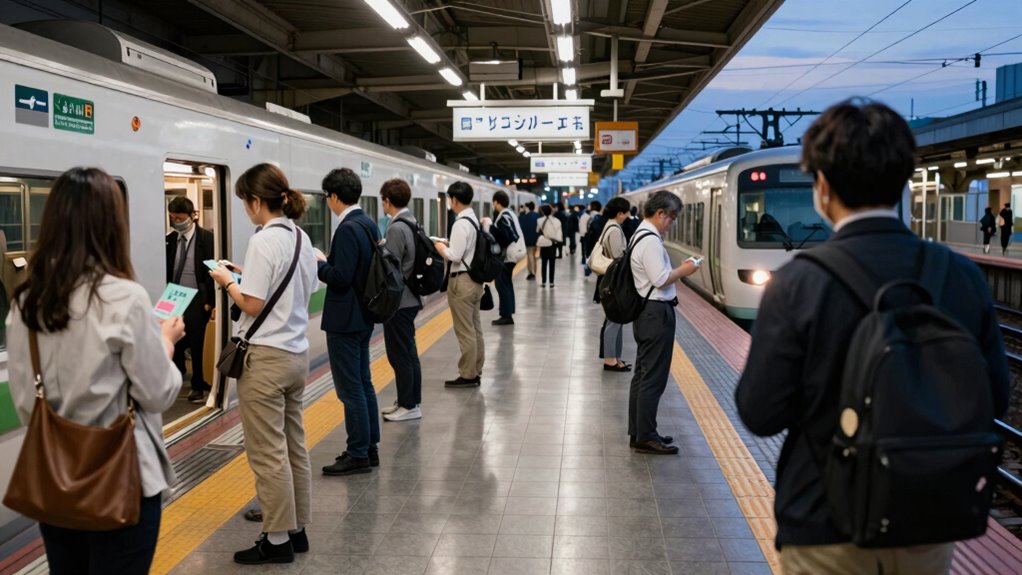
How do travelers navigate their way through the station after arriving? Once off the train, passengers follow signs pointing to exits, transfer points, or connecting lines. Platform signage is helpful, showing train lines, directions, car numbers, and whether the service is local, rapid, or express, making it easier to find the right exit.
When passing through ticket gates, travelers insert their ticket or tap an IC card. If the fare was insufficient, they can use a fare adjustment machine or consult station staff to pay the difference before leaving. For those arriving on the Shinkansen, separate gates are clearly marked for bullet trains.
Exits, maps, and guidance signs work together to direct travelers smoothly toward city streets or other transportation options, ensuring an organized and friendly arrival experience.
Understanding Japan’s Train Pass Options and When to Use Them
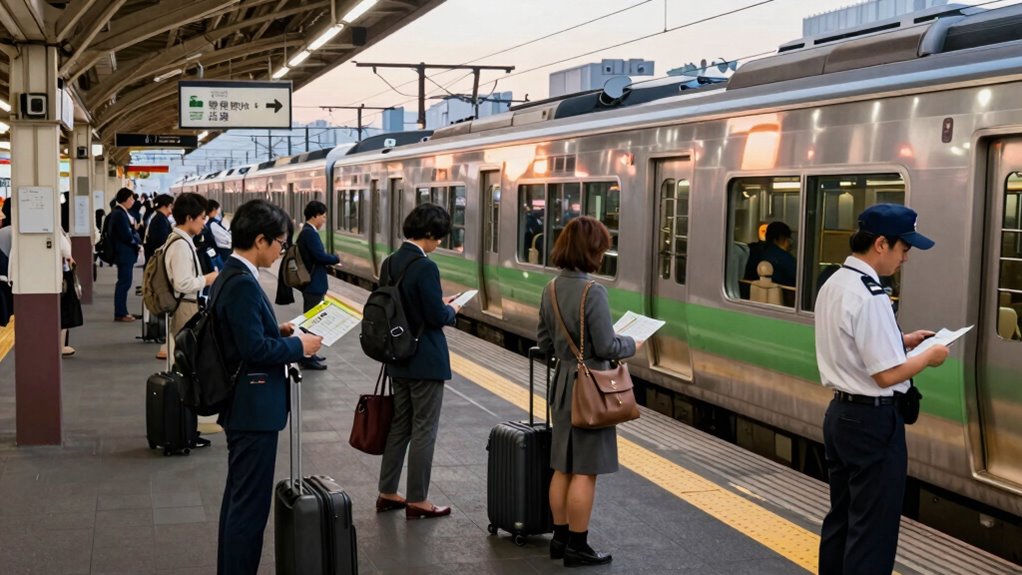
Travelers wondering about the best way to get around Japan’s vast train network often find themselves choosing between train passes and individual tickets. The JR Pass is popular for unlimited rides on JR trains, including the Shinkansen, but it excludes Nozomi services. It’s ideal for those planning extensive travel across the country within a set time, such as 7 or 14 days.
Alternatively, Shinkansen fares are separate and usually require a supplement. Prices range from 800 to 8,000 yen depending on distance and train type.
For convenience, IC cards like Suica or Pasmo offer prepaid access to many lines, including non-JR routes. This makes daily travel easier.
Knowing when to use a JR Pass versus individual tickets or an IC card helps make train travel smooth and cost-effective.
Essential Train Etiquette and Behavior Tips for Travelers
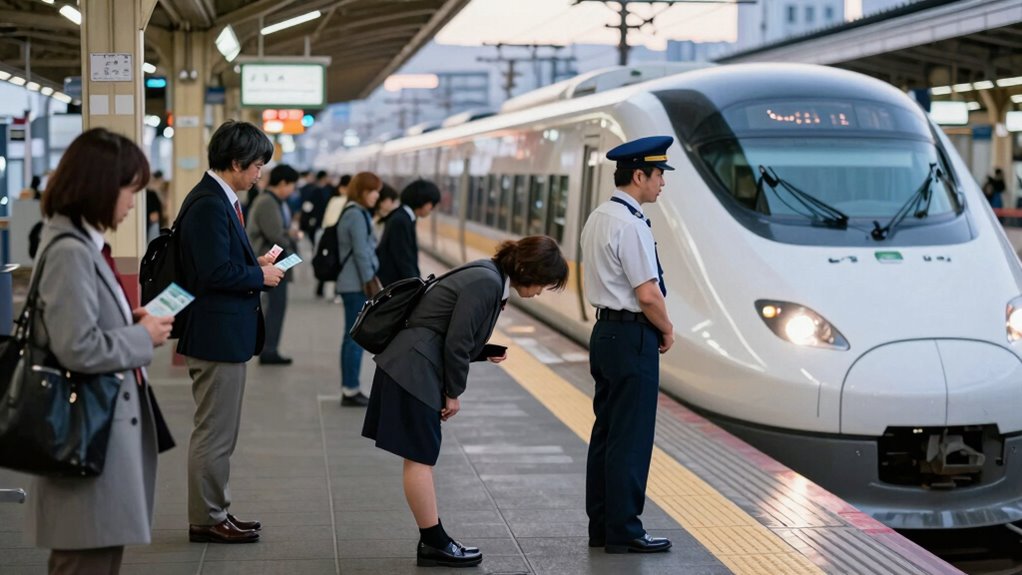
Have you ever wondered why train etiquette is so important in Japan? It reflects respect and consideration for fellow travelers. Key tips include maintaining quiet travel, avoiding loud conversations and phone sounds, and offering seats to the elderly, disabled, or pregnant passengers.
When boarding, let passengers exit first and avoid blocking doors. Seating priority is essential; always look for designated areas and offer your seat if needed. On regular trains, eating is discouraged, but on Shinkansen, light snacks are common—just check local rules. Personal odor and noise from headphones should be kept low, ensuring a comfortable journey for everyone.
| Tip | Explanation | Example |
|---|---|---|
| Quiet travel | Keep noise levels down for everyone’s comfort | Use headphones at low volume |
| Seating priority | Respect those in need by offering your seat | Stand up for elderly passengers |
| Boarding behavior | Be patient, let others exit before boarding | Step aside near doors |