As an Amazon Associate, this website earns from qualifying purchases.
Understanding Japanese symbols is a fascinating journey into a rich culture. Kanji characters, like 米 for rice or 愛 for love, carry meaning beyond their appearance, often reflecting values and emotions. Symbols in Shinto, such as torii gates and komainu guardians, mark sacred spaces and convey spiritual respect. Family crests (kamon) reveal heritage, while animals like koi and cranes symbolize perseverance and longevity. Recognizing these symbols in art, festivals, and daily life helps deepen appreciation—continue exploring, and you’ll discover more about Japan’s visual language and stories behind each mark.
What Are Common Japanese Symbols and Their Meanings?
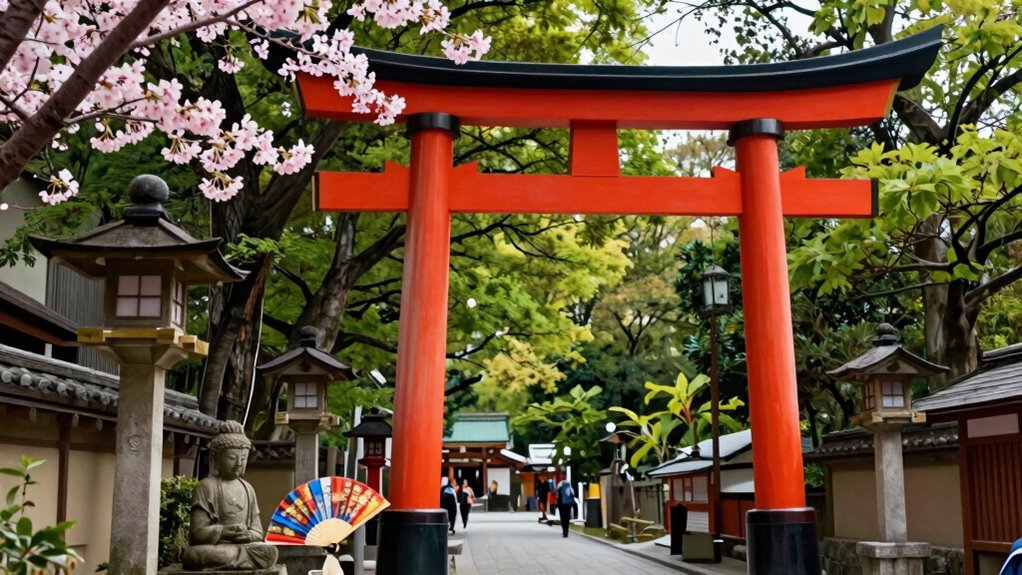
What exactly are the symbols that represent Japan’s rich culture and traditions? Kanji, the intricate characters used in Japanese writing, are a perfect example. They convey deep meanings, like 米 for “rice” and 愛 for “love.” Alongside kanji, Shinto symbols mark sacred spaces, such as the Torii gate, which separates the spiritual from the everyday, and Komainu guardians that protect shrine grounds.
Kamon, or family crests, also hold significance. For example, the Chrysanthemum Crest symbolizes the Imperial Family and longevity. These symbols, whether depicting animals like koi for perseverance or elements like fire for transformation, help express core cultural values. Together, kanji, Shinto symbols, and kamon beautifully reflect Japan’s history, beliefs, and identity in visual form.
How Kanji Characters Convey Cultural Concepts and Emotions
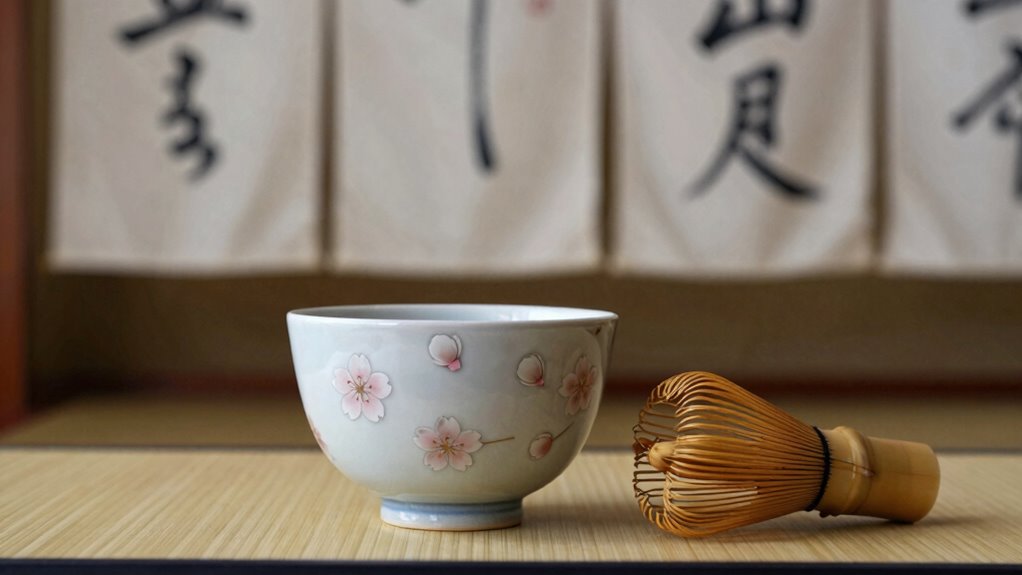
Many people wonder how Japanese kanji characters do more than just form words. They actually express deep cultural concepts and emotions. Kanji meanings often go beyond simple definitions, encapsulating values and feelings. For example:
- 愛 (love) reflects caring and emotional connection.
- 和 (harmony) symbolizes peace and balance within communities.
- 福 (good fortune) conveys hope and prosperity.
- 米 (rice) embodies sustenance and life’s essentials.
These symbols carry rich symbolism, representing broader cultural ideas rooted in everyday life. Each kanji can have multiple readings and meanings depending on the context, adding layers of nuance. Learning these characters helps reveal how language encodes cultural concepts and emotions, making them powerful tools for understanding Japan’s social values and traditions.
What Do Shintoism Symbols Represent in Japanese Spirituality?
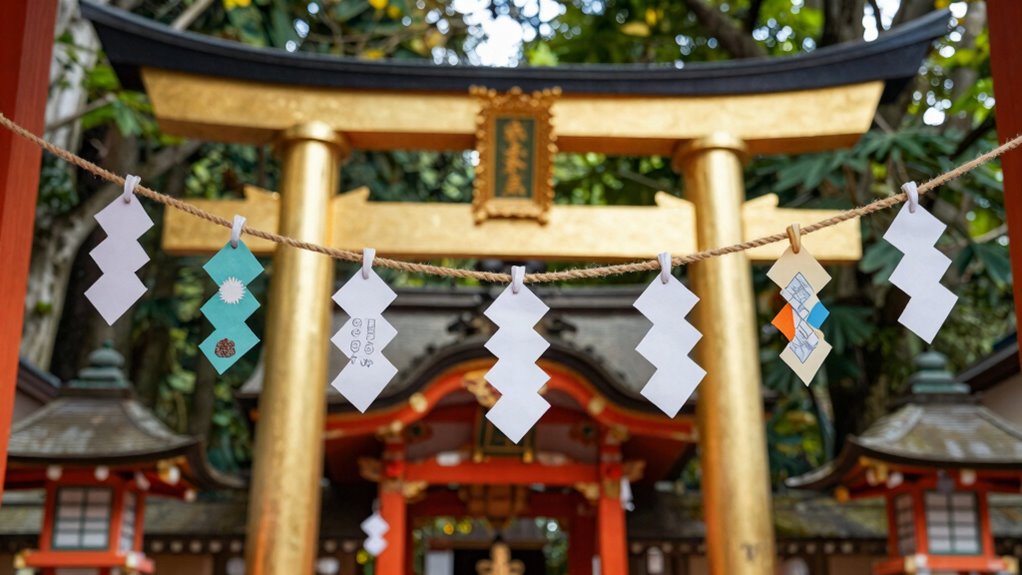
Shintoism symbols serve as meaningful signs that help people understand and connect with the spiritual world. The Torii, a distinctive gate, marks the entrance to a shrine, signaling a transition from everyday life to a sacred space. It acts as a visual cue that visitors are stepping into a realm of spirits and kami (gods).
Komainu, the guardian lion-dogs, stand at shrine entrances to protect sacred grounds from evil and impurities, symbolizing safety and reverence.
Shimenawa, sacred ropes made of rice straw, hang at shrines to signify purity and ward off evil spirits. These symbols collectively convey messages about kami and spiritual respect, guiding worshippers in their rituals and fostering a sense of reverence for the divine in Japanese spirituality.
How Family Crests (Kamon) Reflect Heritage and Status
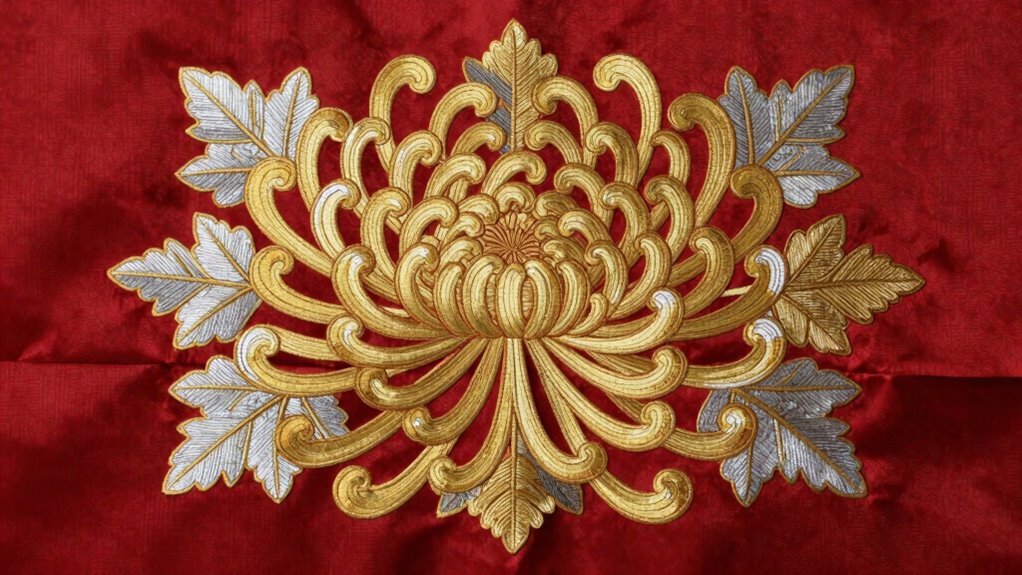
Family crests, known as kamon, serve as visual symbols that reveal much about a family’s history, social standing, and values. These family crests often carry stories of heritage, showcasing a family’s unique background and position in society. For example, the Chrysanthemum Crest (菊 – Kiku) is linked to the Imperial Family, symbolizing longevity and renewal. Meanwhile, the Wisteria Crest (藤 – Fuji) reflects nobility and lasting beauty, often associated with samurai lineages.
The Bamboo Crest (竹 – Take) signifies resilience and strength, representing perseverance through adversity. Kamon are more than mere decorations; they act as a family’s badge, connecting generations and highlighting social status, heritage, and pride through carefully chosen symbols and designs.
What Animal and Element Symbols Signify in Japanese Culture?
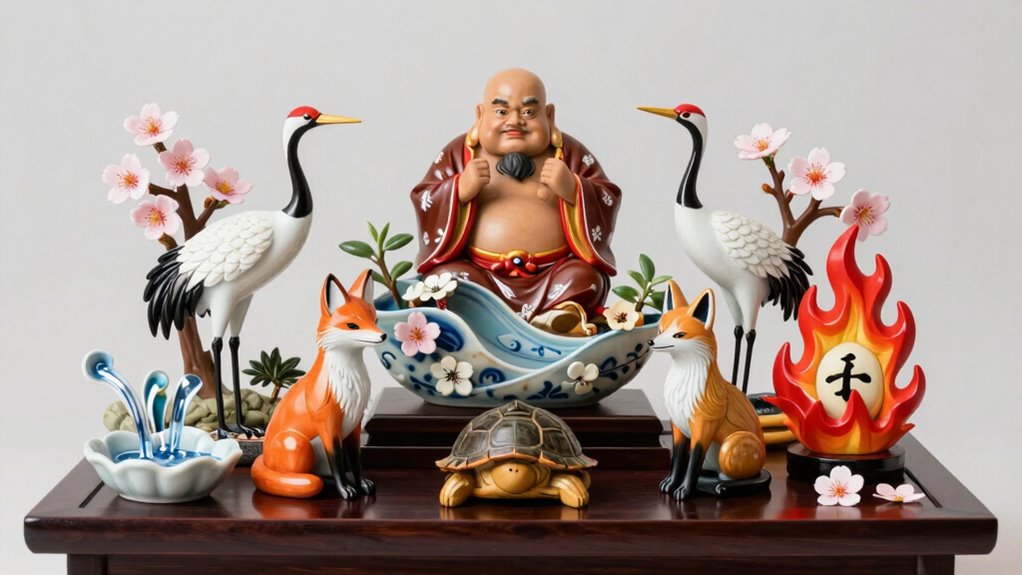
Have you ever wondered what animals and elements symbolize in Japanese culture? Koi, cranes, and dragons each carry deep meanings. Koi fish represent perseverance and determination, often swimming upstream to symbolize overcoming challenges. Cranes are symbols of longevity and good fortune; folding a thousand origami cranes is believed to grant a wish.
Dragons embody water and wisdom, signifying protection and benevolent power. They are often seen as guardians in stories and art. These symbols reflect qualities admired in Japanese society—strength, luck, and insight.
Water and fire also hold significance, representing calmness and energy, respectively. Understanding these symbols offers insight into Japanese values and beliefs, enriching the appreciation of their art, traditions, and everyday life.
How to Recognize Cultural Symbols in Art, Festivals, and Daily Life
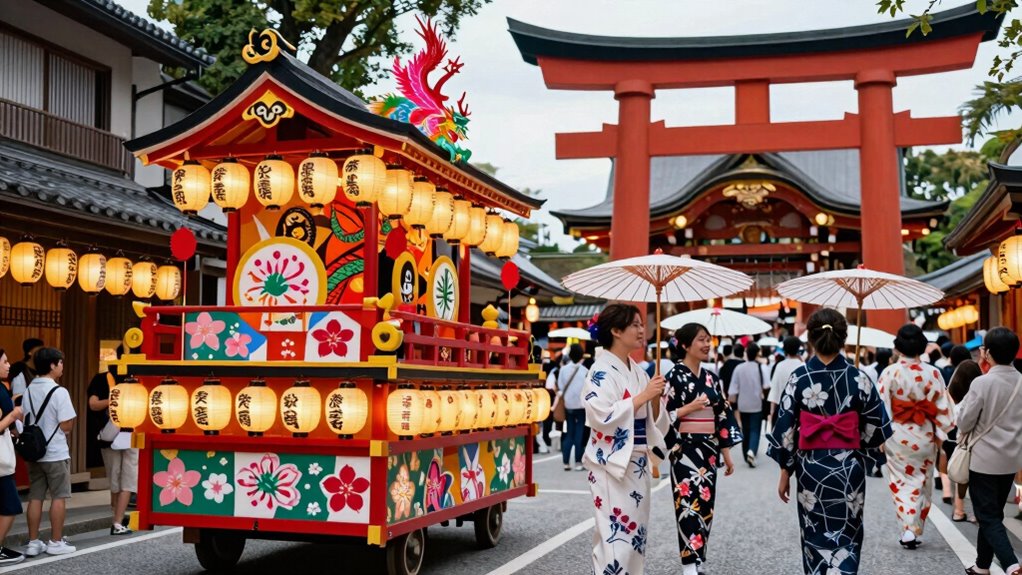
Wondering how to spot Japanese cultural symbols in everyday life? These symbols often appear in art, festivals, and daily settings. For example, a torii gate signals the entrance to a sacred shrine, marking a transition into a pure space. Komainu, the lion-dog statues, guard shrine entrances to keep evil spirits away. Shimenawa, the thick rice-straw ropes, hang around shrines or sacred trees, symbolizing purity and warding off impurities.
You might also see torii gates at temple entrances, komainu standing solemnly at shrines, and shimenawa draped across sacred areas. Other symbols include family crests or lucky charms.
Tips for Learning and Appreciating Japanese Symbols and Their Stories
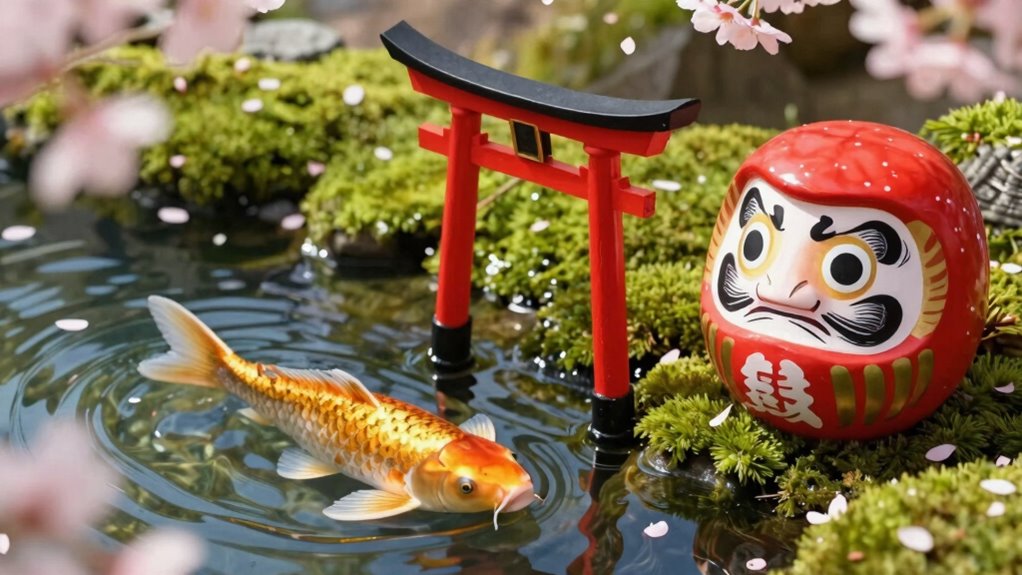
Learning to appreciate Japanese symbols and their stories can be both fun and meaningful when approached with simple, focused strategies. Using kanji mnemonics helps connect the character’s form to its meaning, making them easier to remember. For example, drawing kanji like 大 (big), 水 (water), and 日 (sun) creates strong visual memory links. It’s helpful to learn kanji in context by pairing core characters with common words or phrases, such as 米 for rice in 食べる or 米国 for America.
Starting with a small set of five basic kanji builds a personal “memory translator.” Then, expanding to 100 in about 20 days, and eventually mastering 1,500–2,000 for fluency is a practical approach. Including culturally meaningful symbols like 和 (harmony) and 愛 (love) deepens understanding of their stories and significance.