As an Amazon Associate, this website earns from qualifying purchases.
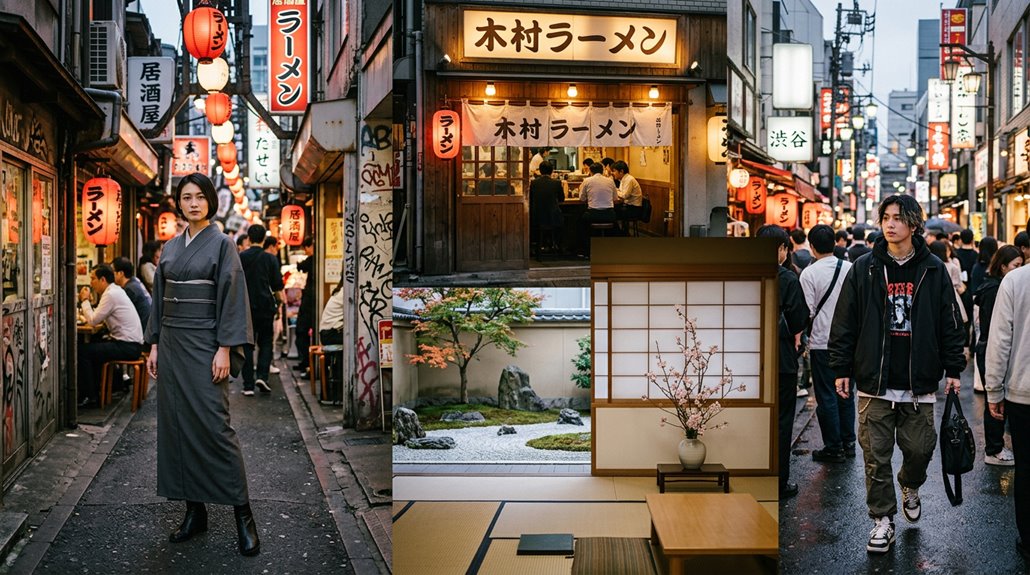
Japanese style seamlessly blends minimalism with warmth, inspiring both sleek interiors and modern streetwear. Japandi design uses natural materials, soft neutral tones, and simple, uncluttered spaces, creating calm environments. In fashion, people reinterpret traditional kimono shapes with layered, oversized silhouettes and textured fabrics. Streetwear incorporates subtle patterns like waves or koi symbols with innovative cuts. Both styles emphasize harmony and functional beauty, offering practical ideas to add serene, authentic Japanese touches to everyday life—exploring further reveals even more inspiring details.
1. Exploring Japanese Minimalist Design Principles for Interiors and Fashion
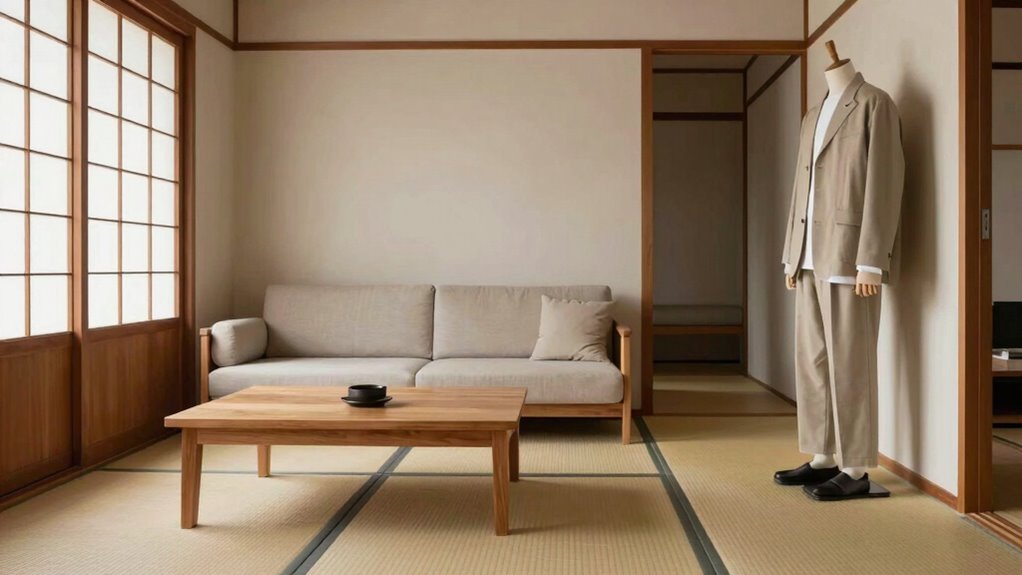
What makes Japanese minimalist design so appealing, and how does it influence both interiors and fashion? The answer lies in its focus on simplicity, natural materials, and balance. Japandi, a popular style, blends Japanese minimalism with Scandinavian warmth, emphasizing uncluttered spaces, soft neutral tones, and textures like linen, oak, and stone. These design principles create calm, airy environments, often using sliding screens or subtle divisions to define spaces.
In fashion, Japanese streetwear mirrors this minimalism by prioritizing silhouette, layering, and craftsmanship over loud logos. Authenticity is key—careful attention to fabric quality and traditional proportions makes the look both modern and timeless. Overall, these principles inspire functional beauty, making everyday spaces and outfits feel serene yet stylish.
2. Top Examples of Japandi Style in Modern Homes and How They Inspire
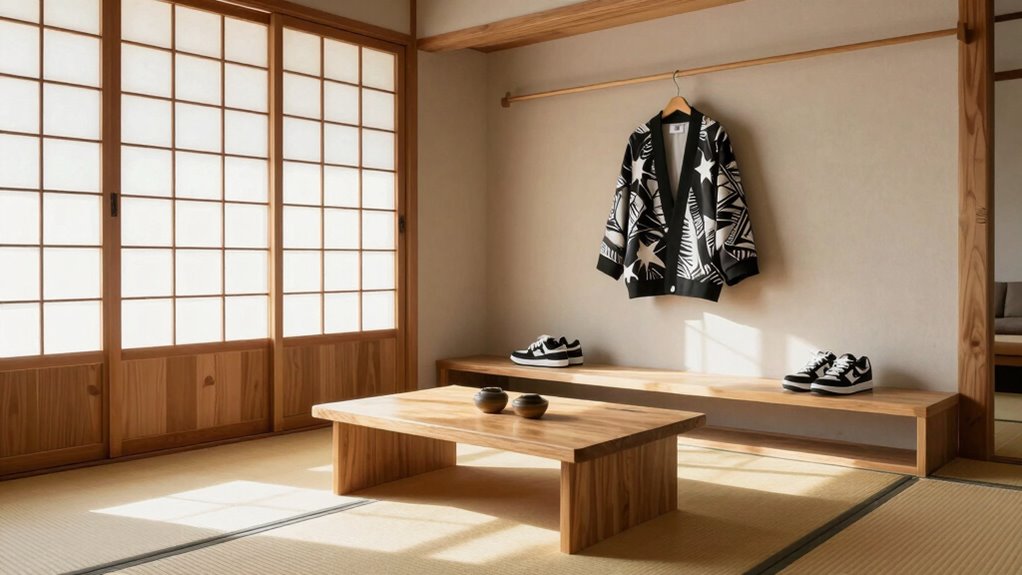
Modern homes around the world are increasingly embracing Japandi style, showcasing how this elegant blend of Japanese minimalism and Scandinavian coziness can transform any space. Notable examples include The Rasidence duplex in Singapore, with sliding ash wood screens and earthy tones of oak and stone, creating a calming atmosphere. These homes highlight key design principles like balance, texture, and the honesty of materials, often using neutral palettes to evoke serenity. Large windows and clerestory lighting fill rooms with natural light, enhancing the minimalist aesthetic.
- The Rasidence’s earthy palette and sliding screens inspire simplicity and natural beauty.
- San Francisco’s photography studio conversion showcases how Japandi enhances functional spaces.
- Dublin and Prague homes emphasize the global versatility of this style, blending comfort with elegance.
3. The Evolution of Japanese Streetwear: Tradition Meets Urban Trends
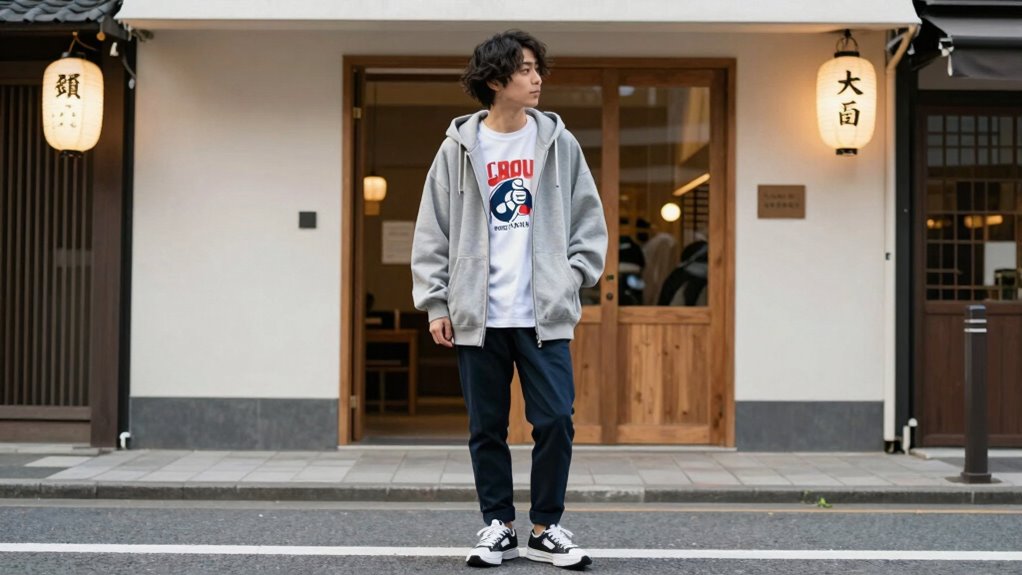
Have you ever wondered how traditional Japanese clothing styles have found their way into the bustling world of street fashion? Japanese streetwear has evolved since the 1990s, blending classic elements with urban trends. It emphasizes silhouette-focused design, using architecture-inspired proportions and controlled volumes to create a striking look. Traditional pieces like kimono and haori are reinterpreted into modern cuts, often layered with thick textures and oversized silhouettes, making them suitable for daily wear.
This traditional reinterpretation respects Japanese craftsmanship while embracing contemporary street style. Unlike logo-heavy fashion, Japanese streetwear values the quality of cut, fabric, and finish, reflecting a deep appreciation for authentic design. Overall, it’s a dynamic fusion where tradition meets modern urban trends seamlessly.
4. How Color Harmony Shapes Japanese and Japandi Aesthetics
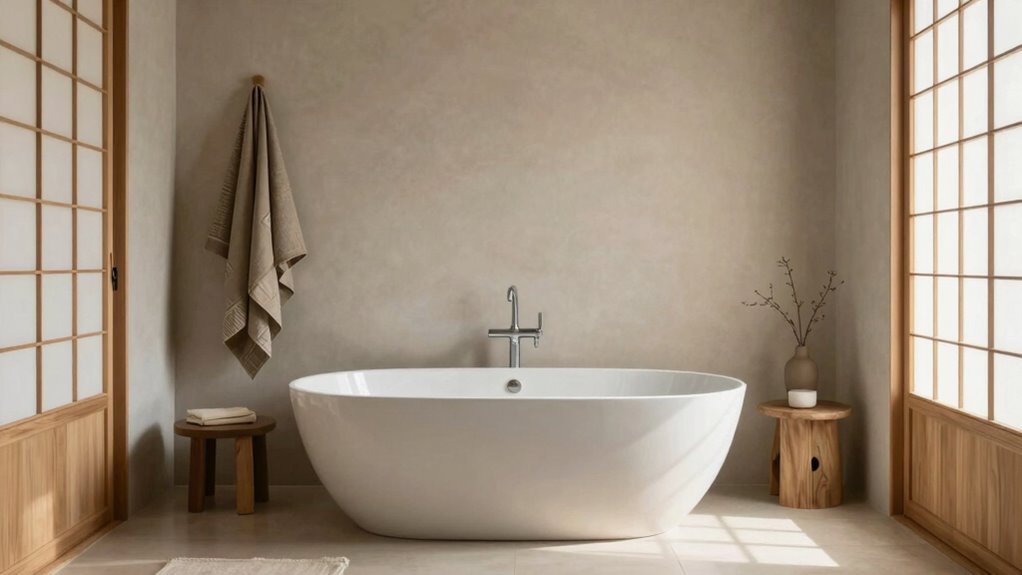
Color harmony plays a crucial role in shaping the serene and balanced look of Japanese and Japandi aesthetics. This approach combines warm Japanese earth tones—like ochre, taupe, and stone—with cool Nordic neutrals such as greys, blacks, and whites, creating a calming palette.
Japandi design often uses a restrained color scheme of three to four tones, helping maintain a minimalism that feels uncluttered and peaceful. To add subtle contrast and warmth, beige dual tones and a continuum of grey punctuated by yellow or orange accents are common. Natural materials like oak, stone, and linen are paired with these subdued colors, enhancing texture and depth without visual noise.
Essentially, thoughtful color harmony guides the architectural and decorative choices that define both Japanese and Japandi styles.
5. Incorporating Japanese Heritage in Everyday Fashion and Home Decor
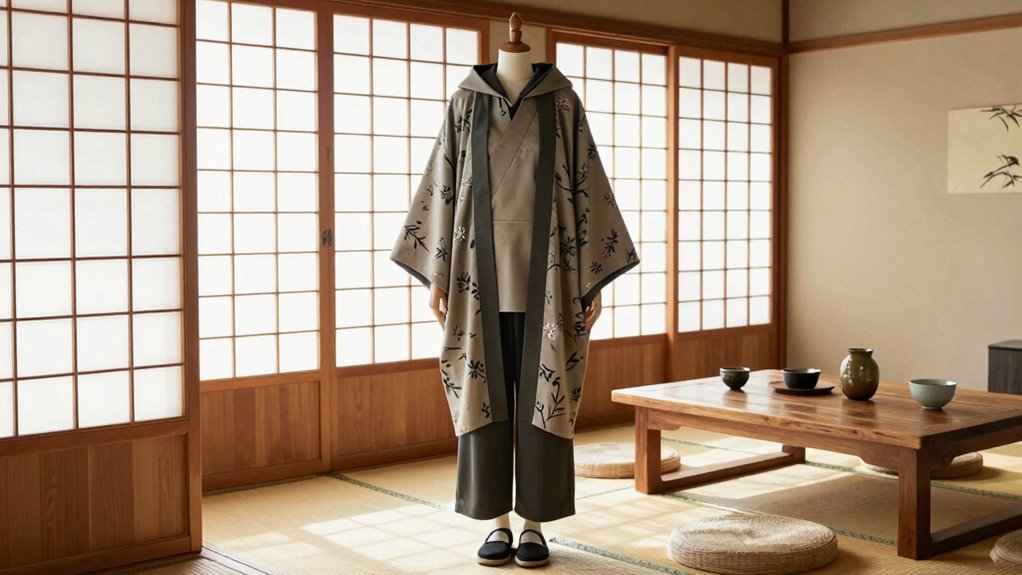
Ever wonder how Japanese heritage influences everyday fashion and home decor? Casual Japanese outfits blend traditional garments like kimono and haori with modern styles, reinterpreted through thicker textures, layered silhouettes, and oversized cuts for comfort and daily wear. In Japanese fashion 2026, understated patterns such as dragons, koi, and waves emphasize silhouette mastery and proportion, avoiding loud branding.
Similarly, japandi interiors combine Japanese minimalism with Scandinavian warmth. They use natural materials like oak and stone, neutral earthy palettes, and uncluttered layouts to create serene, light-filled spaces. Both realms focus on quality finishes and honest materials, respecting traditional codes while embracing contemporary aesthetics.
Incorporating Japanese heritage involves assessing fabric, cut, and color harmony in fashion. It also includes applying principles of balance and simplicity in decor, creating authentic and timeless styles.
6. Achieving Comfort and Elegance With Japanese-Inspired Style Choices
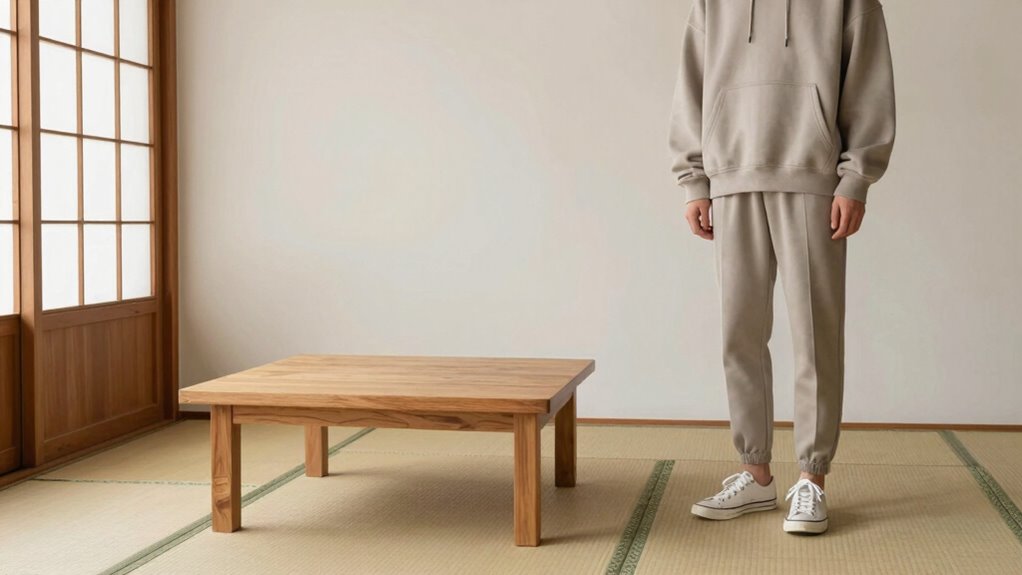
What makes Japanese-inspired style both comfortable and elegant? It’s the perfect balance of relaxed fit and refined details, rooted in the Japanese clothes aesthetic. This style favors loose yet structured silhouettes, like oversized outerwear and wide trousers, which allow ease of movement. Fabrics such as textured cottons, linens, and wovens add tactile richness and age beautifully over time. The design focuses on subtle ornamentation, precise cuts, and architectural lines, steering clear of loud logos or flashy details.
To achieve this look, consider these ideas:
- Use natural materials and neutral tones for calm, versatile outfits.
- Incorporate layered kimono-inspired pieces like haori for added elegance.
- Prioritize quality details like seam finishes and perfect proportions for a polished appearance.
This approach echoes the Japan fashion of the 2000s, blending comfort with understated sophistication.
7. Practical Tips for Infusing Japanese Style Into Your Living Space and Wardrobe
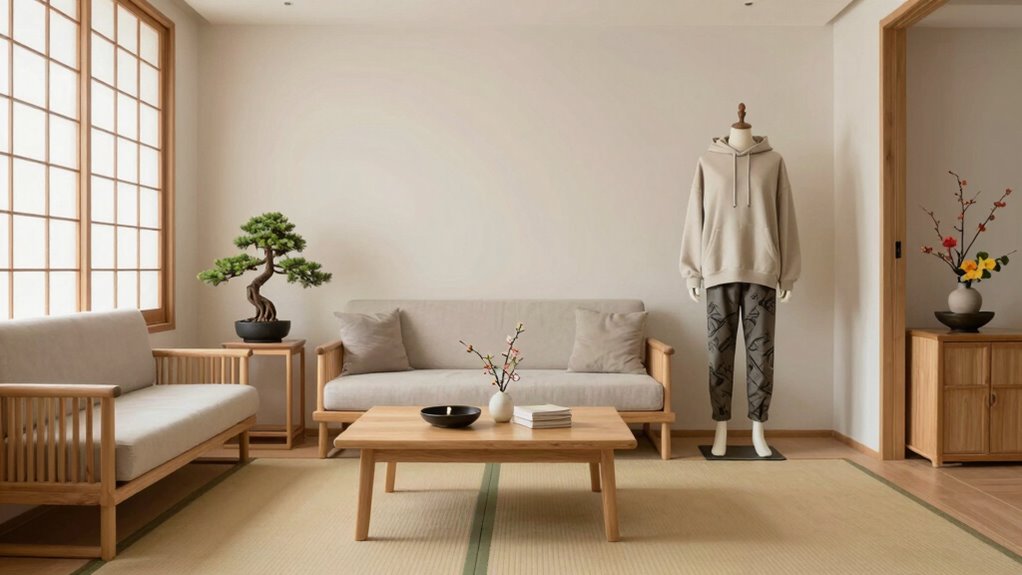
Incorporating Japanese style into living spaces and wardrobes can be both fun and rewarding, especially when approached with a thoughtful eye for balance and simplicity. For interiors, focus on natural light and uncluttered spaces, using materials like oak, stone, and neutral tones to evoke calm. Sliding screens or subtle architectural dividers help create peaceful zones that feel open yet private.
In fashion, prioritize silhouettes over logos, choosing loose cuts, layered pieces, and fabrics that highlight quality. Patterns inspired by nature, like waves or koi, add subtle detail without overpowering. When blending these elements, keep touches of tradition controlled and balanced. This approach maintains authenticity, ensuring the space and wardrobe feel harmonious, simple, and effortlessly stylish—true to Japanese aesthetics.