As an Amazon Associate, this website earns from qualifying purchases.
Choosing the right kimono depends on the occasion, personal style, and comfort. Formal events like weddings often call for elegant styles such as furisode or tomesode in luxurious silk, while casual outings suit cotton yukatas or komons. Fabric choice affects comfort and season—silk for elegance, cotton for hot weather. Patterns and colors should complement body type and personal taste, with accessories like obi and Kanzashi adding the perfect finishing touch. Keep exploring to discover how all these elements come together beautifully.
Understanding the Different Types of Kimono and Their Purposes
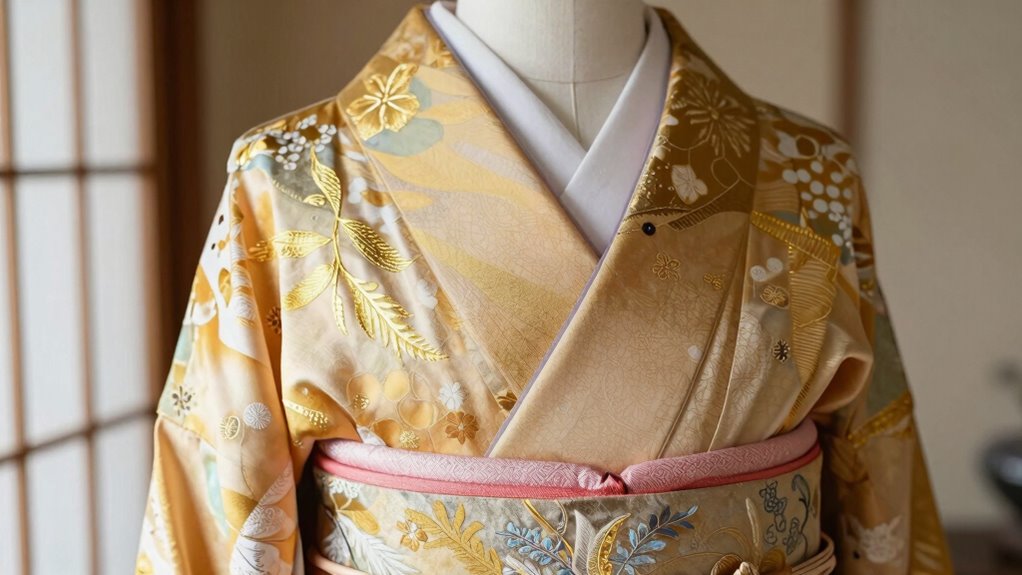
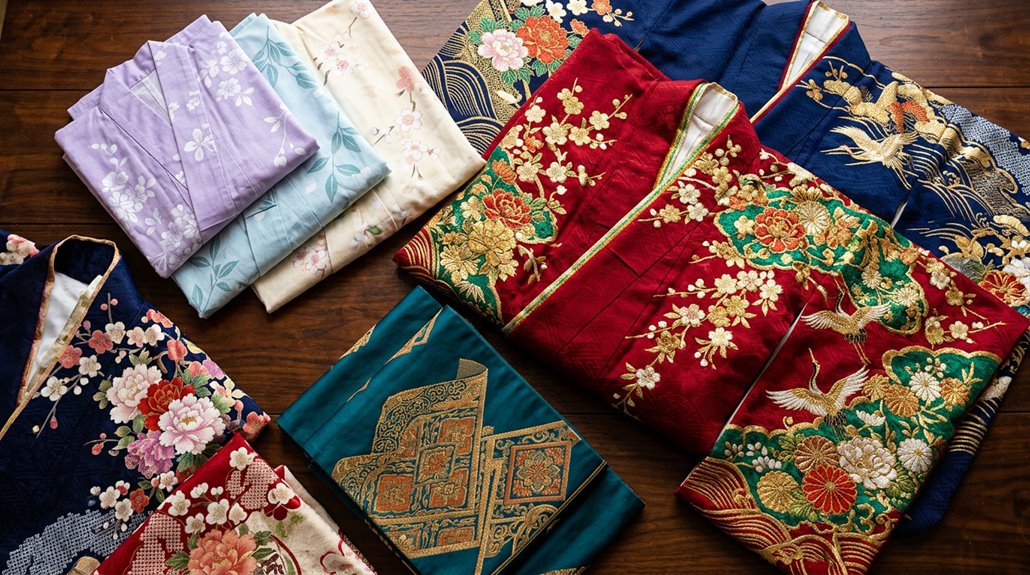
Have you ever wondered why there are so many different types of kimono and what sets each one apart? The answer lies in factors like sleeve length, formality, and purpose. Kimono types vary widely, from the highly formal furisode, distinguished by its long sleeves, to the married women’s tomesode, which features shorter sleeves and crested designs.
More versatile options like houmongi and tsukesage suit both semi-formal and formal occasions, with varying sleeve lengths and patterns.
Casual styles such as iromuji and komon are suitable for everyday wear, often in muted colors or small patterns.
Meanwhile, yukata, made from lightweight cotton, is informal and perfect for summer festivals. The choice depends on the event’s formality, age, and the kimono’s design details.
Choosing the Right Fabric for Comfort, Durability, and Season
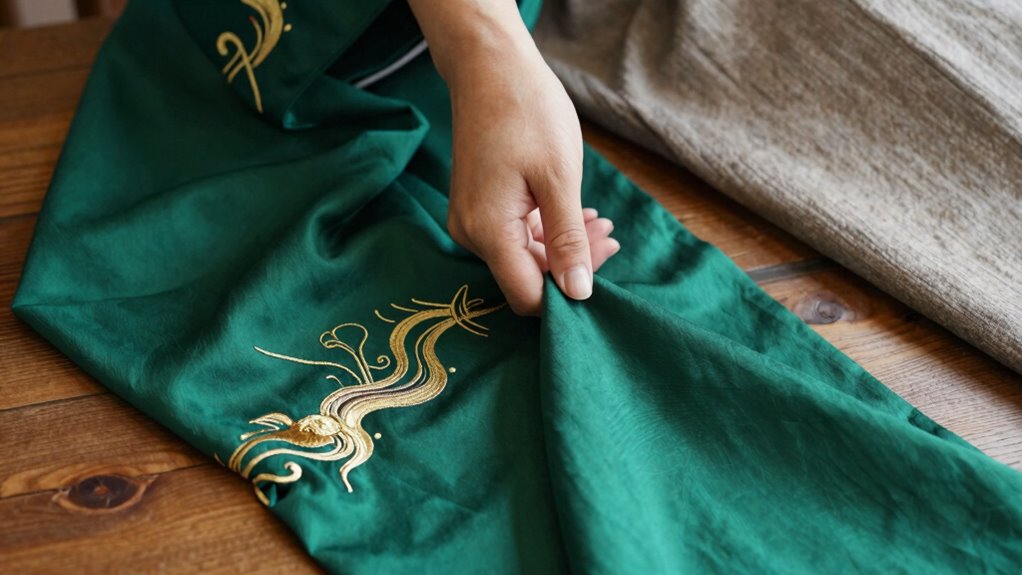
Choosing the right fabric for a kimono can make a big difference in how comfortable, durable, and season-appropriate it feels.
Silk kimono offers formal elegance and durability, with different types like smooth crepe or glossy satin, providing various drapes and weights suitable for all seasons. It’s perfect for special events but requires careful maintenance to prevent color bleeding.
Cotton kimono is breathable and easy to care for, making it ideal for everyday wear and hot summers, especially in yukata style.
Wool kimono provides warmth and a casual look, best for winter or cooler days. However, it can add bulk and affect layering. Choosing the right fabric depends on comfort, climate, and occasion.
Matching Kimono Formality Levels to Your Occasion
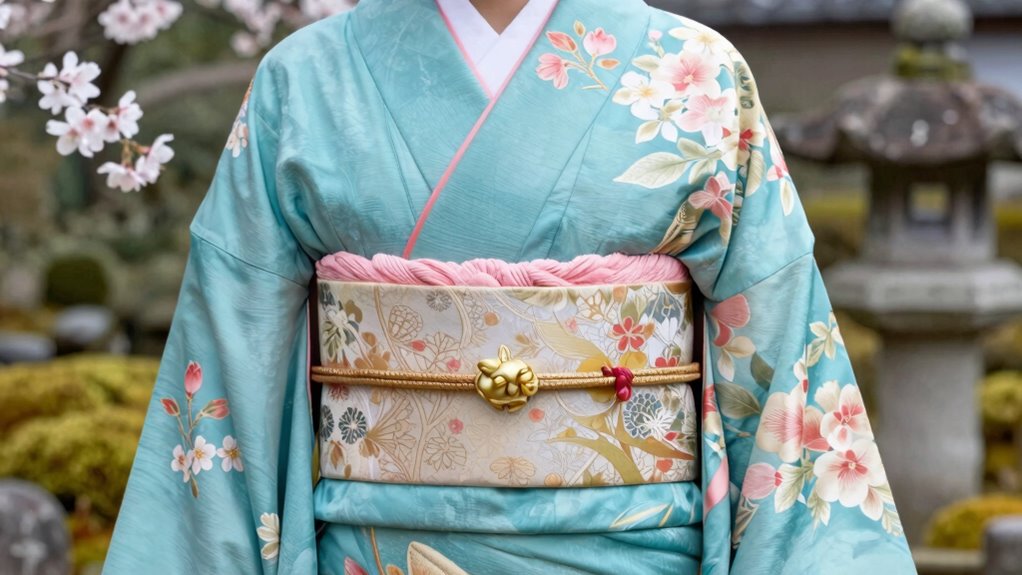
Ever wondered how to ensure your kimono outfit perfectly suits the occasion? Matching kimono formality to the event is key. For formal events like weddings or ceremonies, a more elaborate kimono such as a furisode or tomesode is appropriate, paired with a woven obi to match the fabric’s formality. Casual outings, like a daytime stroll, can be suited with simpler iromuji or komon kimonos, often paired with dyed obi for a softer contrast.
Beginners should consider Rikawafuku Kimono Rental Kyoto options, which help in selecting outfit combinations that align with the event occasion. Ensuring the kimono and obi style, woven or dyed, corresponds to the fabric’s formality level helps avoid mismatched appearances. This consistency reflects respect for the occasion and the tradition behind kimono dressing.
Selecting Colors and Patterns Based on Personal Style and Body Type
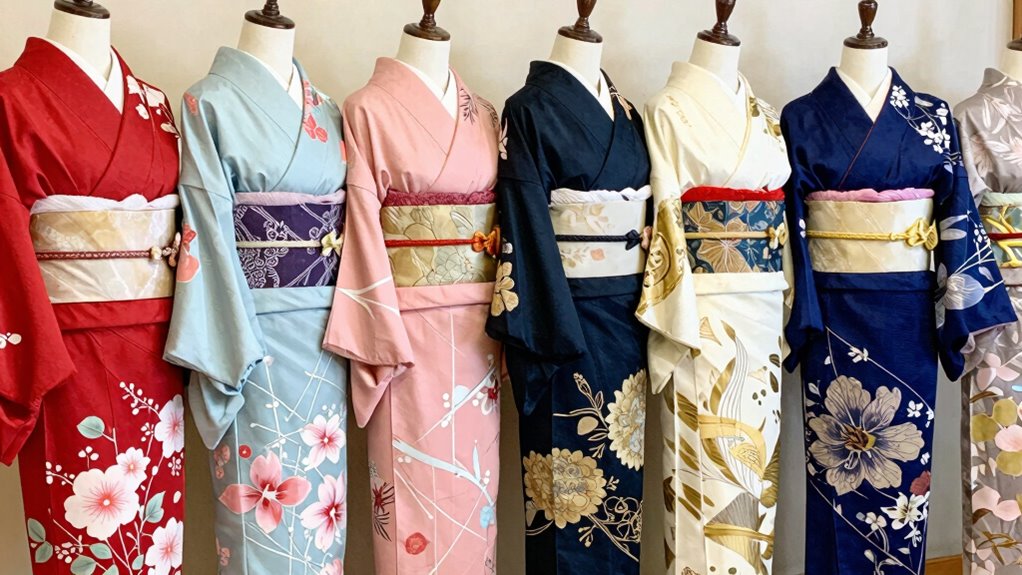
When selecting colors and patterns for a kimono, it’s helpful to contemplate personal style and body type to create a harmonious and flattering look.
- Bright colors like orange or red work well for spring types or slimmer figures, adding vitality and expanding the silhouette. Conversely, cooler shades such as navy or purple suit fuller bodies, helping create a more balanced appearance.
- Pattern size matters: short women often benefit from small or diagonal patterns that elongate the body. Taller individuals can wear larger, bold designs for a mature, elegant presence.
- Pattern visibility is key. Patterns with base colors showing at least partially tend to look neater and more refined. By aligning colors, patterns, and body proportions, the kimono can beautifully enhance personal style and natural shape.
How to Determine the Correct Kimono and Obi Size for a Flattering Fit
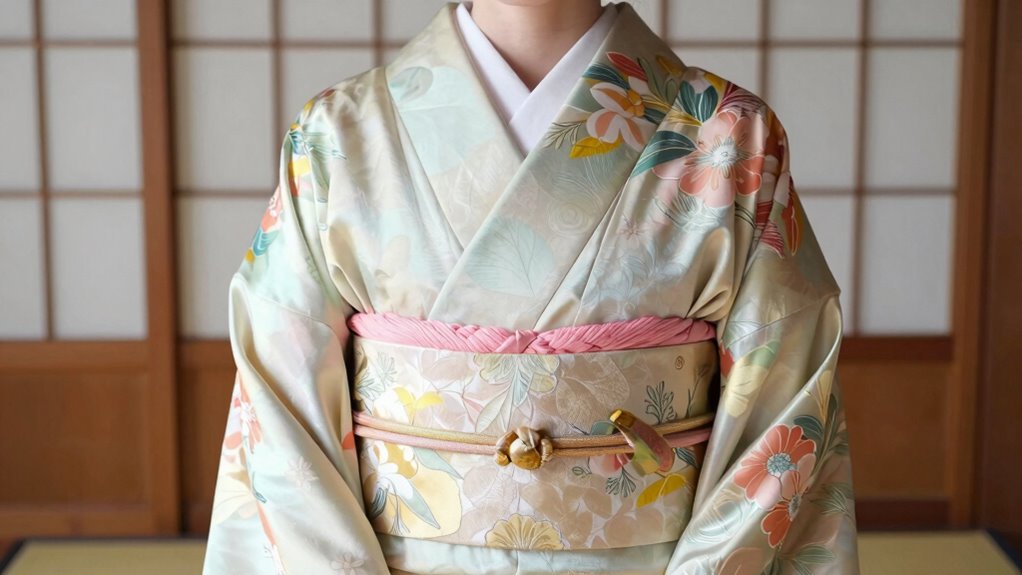
Have you ever wondered how a properly fitted kimono can make a person look both elegant and comfortable? The secret lies in correct kimono sizing, especially when choosing the right obi fit, sleeve length, and hem alignment.
To find the perfect fit, start by matching the kimono height to the wearer, allowing about 10 cm below their height for comfort. Check that the kimono wraps smoothly around the waist without tight compression, creating a flattering silhouette. Sleeve length should complement the person’s height—shorter sleeves for shorter figures, longer for taller ones—ensuring balanced proportions.
Additionally, the hem should fall mid-calf to ankle, depending on style, and fabric quality along with precise stitching will enhance fit and drape. Proper sizing makes all the difference.
Tips for Picking the Perfect Design and Pattern for Your Height and Look
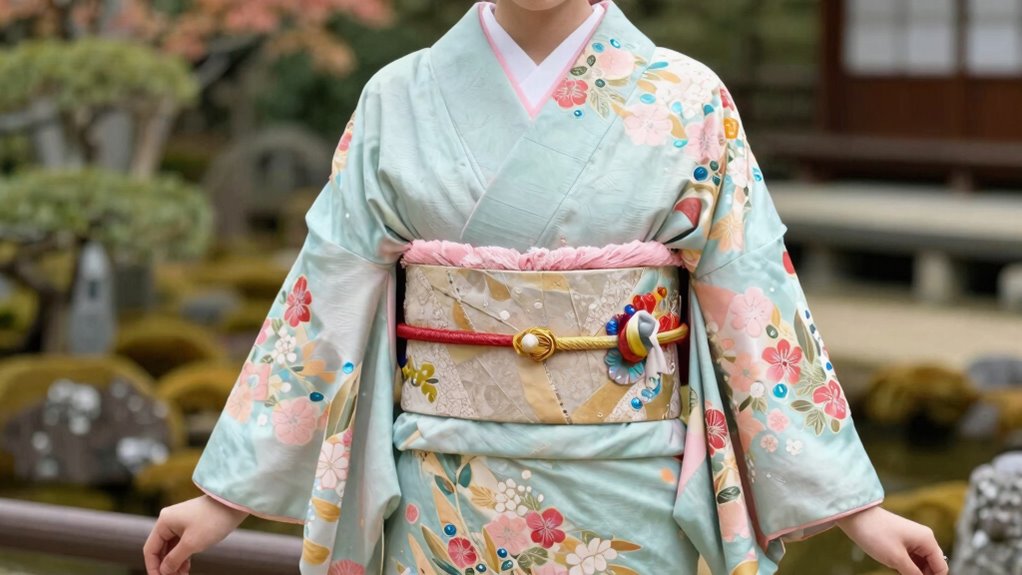
Choosing the right kimono pattern is just as important as selecting the proper size; the design can greatly influence how the overall look complements a person’s height and style. To achieve a balanced appearance, consider these tips:
- Shorter individuals should opt for small patterns like tiny flowers or diagonal designs, which help elongate the silhouette and prevent the kimono from appearing overwhelming.
- Taller people can carry larger, bolder patterns or full-pattern coverage to enhance their presence and create harmony in their look.
Retro patterns are a trendy choice in Kyoto rentals, offering a stylish blend of modern and traditional aesthetics. They work well for those wanting a unique, height-appropriate pattern sizing that stands out without overpowering.
These guidelines help ensure the pattern complements rather than competes with one’s natural stature.
Additional Accessories and Styling Tips to Complete Your Kimono Look
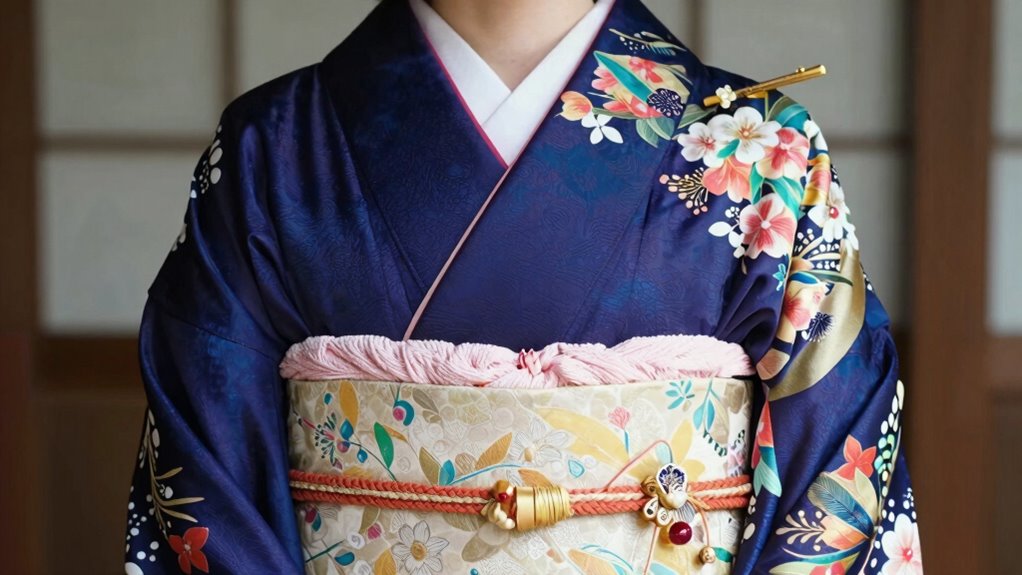
Ever wondered how the right accessories can transform a simple kimono into a stunning ensemble? Kimono accessories like hairpieces, handbags, and small embellishments can truly elevate the look. For obi styling, selecting the right obi, obiage, and obijime creates harmony with the kimono’s pattern and color.
Practical tips include choosing an obi style that matches the event’s formality and maintaining a balanced silhouette. When it comes to hair and bags, delicate kanzashi or hairpins add elegance, while coordinating handbags complete the outfit. To ensure everything fits perfectly, planning add-ons ahead of time at rental shops or tourist spots helps.
Below is a quick guide to these accessories:
| Accessory Type | Styling Tip |
|---|---|
| Obi styling | Match to formality and pattern |
| Hair accessories | Use kanzashi or elegant pins |
| Bags | Coordinate with kimono color |
| Footwear | Zori or geta based on season |
| Planning | Prepare in advance for a seamless look |