As an Amazon Associate, this website earns from qualifying purchases.
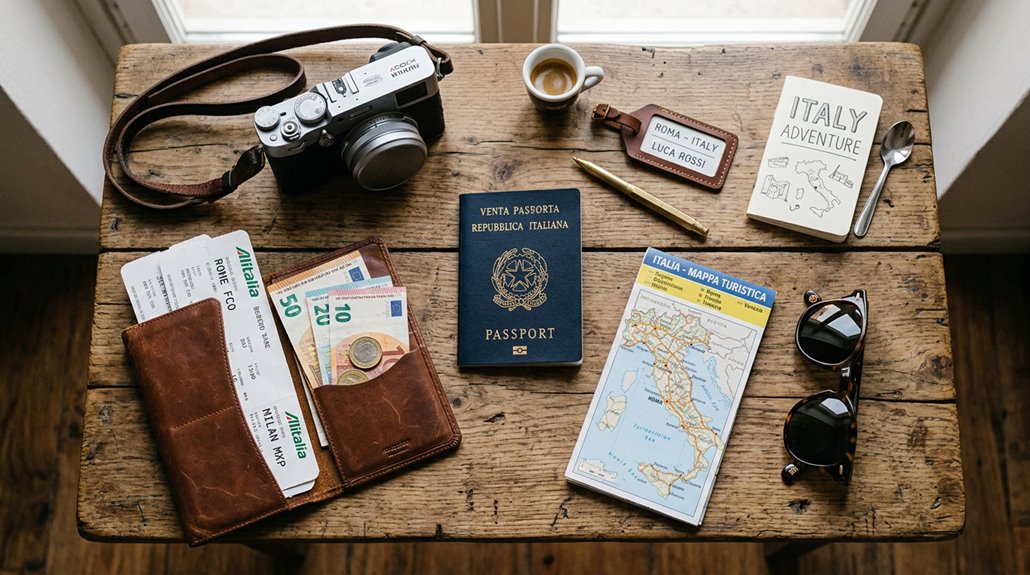
Travelers heading to Italy should carry their valid passports, ensuring at least six months of validity beyond their return. It’s wise to make digital and hard copies of important documents like visas, travel insurance, and itineraries for safety. Checking visa requirements beforehand helps avoid surprises, especially with upcoming ETIAS rules for certain travelers. Organizing these essentials makes your trip smoother, and exploring more tips will help you prepare even better for the Italian adventure ahead.
What Are the Essential Travel Documents You Need for Italy
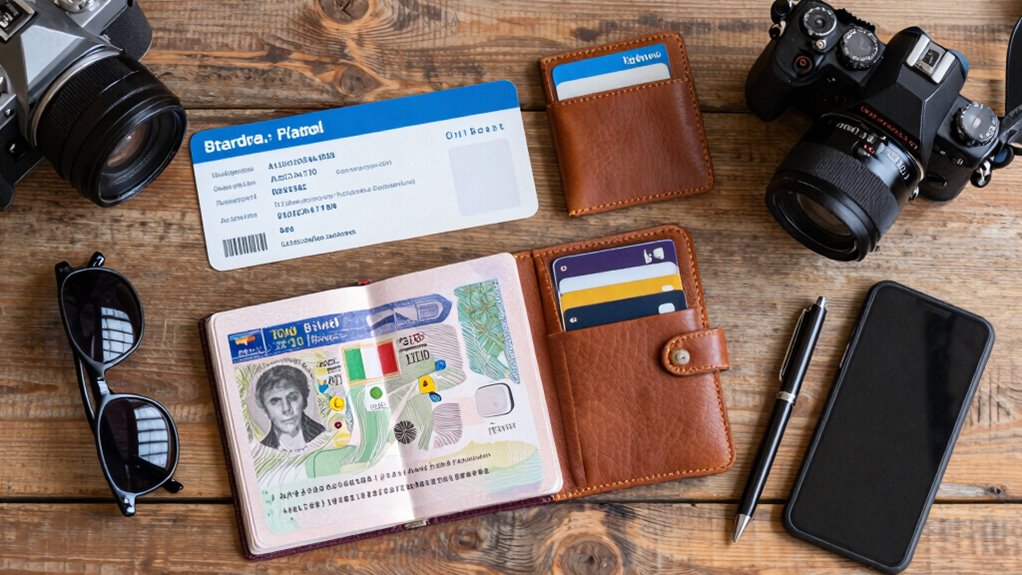
Ever wonder what documents are truly essential when traveling to Italy? A valid passport is a must, ideally with at least six months of validity beyond your planned return date. It should also have enough blank pages for stamps and visas. Depending on your nationality, a visa might be necessary, so checking the latest requirements is wise.
For future trips, an ETIAS authorization will be needed for travelers from visa-exempt countries. Think of it as an electronic travel authorization. Along with your passport and visa or ETIAS, carrying copies of important travel documents, like insurance and itinerary, is helpful. Keep these organized and easily accessible. Preparing all these documents before departure makes airport checks smoother and ensures your journey through Italy begins stress-free.
How to Choose the Right Electronics and Gadgets for Your Trip
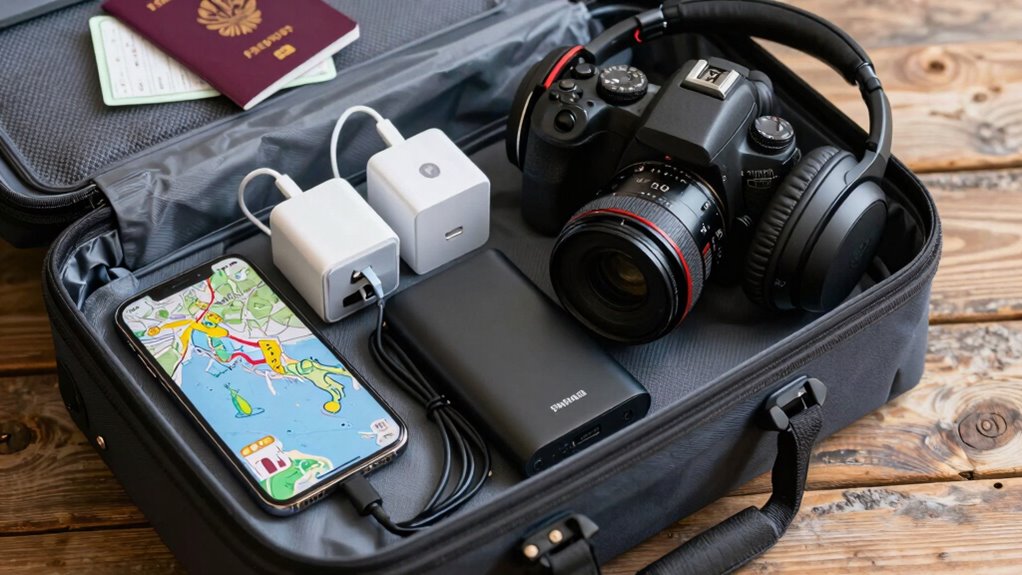
When packing electronics for a trip to Italy, choosing the right gadgets can make all the difference in staying connected, capturing memories, and navigating unfamiliar streets. Essential electronics include a smartphone with its charger, a travel-friendly power adapter compatible with Italy’s type C, F, and L outlets, and a portable power bank to keep devices charged on the go. Travel adapters, especially multi-port ones, simplify packing by reducing the number of adapters needed.
Compact gadgets like a portable charger and a small daypack help keep electronics secure and accessible during tours. It’s wise to carry a backup, such as a travel journal or RFID-protected wallet, for safety. Download maps offline and consider an e-reader or translation app to minimize data usage while exploring Italy’s treasures.
What Clothing and Packing Strategies Make Traveling Easier in Italy
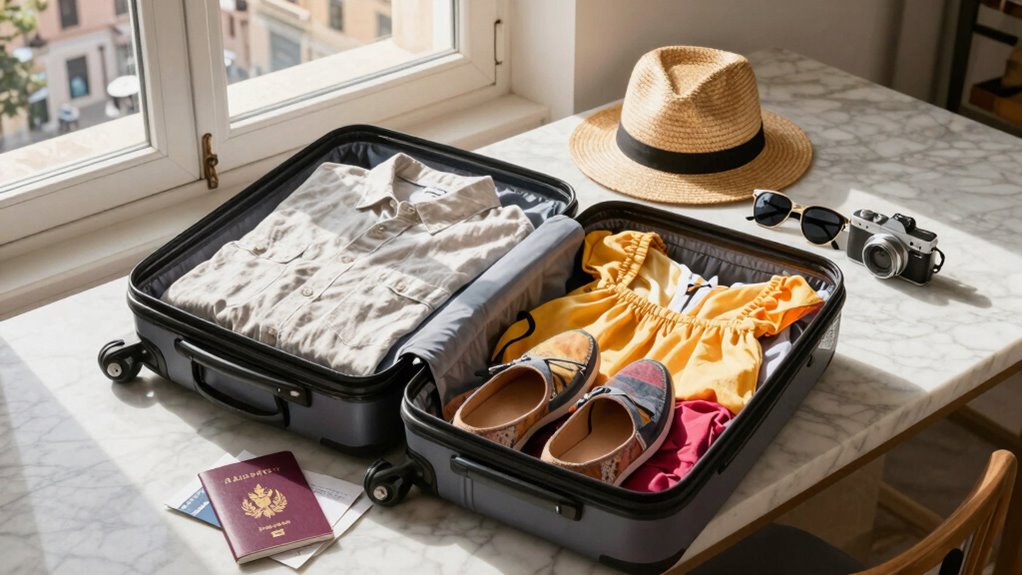
Packing clothing for travel to Italy involves more than just tossing in a few shirts and pants. It’s about choosing versatile pieces that adapt to changing weather and settings. Travelers should favor season-appropriate clothing with layering options, such as light tops, mid layers, and scarves, to stay comfortable throughout the day. Comfortable, walking-ready footwear, like sneakers with arch support and non-slip soles, is essential. Be sure to break them in before the trip to avoid blisters.
To stay organized and secure, using a small crossbody bag or daypack helps comply with security checks at churches and museums, while keeping valuables safe. Remember to leave space for souvenirs and gifts. Pack a light, cohesive wardrobe that makes packing and unpacking easier, all while keeping your passport and important documents close.
Which Personal Care Items Should You Pack for Comfort and Convenience

Choosing the right personal care items for a trip to Italy can make a big difference in comfort and convenience. Travelers should pack essential travel-sized toiletries like shampoo, conditioner, body wash, toothpaste, and deodorant. These small bottles save space and comply with airline carry-on rules.
Medications, including a small first-aid kit, sunscreen, hand sanitizer, and insect repellent, keep travelers healthy during long sightseeing days. Using an RFID-protected bag helps safeguard personal information from digital theft.
To stay organized, store these items in a travel-sized toiletries and personal care bag, keeping critical items easily accessible in a daypack or crossbody bag. This setup ensures comfort and convenience whether exploring historic sites or enjoying a quiet moment in a café.
How to Prepare Currency, Tipping, and Payment Methods for Italy
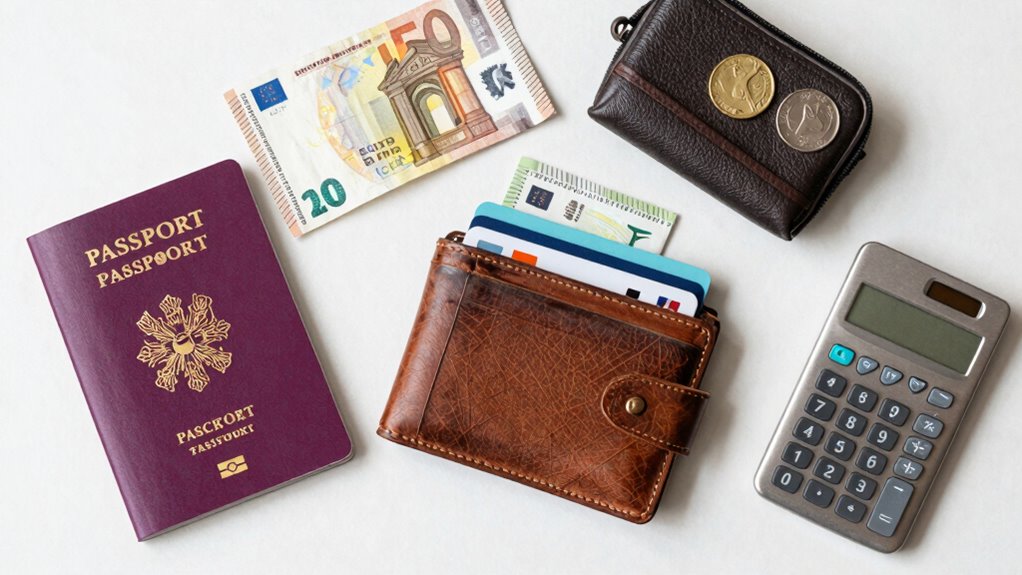
Ever wonder how to handle money smoothly during a trip to Italy? Planning ahead with cash, payment methods, and travel documents can make your experience much easier. Italians mainly use cash, so it’s smart to withdraw euros from ATMs upon arrival rather than exchanging large sums beforehand. Carry euro bills and coins for daily purchases, bathroom visits at train stations, and tipping.
Consider these tips:
- Use debit cards for ATM withdrawals and on-site payments, as traveler’s checks are less accepted.
- Keep digital and hard copies of your passport, visa, and itinerary separate from the originals.
- Stay updated on visa requirements, like potential ETIAS needs, to avoid surprises at borders.
Proper preparation ensures smooth spending and peace of mind during your adventure.
What Safety and Practical Items Will Help You Explore With Confidence
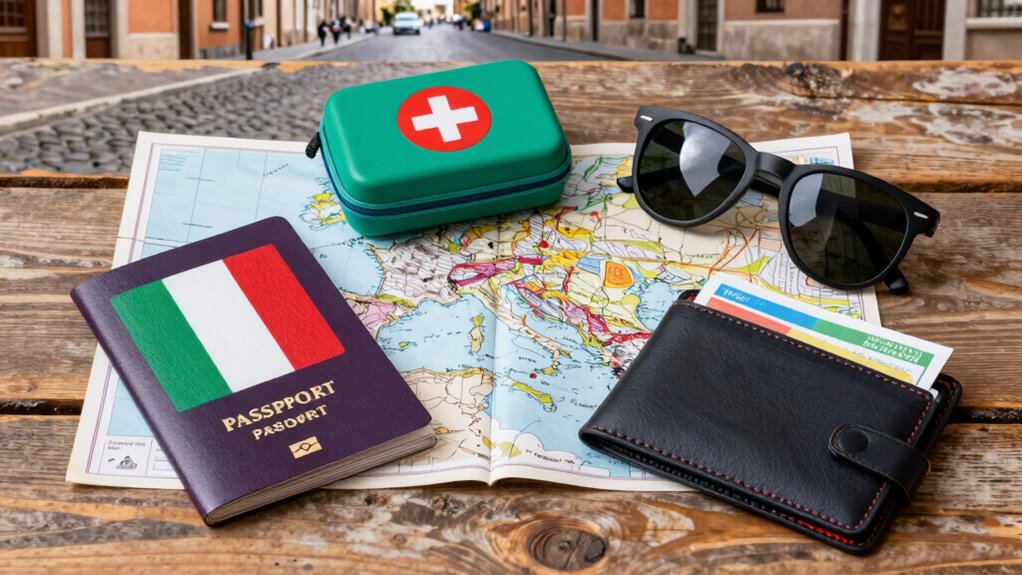
Have you ever wondered how travelers stay confident and safe while exploring the charming streets of Italy? One key is keeping essential travel safety items close at hand. A valid passport, preferably valid for at least six months beyond your trip, is crucial. Carrying copies—both digital and hard—of your passport, travel documents, and insurance can save the day if originals get lost. Using a secure daypack or crossbody bag with anti-theft features helps protect valuables like wallets, phones, and small essentials.
Don’t forget a portable charger and a travel adapter compatible with types C, F, and L plugs, ensuring devices stay powered during long sightseeing days. Packing a small first-aid kit, sunscreen, and hand sanitizer also boosts confidence and safety as you immerse yourself in Italy’s vibrant culture.
How to Organize Your Packing List for Flexibility and Efficiency
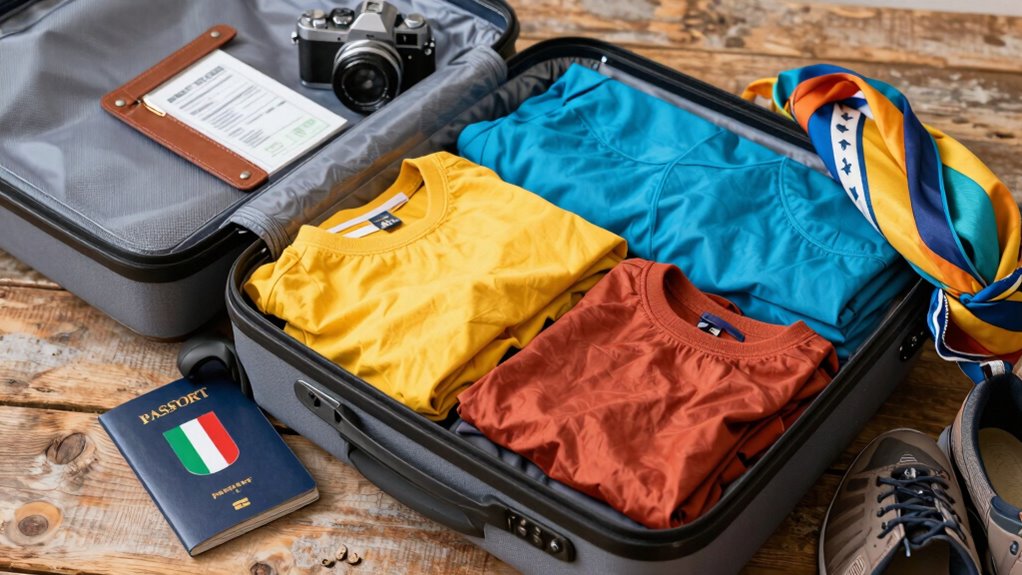
Organizing a packing list for a trip to Italy can make all the difference in experiencing a smooth, enjoyable journey. Proper passport organization is key, keeping copies of travel documentation, like passports, visas, and insurance, both digital and hard copies, ensures quick access if needed.
To boost packing list efficiency, consider using compression packing cubes to separate outfits and save space, leaving room for souvenirs.
Some essential tips include packing versatile clothing items that serve multiple purposes and using a lightweight daypack with anti-theft features for sightseeing.
Bringing travel adapters compatible with types C, F, and L plugs is also recommended.
Streamlining your packing helps you stay flexible and prepared, making your Italian adventure truly memorable.
What Extra Tips Ensure a Smooth and Enjoyable Italy Adventure
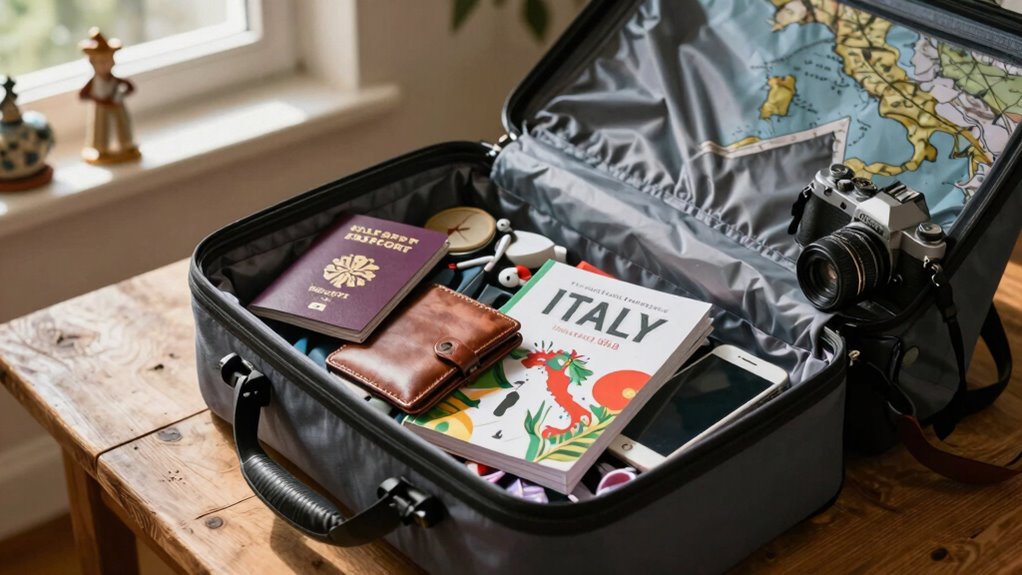
What small but smart steps can make a big difference in ensuring an enjoyable trip to Italy? Carrying a valid passport for at least six months beyond the trip, along with copies of important documents like visas, insurance, and itinerary, helps prevent last-minute issues. Using a secure daypack with anti-theft features keeps essentials like wallet, phone, and sunscreen safe while sightseeing.
Packing light with travel-sized toiletries, refillable bottles, and medication leaves room for unique Italian skincare finds. Bringing a universal power adapter and portable charger ensures devices stay powered during busy days. Additionally, considering travel insurance and awareness of ETIAS can save stress. To stay extra secure, travelers might use trackers like AirTags for luggage and passports.
| Tip | Benefit |
|---|---|
| Carry copies of documents | Easy access if original documents are lost or stolen |
| Use anti-theft bags | Keeps valuables safe from pickpockets |
| Pack essentials lightly | Easier to carry and less stress |
| Bring power adapters and trackers | Keeps devices charged and belongings secure |