As an Amazon Associate, this website earns from qualifying purchases.
Capturing China’s urban and rural contrast involves thoughtful composition, timing, and storytelling. Photographers can showcase cityscapes with towering buildings and vibrant street scenes using wide-angle lenses, while rural scenes benefit from dawn light and open skies. Juxtapose modern architecture with traditional villages, highlighting differences through selective color or post-processing. Night shots of city lights and rural dawn scenes reveal mood and atmosphere. Foundational techniques include emphasizing place with horizon lines and scale, and balancing scenes with the right equipment. Keep exploring these ideas to uncover deeper stories behind China’s changing landscapes.
1. Understanding the Urban-Rural Divide in Chinese Photography
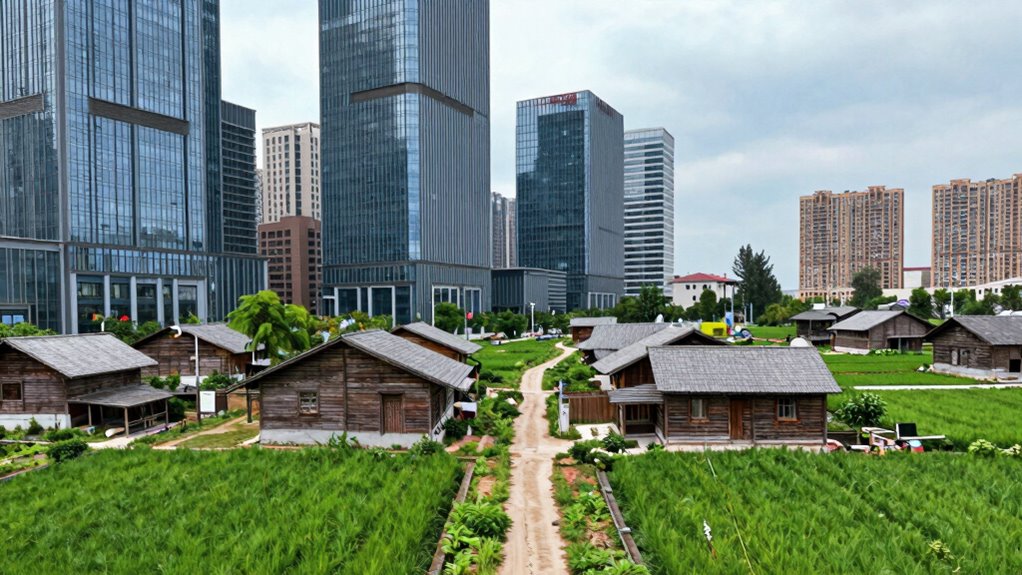
Have you ever wondered how photographers capture the striking differences between city life and rural landscapes in China? This is a core theme in China contemporary photography, revealing the urban-rural divide through powerful images. Street photography plays a key role, as photographers like Yan Jiacheng document everyday scenes near Guangzhou, showing contrasts between high-rise windows and dark rural outskirts. These photos highlight the lively urban nightlife and the quieter rural outskirts, emphasizing social change and migration.
Using online platforms like Weibo, photographers build communities that appreciate these stories, shaping how subjects are engaged. By blending street activity with fringe areas, they explore post-modern uniformity and the fringes of modern life. This approach helps viewers understand the complex layers of China’s rapidly evolving landscape.
2. How to Capture Contrasting Cityscapes and Countryside Landscapes
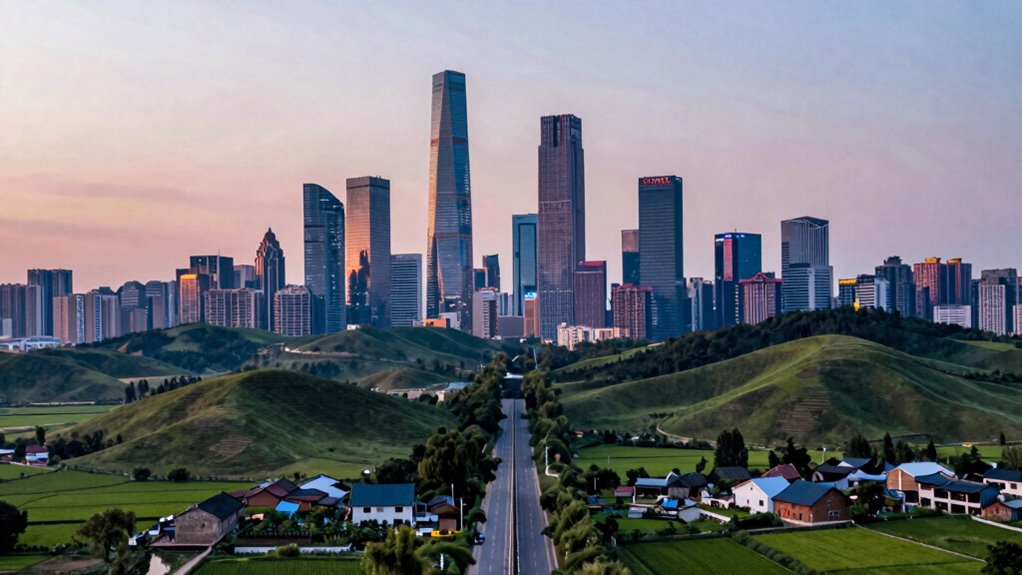
Capturing the stark contrast between cityscapes and countryside landscapes can be both exciting and rewarding for photographers.
Using wide-angle photography helps showcase the grand scale of urban environments, with their towering skylines, while including foreground elements from rural areas emphasizes the difference.
Juxtaposing dense urban features, like busy streets, neon signs, and traffic, with open rural skies and fields creates a strong urban-rural contrast.
Paying attention to color and light differences enhances this effect; city reflections during golden hour contrast beautifully with the cool tones of dawn or blue hour rural scenes.
Incorporating people and activity, such as city crowds versus solitary farmers, further highlights lifestyle differences.
Thoughtful post-processing, like selective color or sky replacement, can help maintain the distinct atmospheres of each setting while telling a cohesive story.
3. Choosing the Right Equipment for Urban and Rural Scenes
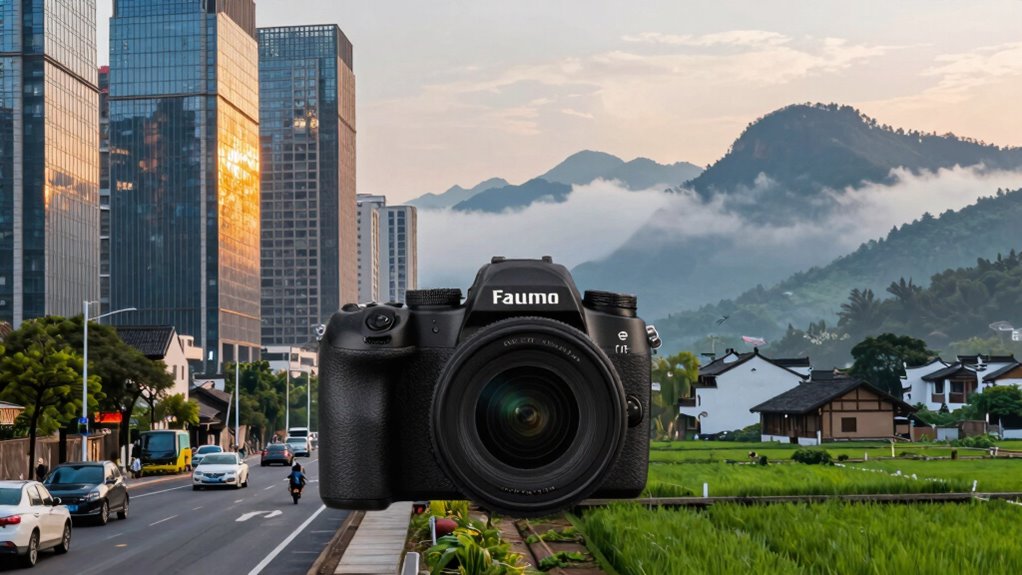
Choosing the right equipment can make a big difference when capturing the diverse scenes found in both urban and rural settings. For urban photography gear, lightweight mirrorless bodies paired with compact primes like 35mm or 50mm lenses for street shots are ideal. They’re easy to carry and produce sharp images. A versatile zoom, such as 24-70mm or 24-105mm, works well as a main lens, allowing photographers to adapt from tight street scenes to wider cityscapes effortlessly.
In rural areas, a wide-angle lens around 24mm helps capture vast skies and open landscapes, emphasizing the relationship between subject and environment.
When considering city versus rural photography equipment, balance is key: choose lenses that allow close framing for details or background compression for scenic shots, depending on your scene.
4. Tips for Shooting Nighttime Urban Skylines and Rural Dawn Mornings
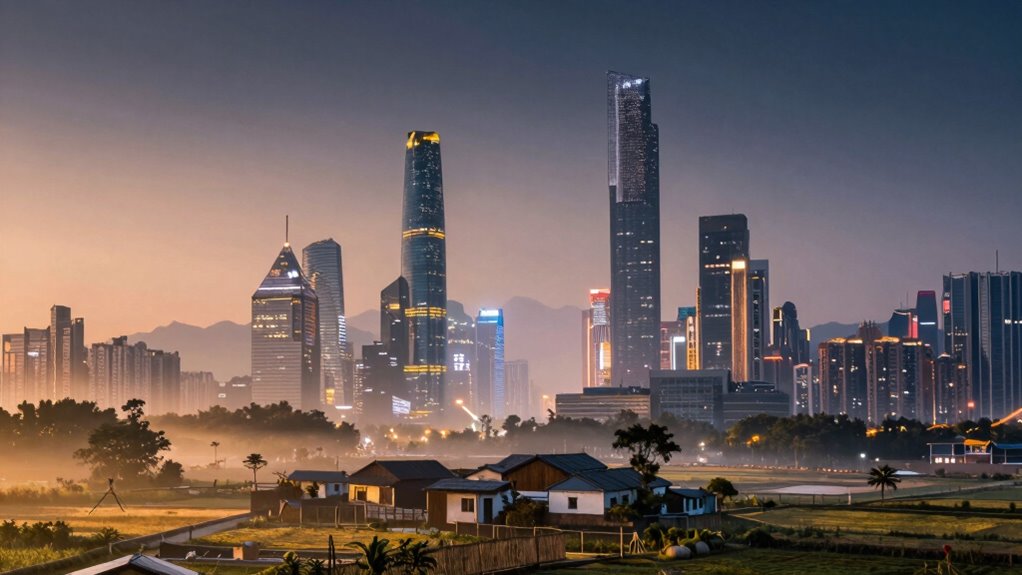
What makes nighttime urban skylines and rural dawn mornings so captivating is the way light, color, and composition come together in each scene. For urban night photography, a tripod is essential to keep the camera steady during long exposures, which range from 2 to 6 seconds to catch light trails and city lights. Using wide or standard prime lenses, around 24–50mm, helps capture the scene with clarity.
In rural dawn photography, positioning the horizon on the upper third emphasizes the vast sky. Small apertures, such as f/8–f/16, create a sharp focus from foreground to background. Incorporating leading lines from streetlights or roads guides viewers’ eyes, and adjusting white balance during post-processing keeps natural hues vibrant. Patience and understanding how lighting changes are key to mastering these photography techniques.
5. Techniques for Juxtaposing Modern Architecture With Traditional Villages
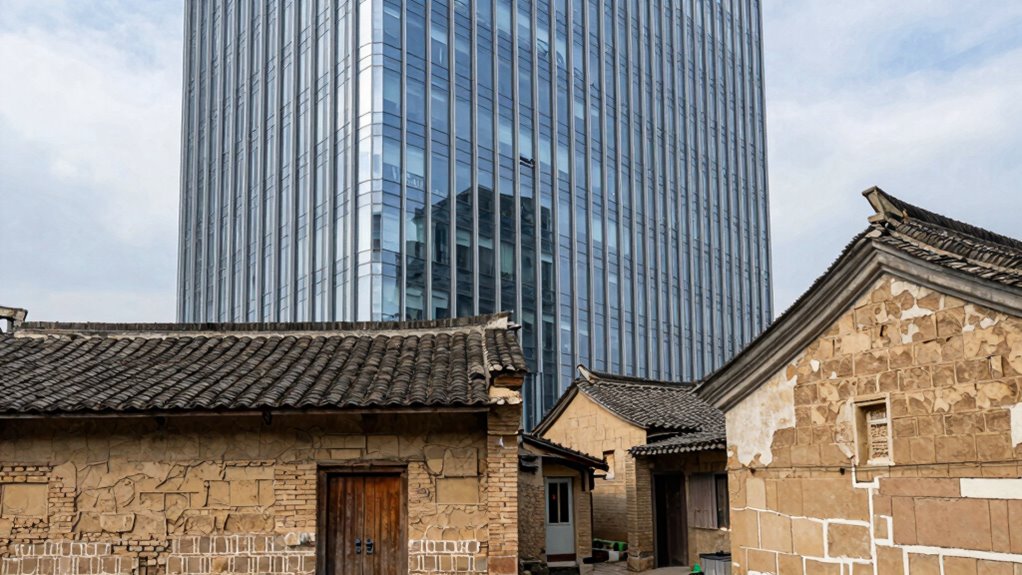
When aiming to show the striking differences between modern buildings and traditional villages, composition plays a key role. In China, capturing the urban-rural contrast requires thoughtful photography techniques. Using wide-angle or fisheye lenses helps place a towering skyscraper beside a quaint village, emphasizing scale and disparity. Aligning backgrounds of contemporary architecture and Hui-style houses along the same horizon line creates a visual balance that highlights the contrast. Shooting during blue hour or golden hour enhances mood, blending warm city lights with natural village illumination.
Including people—such as city commuters versus villagers at work—adds a social layer to the contrast. Post-processing techniques like selective color or sky replacement can further emphasize the separation or harmony between these two worlds, making the urban-rural contrast even more vivid.
6. Incorporating Local Culture and Textures to Highlight Contrast
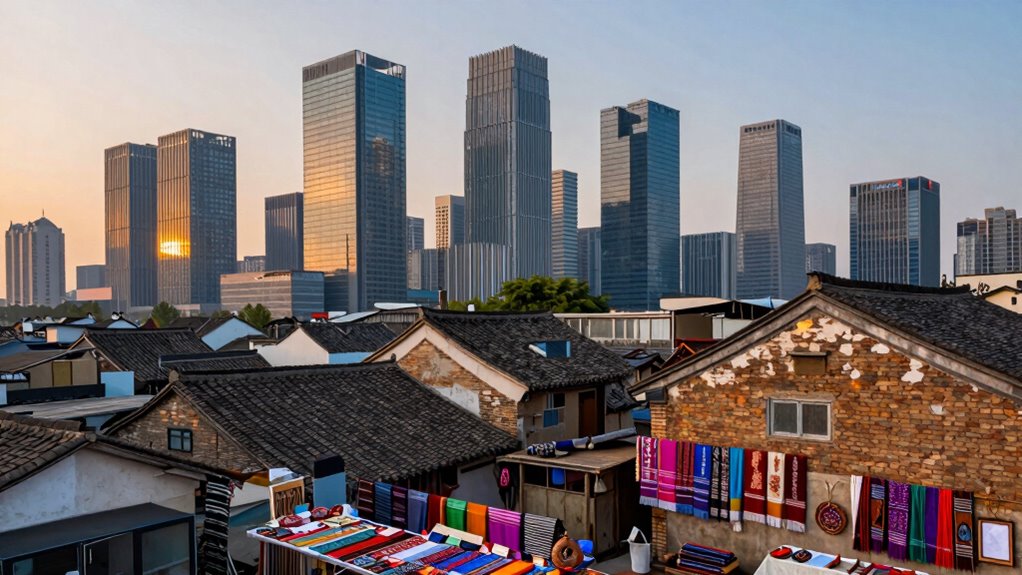
Have you ever wondered how the textures and details of everyday life can tell a story about a place? In photography, highlighting local culture through textures creates a vivid contrast between urban and rural areas. For example, capturing the bustling street market with its vibrant produce baskets, illuminated signs, and gritty pavement shows the tactile richness of city life.
7. Using Composition and Scale to Emphasize Difference Between City and Countryside
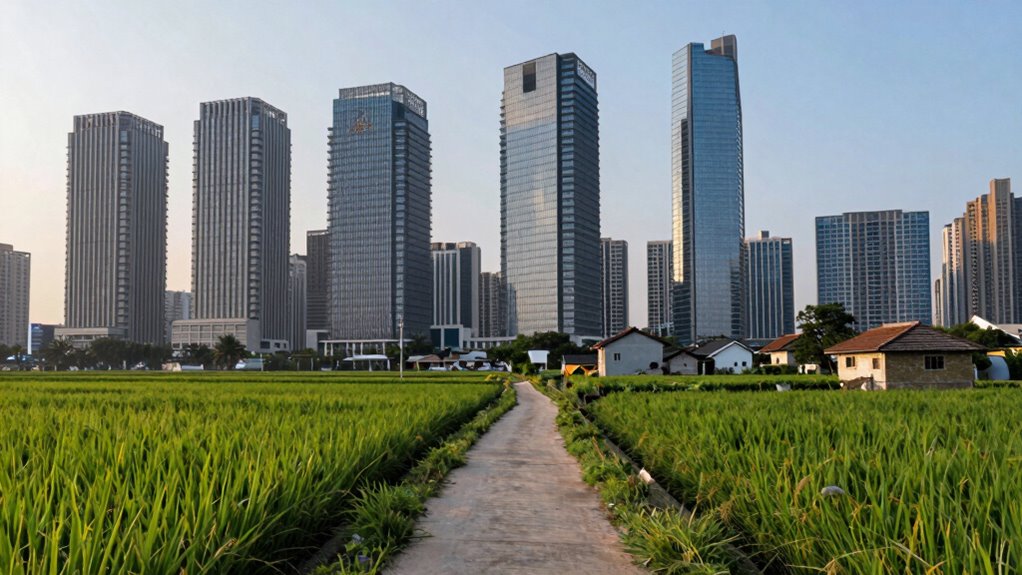
Images often tell stories through their composition, especially when capturing the contrast between city and countryside. To highlight this, photographers can use scale creatively. For example, placing towering urban skyscrapers or bright billboards in the background makes rural elements like fields, livestock, or forests stand out in the foreground. Wide-angle shots exaggerate urban density, making streets and high-rises seem massive compared to open rural spaces.
Framing people with the environment reveals activity differences—busy cities versus quiet farms. Positioning the horizon high in rural scenes against city silhouettes emphasizes spatial separation. Additionally, combining wide urban panoramas with close rural details creates a striking contrast of scale, illustrating the modern versus agrarian China beautifully.
8. Creative Approaches to Show Transition and Change Over Time
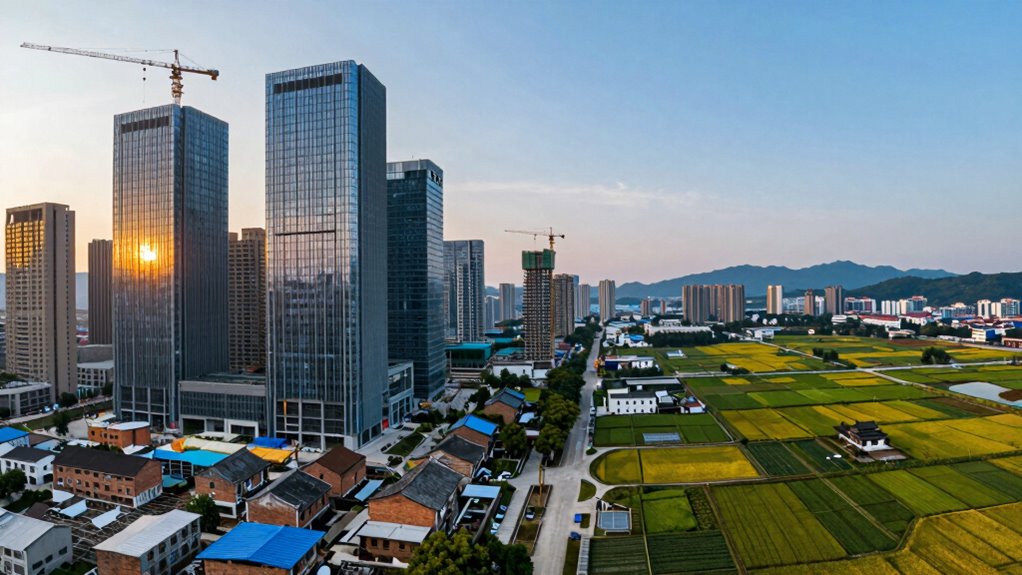
Curious about how to visually tell the story of China’s rapid transformation over time? Creative approaches can vividly illustrate the urban-rural shift by combining images that show change and continuity. For instance, composite imagery juxtaposing bustling city centers with peaceful rural outskirts can highlight the shift from traditional to modern life.
Documenting mobility and labor shifts, such as migrant workers alongside landmarks, reveals the evolving relationship between urban and rural areas. Large-scale, metaphorical composites inspired by artists like Gursky and Wolf can emphasize post-modern uniformity and cultural shifts.
Additionally, tracking social media reactions offers insight into public perception of these changes. By integrating historical context with contemporary scenes, photographers craft compelling narratives that showcase China’s layered development across eras.
9. Post-Processing Tips to Enhance the Visual Contrast in Your Photos
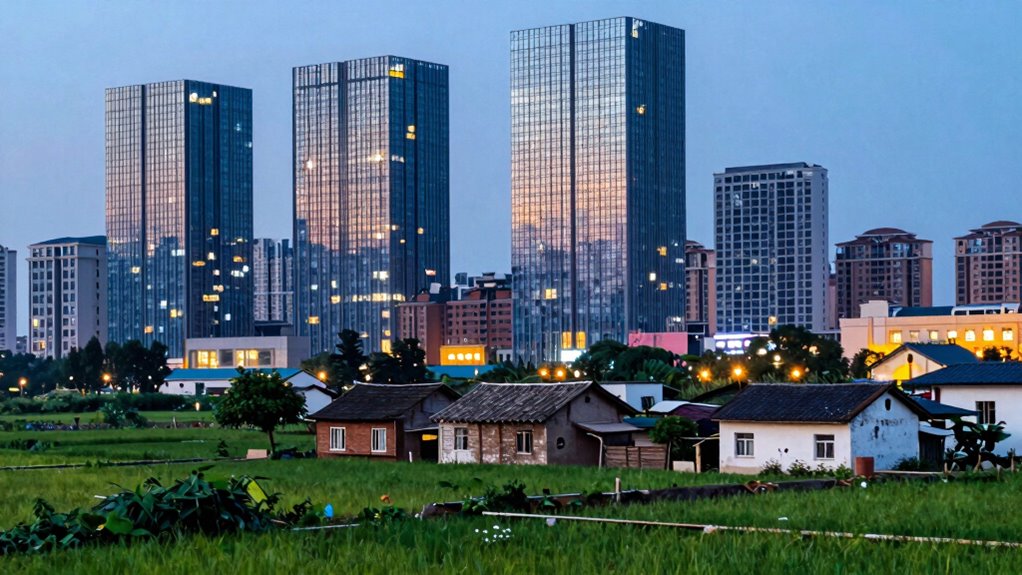
Ever wondered how to make the contrast between bustling city streets and peaceful rural landscapes truly pop in your photos? Post-processing offers powerful tools to highlight this rural-urban contrast. For instance, sky replacement can emphasize blue skies and ensure the horizon lines are perfectly positioned along the upper third.
Using complementary colors—like yellow fields with vivid blue skies—can enhance visual separation. Boost the blue tones and contrast in rural scenes to emphasize the “big sky,” creating a sense of openness against dense cityscapes. Applying selective color adjustments helps keep urban subjects crisp while giving rural elements a softer, muted look.
To maintain consistency in a rural-urban series, keep your editing ratios—contrast, exposure, and color balance—uniform across images. This approach makes your photos more compelling and cohesive.
10. Sharing Your Work and Telling Stories of China’s Urban and Rural Life
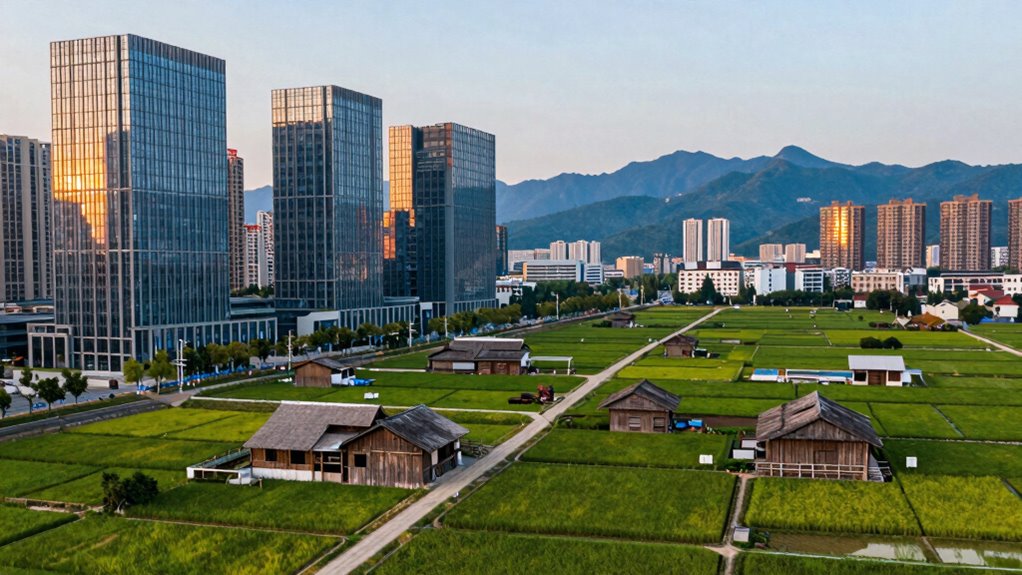
How can photographers effectively share their images and tell meaningful stories about China’s diverse urban and rural life? Platforms like Weibo are invaluable for reaching large audiences and showcasing urban-rural contrast. Yan Jiacheng’s Night in the Suburbs project, for example, uses striking photos of city and countryside scenes, revealing social and spatial disparities. Sharing these stories online allows viewers to connect emotionally with everyday life.
Post-processing techniques, such as composites and image manipulation, help craft narratives that highlight themes like urban uniformity or rural beauty. Additionally, emphasizing place—big skies, horizon lines, and color relationships—can deepen the storytelling. By combining thoughtful images, strategic sharing, and subtle post-processing, photographers can effectively illustrate China’s changing landscape, making their work both visually compelling and socially meaningful.