As an Amazon Associate, this website earns from qualifying purchases.
Brittany offers a perfect mix of coastal beauty and rich Celtic heritage, making it ideal for a week-long adventure. Visitors can explore ancient towns like Saint-Malo and Dinan, walk along the Pink Granite Coast with its striking rock formations, or hike the scenic GR34 trail. The region’s festivals, bilingual signs, and symbols reflect lively Breton traditions. From delicious seafood to historic Megalithic sites, Brittany’s charm unfolds step by step—keep exploring to discover even more surprises in this enthralling region.
Discover the Charm of Brittany’s Ancient Coastal Cities
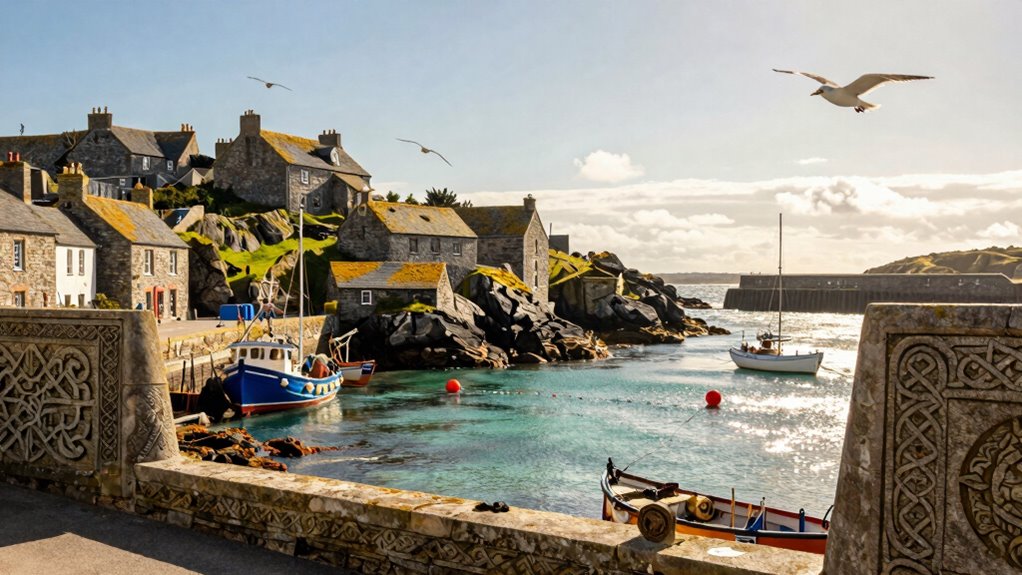
Have you ever wondered what makes Brittany’s ancient coastal cities so special? The region boasts charming towns like Saint-Malo and Dinan, each with unique stories to tell. Saint-Malo, a fortified port on a granite islet, once housed privateers, bold sailors who roamed the seas. Visitors can walk along medieval ramparts, enjoying spectacular views of the Brittany coastline.
Meanwhile, Dinan sits along the River Rance, offering a picturesque scene of cobbled streets, half-timbered houses, and a medieval ambiance rooted in history. These cities reflect Breton identity through Celtic influences, bilingual signs, and lively festivals celebrating maritime heritage. Together, they highlight the region’s rich history, blending seaside grandeur with quaint riverside charm, making the Brittany coast a captivating destination for explorers.
Explore the Spectacular Pink Granite Coast and Its Rock Formations
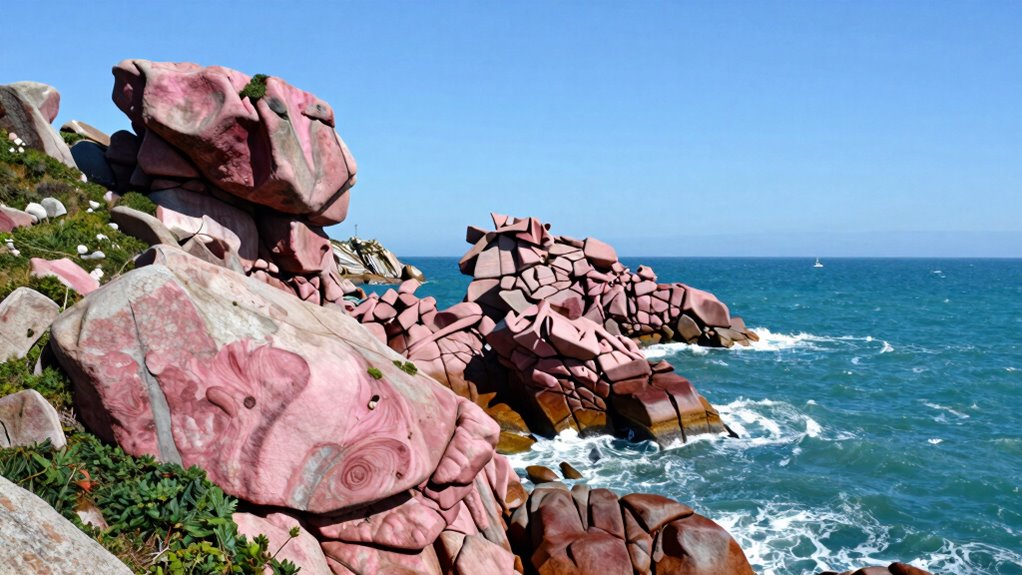
The rugged coastline of Brittany offers more than just charming towns and historic sites; it reveals a spectacular display of natural artistry along the Pink Granite Coast. This stretch of the Brittany coast is famous for its unique rock formations, each with whimsical names that spark imagination.
- The Overturned Bottle, shaped like a giant glass, invites curiosity.
- Napoleon’s Hat resembles a military cap perched on the rocks.
- Ram’s Head, with its twisted profile, seems almost alive.
- Mushroom rocks look like natural sculptures, adding to the coast’s charm.
Near Ploumanac’h and Trébeurden, these formations create dramatic coastal views, captivating visitors. Castel Meur, wedged between massive boulders, and Le Castel’s anthropomorphic rock add character and wonder. The Pink Granite Coast’s rock formations are truly a highlight of Brittany’s coast, blending nature’s artistry with coastal magic.
Experience Breton Culture Through Festivals, Language, and Traditions
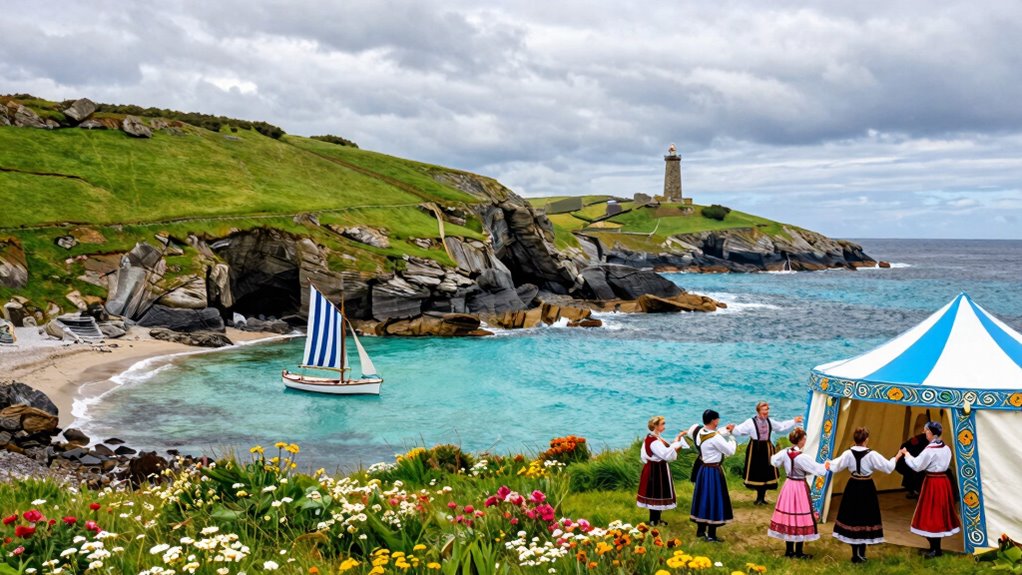
What makes Breton culture so captivating is its rich blend of traditions, language, and vibrant festivals that have been preserved for generations. Festivals like the lively Fest-noz celebrate traditional music and dance, offering visitors a chance to experience authentic Breton joy.
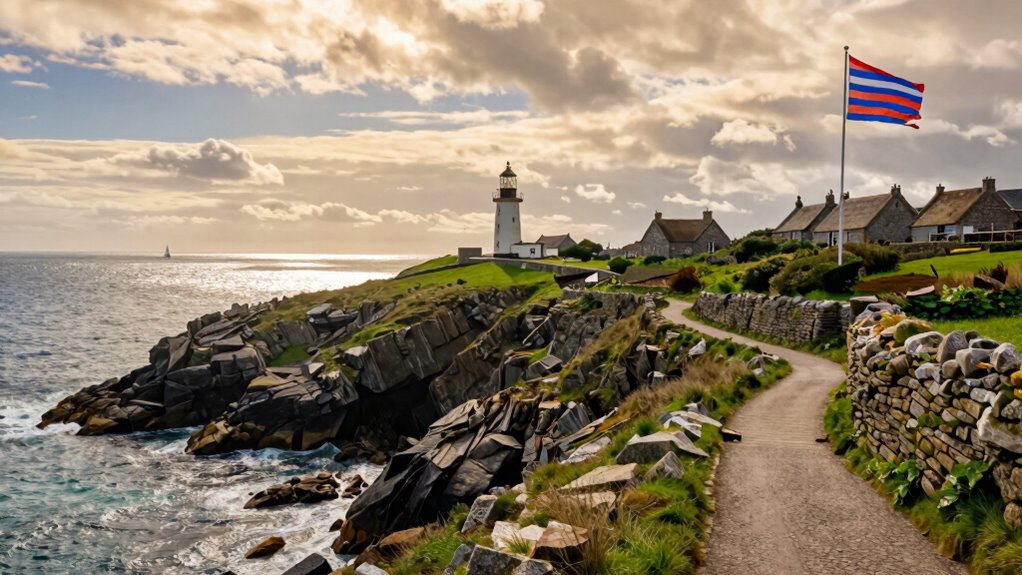
The region’s cultural pride is reflected in bilingual signage, where signs display both Breton and French, reinforcing regional identity. Breton culture also emphasizes its Celtic roots through symbols like the Gwenn-ha-du flag and language use, keeping the heritage alive.
Historic towns such as Saint-Malo and Dinan showcase medieval architecture, adding to the cultural tapestry. These elements—festivals, language, and symbols—create a warm, inviting atmosphere that invites visitors to connect deeply with Brittany’s unique Celtic spirit.
Savor the Region’s Delicious Cuisine: Seafood, Galettes, and More
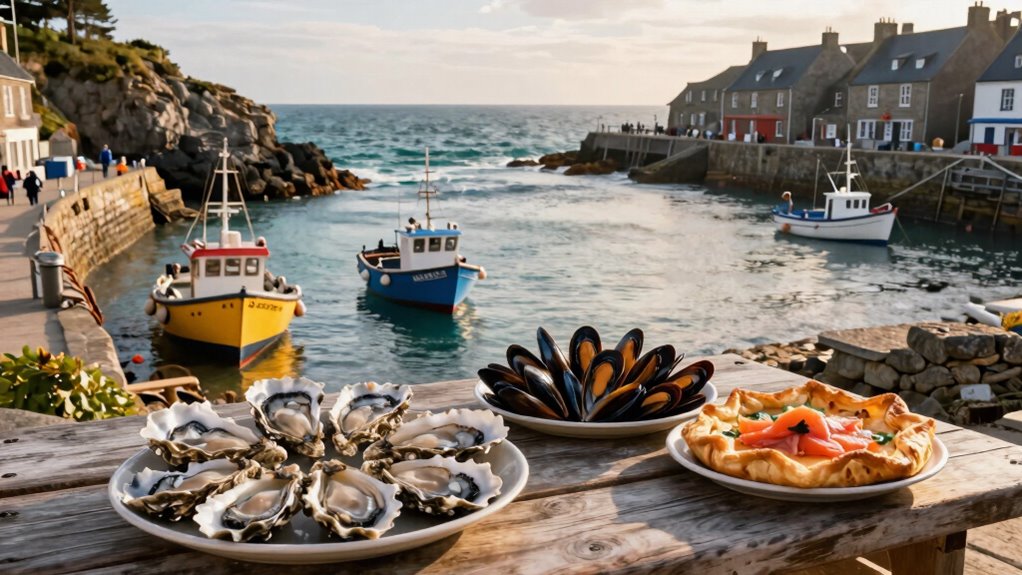
Brittany’s culinary scene is as vibrant and inviting as its lively festivals and colorful traditions. The region offers a delightful array of flavors, especially from its coastal towns. Visitors can indulge in oysters, renowned as France’s oyster capital in Cancale, known for their freshness straight from Breton shores. Crêperies serve both savory galettes and sweet crêpes, often enjoyed with local apple cider.
The taste of kouign-amann, a rich buttered pastry, and cotriade, a hearty fish stew, add to the region’s rich flavors. To complete the experience, sip calvados, an apple brandy, and cider from nearby orchards. These beverages perfectly complement the seafood platter, plateau de fruits de mer, showcasing oysters, mussels, and shrimp, capturing Brittany’s authentic coastal cuisine.
Uncover Top Hiking Routes Along Brittany’s Dramatic Coastline
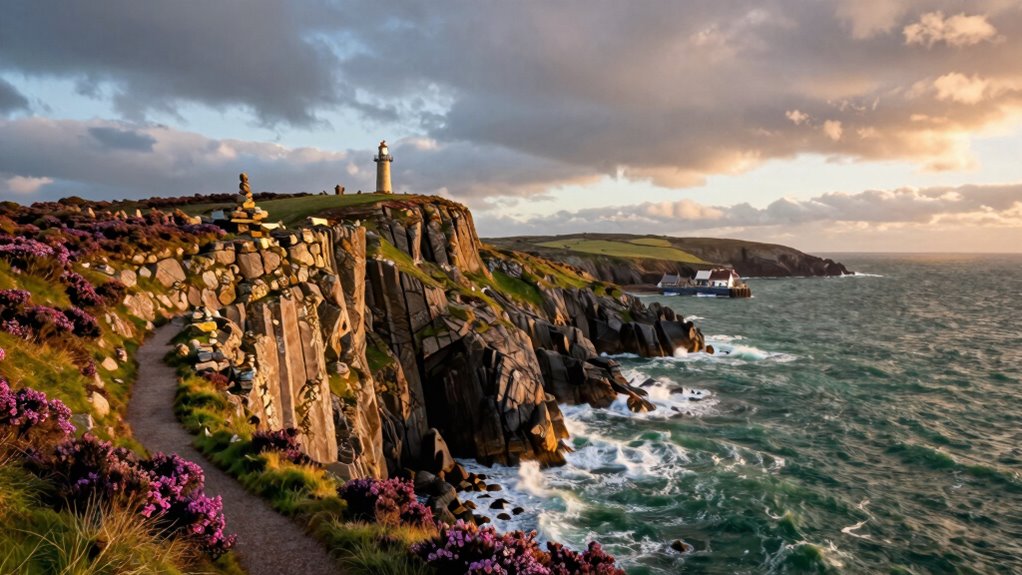
Have you ever wondered where breathtaking views meet a walk through history? Brittany’s coast offers some of the most stunning hiking routes, with the famous GR34 trail leading adventurers from Mont-Saint-Michel to Roscoff. Along this 624 km path, hikers encounter dramatic cliffs, sandy beaches, and charming fishing villages.
The Pink Granite Coast, between Perros-Guirec and Ploumanac’h, is renowned for its striking rock formations and pink-hued stones that seem almost out of a fairy tale. Further along, the Emerald Coast features spectacular viewpoints from Pointe du Grouin to Pointe du Meinga, where rocks like Castel Meur and Le Castel’s anthropomorphic shapes create mesmerizing scenery.
Tides influence access to some areas, so timing is key when exploring islands and sea routes.
Visit Historic Sites and Megalithic Monuments in Brittany
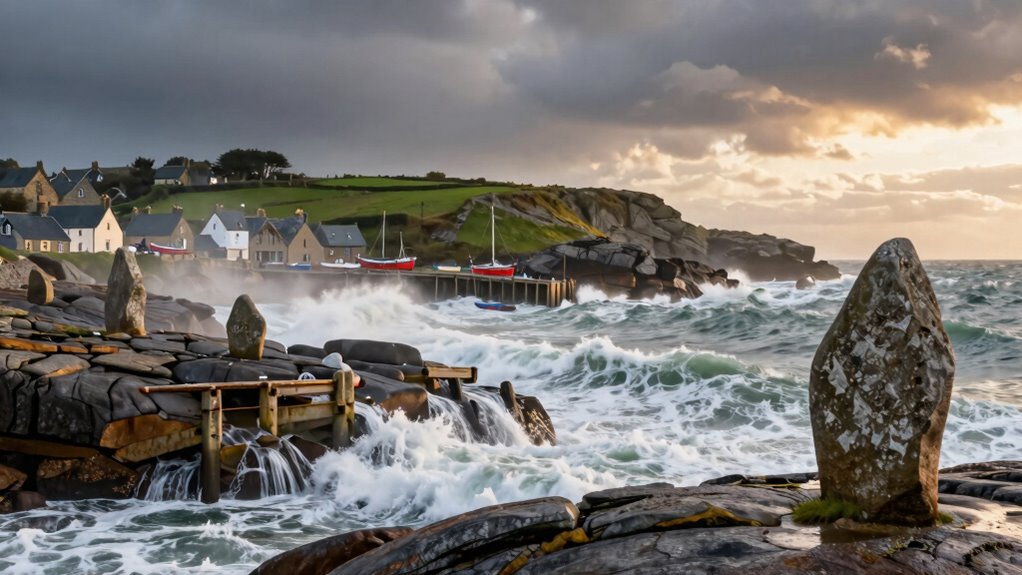
A visit to Brittany wouldn’t be complete without exploring its rich tapestry of historic sites and ancient monuments. The region boasts remarkable megalithic sites, such as Carnac’s standing stones, which have stood for thousands of years, evoking awe and curiosity. Medieval towns like Dinan and Saint-Malo invite visitors to stroll cobbled streets, admire half-timbered façades, and explore fortified harbors full of maritime history.
Coastal fortifications like Château de Guildo, Fort La Latte, and Château du Taureau reveal Brittany’s strategic defenses through stunning medieval architecture.
- Discover the mysterious megalithic sites that echo prehistoric life.
- Wander through medieval towns filled with history and charm.
- Experience dramatic coastal scenery shaped by ancient defenses.
- Walk along the GR34 coastal path connecting these historic treasures.
Plan Your Travel: Getting to Brittany and Navigating the Region
How do travelers typically reach Brittany and get around once they arrive? Many start their journey from Paris or the UK, with options like the TGV high-speed train making travel quick and comfortable. It takes about 1 hour 25 minutes from Paris to Rennes, or around 2 hours 20 minutes to Saint-Malo.
Once in Brittany, train travel is a convenient way to explore, especially along the scenic coastal itinerary. The TER BreizhGo network offers passes, such as 2-day or 7-day tickets, for unlimited regional train travel, making it easy to hop between towns.
For more flexibility, renting a car is ideal, especially for reaching remote spots like the Pink Granite Coast. Additionally, seasonal ferries from Portsmouth to Saint-Malo expand access for those arriving by sea.
Practical Tips for a Memorable Week in Brittany
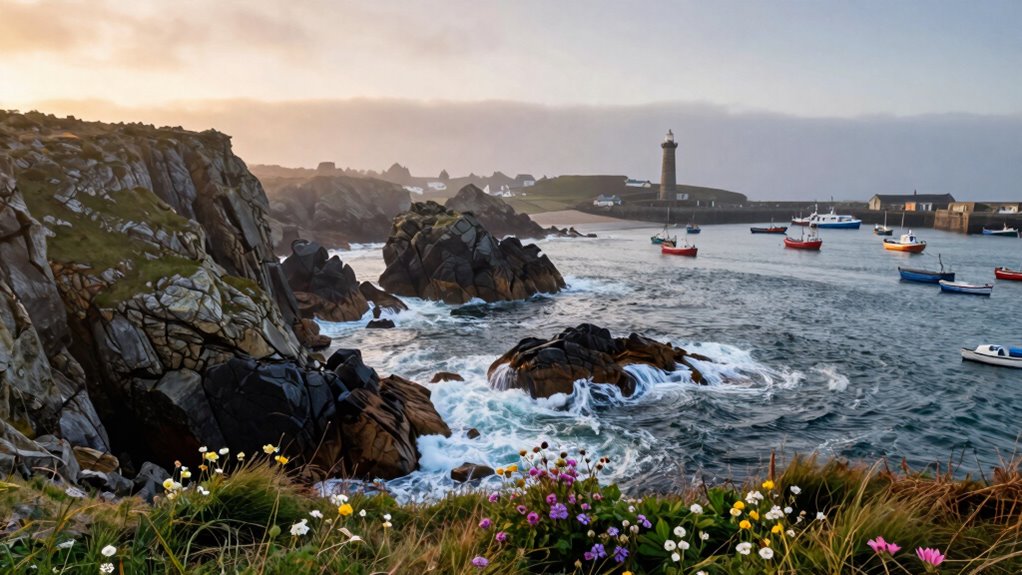
What makes a week in Brittany truly memorable often comes down to a mix of smart planning and embracing the region’s natural rhythm. Coastal hiking along the GR34 offers breathtaking views of cliffs, beaches, and fishing villages, but tides significantly influence access to islands and beaches. To maximize your experience, check tide tables daily to time your visits. Exploring Breton culture enhances the trip—sampling crêpes, enjoying fest-noz dances, or browsing bilingual markets.
Here are practical tips:
- Plan coastal hikes during low tide for full access to beaches and tidal pools.
- Visit key highlights like Saint-Malo and Dinan early in the week to avoid crowds.
- Dress in layers to adapt to changing weather and sea breezes.
- Immerse yourself in local cuisine and traditions for a truly authentic experience.