As an Amazon Associate, this website earns from qualifying purchases.
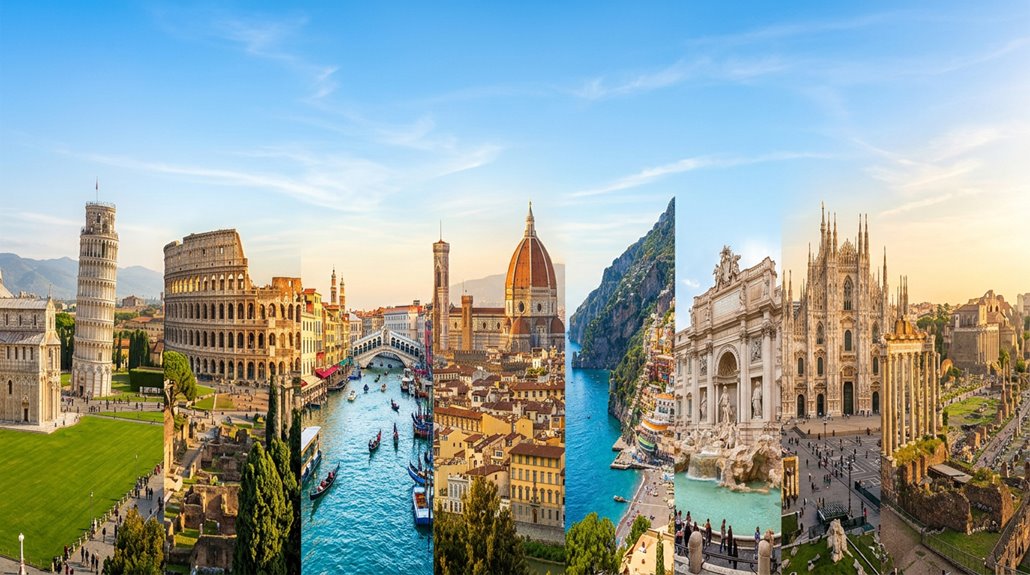
Italy’s iconic landmarks include the Colosseum’s ancient gladiator battles and the Pantheon’s stunning dome with its eye-shaped oculus. Visitors should also toss a coin into the Trevi Fountain for good luck and admire Pisa’s leaning tower’s unique architecture. The Sistine Chapel amazes with Michelangelo’s masterpieces, while Venice’s Rialto Bridge and Dorsoduro district charm travelers. Florence’s Uffizi Gallery and Michelangelo’s David showcase Renaissance art’s glory. Exploring these highlights offers a rich taste of Italy’s history, culture, and art—just the beginning of what awaits.
1. Why the Colosseum Is a Must-See Icon of Ancient Rome
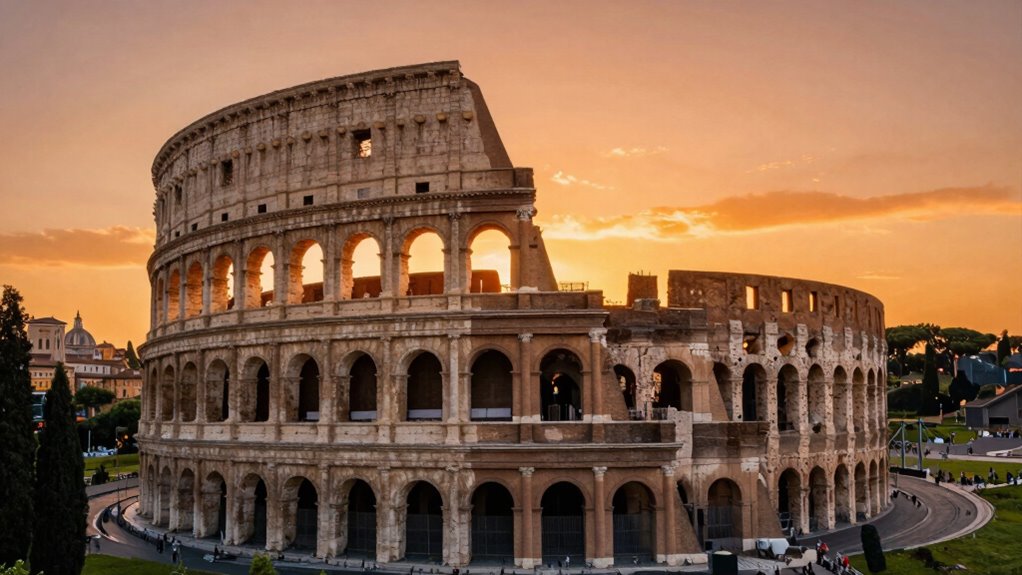
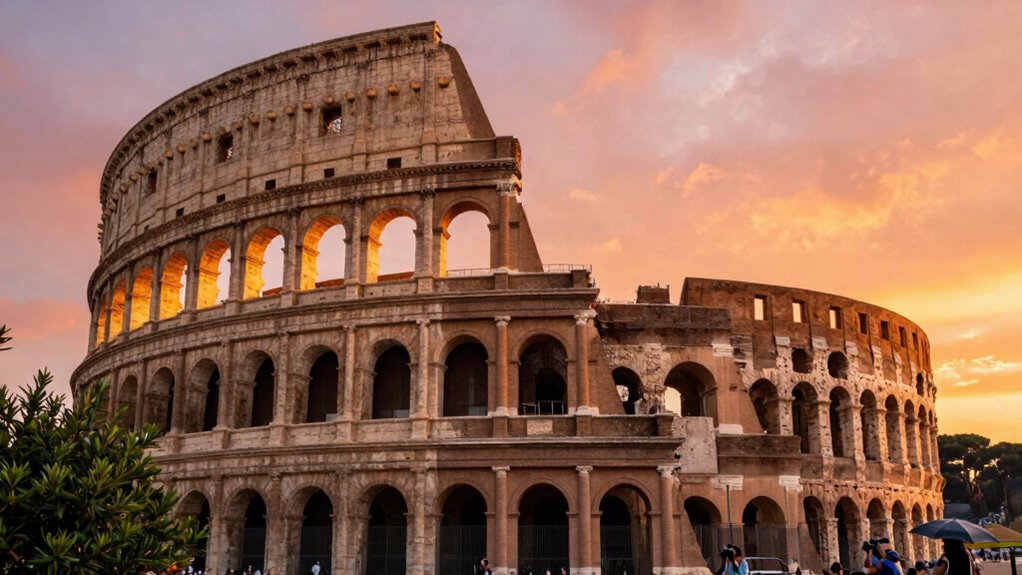
Ever wonder why the Colosseum remains one of the most recognizable symbols of ancient Rome? This iconic structure, built between 70 and 80 AD under Emperor Vespasian, is a must-see Rome landmark. It originally hosted thrilling gladiatorial battles and wild animal shows, showcasing Roman engineering and entertainment at its finest.
The construction involved tens of thousands of workers, including Jewish slaves, highlighting the immense effort behind its creation. Over time, the Colosseum was even used as a quarry for building materials, but today it stands as a powerful reminder of Rome’s grandeur. Its massive stone arches and intricate design attract millions of visitors yearly, making it a central piece of Rome’s ancient core.
The Colosseum’s lasting presence helps us understand the culture and history of ancient Rome.
2. Exploring the Pantheon’s Architectural Marvels and History
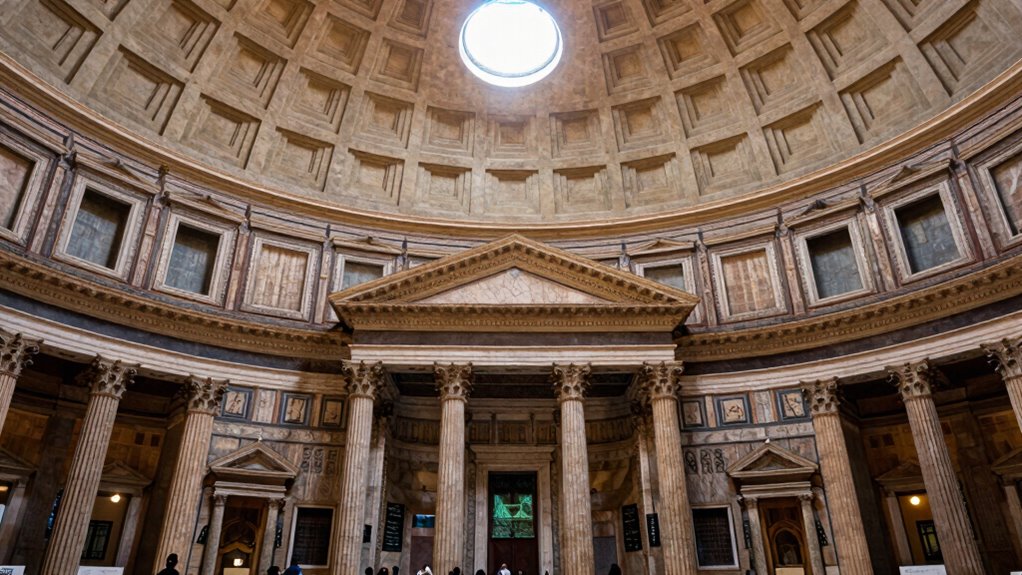
What makes the Pantheon stand out among Rome’s ancient landmarks is its incredible blend of architectural innovation and rich history. This iconic building features a massive domed rotunda, which was a groundbreaking design in ancient architecture. The oculus, a large circular opening at the center of the dome, is one of its most fascinating features. It allows natural light to flood the interior and even lets rain in, but the floor has a clever drainage system.
Originally built around 27 BCE and rebuilt by Emperor Hadrian, the Pantheon’s preserved form showcases Roman engineering brilliance. Its name, meaning “all gods,” hints at its original purpose as a temple. Today, it still functions as a church and remains one of Rome’s most visited ancient monuments.
3. The Trevi Fountain: Legend, Beauty, and Coin Tossing Traditions
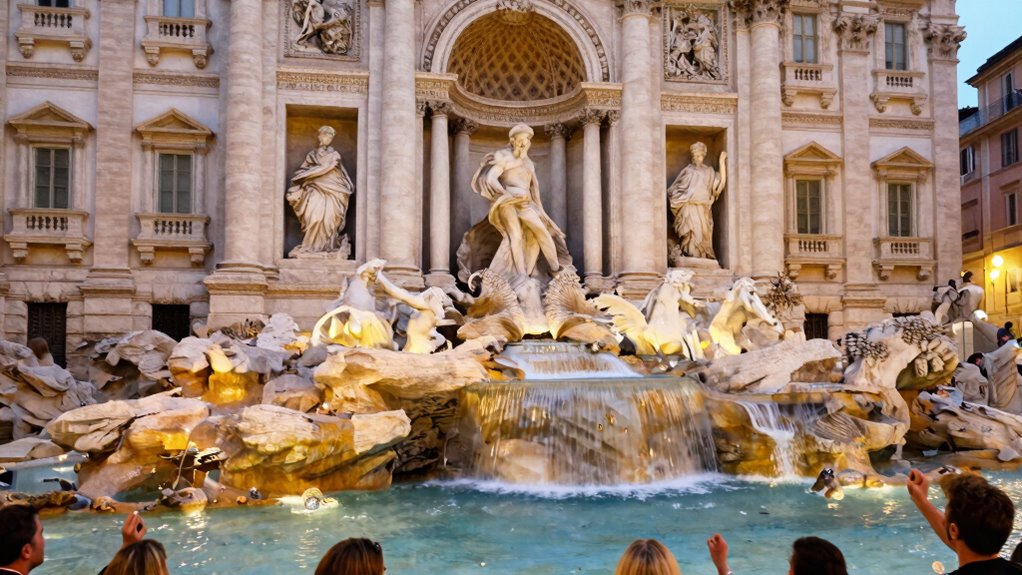
Have you ever wondered why tossing a coin into the Trevi Fountain is such a beloved tradition? This iconic fountain, built from travertine stone, features a stunning Baroque design, and gets its water from the ancient Aqua Virgo aqueduct. The legend says that tossing a coin over the left shoulder with the right hand guarantees a return to Rome. Visitors often toss coins for good luck, romance, or even a Roman wedding wish.
- The coins collected since 2006 support global charity programs through Caritas.
- Tossing a coin symbolizes hope and a wish to come back.
- The Trevi Fountain’s water from Aqua Virgo adds historical charm.
- Its breathtaking sculptures and water choreography make it a must-see landmark.
4. Climbing the Leaning Tower of Pisa and Its Unique Engineering
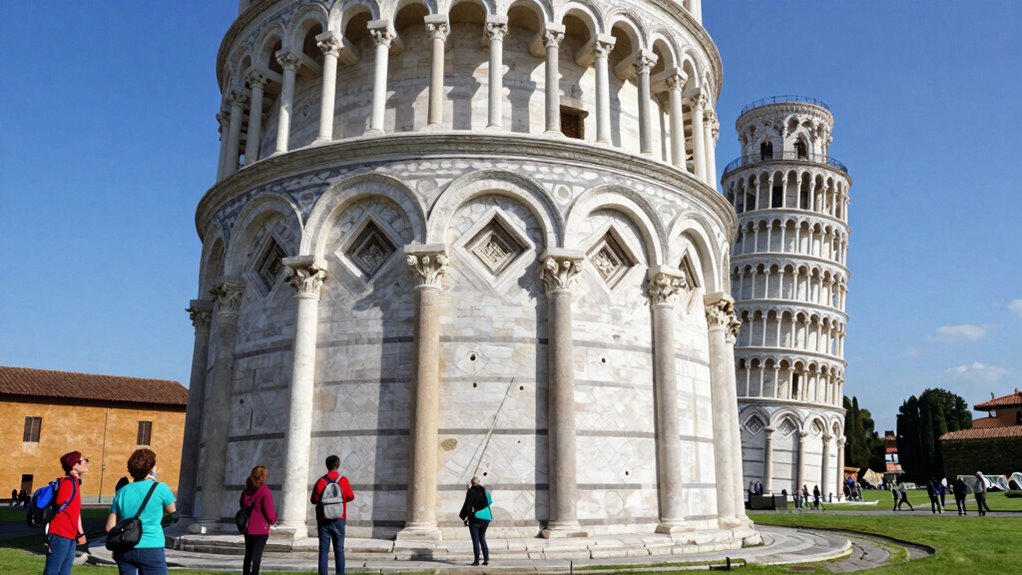
Few sights in Italy capture the imagination quite like the Leaning Tower of Pisa, with its distinctive tilt making it one of the world’s most recognizable landmarks. Climbing this iconic structure offers visitors a chance to experience its unique engineering firsthand.
Built in the 12th century, the tower’s tilt resulted from a shallow, soft foundation and unstable soil. Despite the tilt increasing over time, ongoing stabilization efforts ensure safety today. Visitors can ascend both sides, enjoying panoramic views of Pisa and beyond. The tower is part of the UNESCO site, which includes the nearby cathedral and baptistery. Its remarkable design and historic significance highlight human ingenuity and resilience.
The table below emphasizes key engineering features that make the Leaning Tower of Pisa a fascinating marvel:
| Feature | Explanation | Significance |
|---|---|---|
| Tilt Origin | Soft foundation and soil instability | Causes the tower’s iconic lean |
| Structural Monitoring | Ongoing safety measures | Keeps visitors safe during climbs |
| Construction Timeline | Started in the 12th century | Shows historical engineering challenges |
| UNESCO Recognition | Part of the historic complex | Preserves this engineering marvel |
5. Discovering the Sistine Chapel’s Masterpieces by Michelangelo
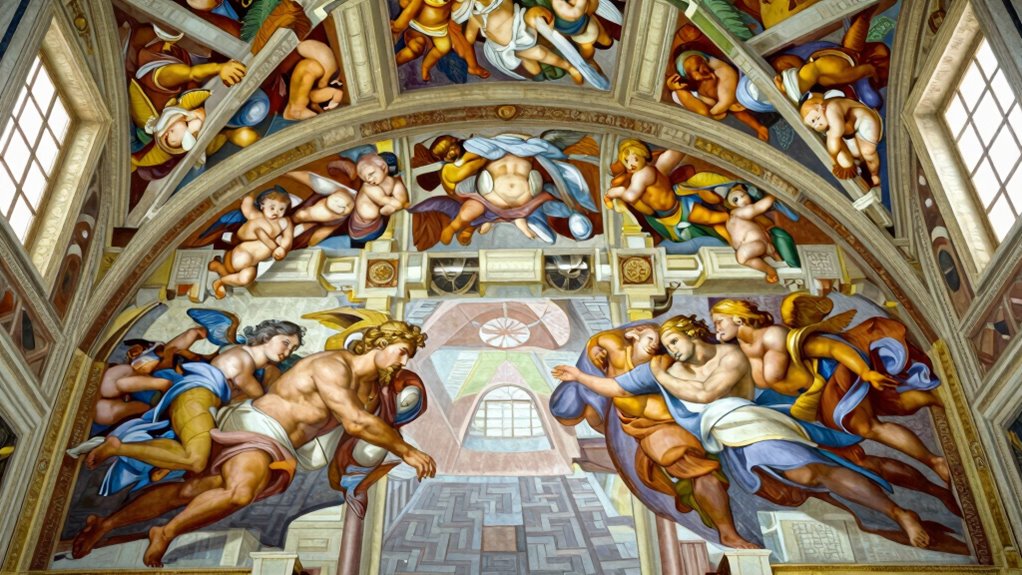
Many visitors find themselves captivated by the Sistine Chapel, not just because of its religious significance but because of the stunning artworks that adorn its interior. Michelangelo’s paintings are considered some of the greatest Renaissance masterpieces. The ceiling, famously painted by Michelangelo himself, features scenes from the Bible, including the iconic Creation of Adam. Visitors should look up and marvel at the vibrant frescoes that span from floor to ceiling.
Here are four highlights:
- The Sistine Ceiling, with its intricate biblical stories.
- Michelangelo’s powerful depiction of the Creation of Adam.
- The Last Judgment, painted on the altar wall.
- The chapel’s incredible Renaissance artistry, which draws millions annually.
This site is a must-see for anyone interested in art and history.
6. Venice’s Rialto Bridge and Dorsoduro District’s Charm
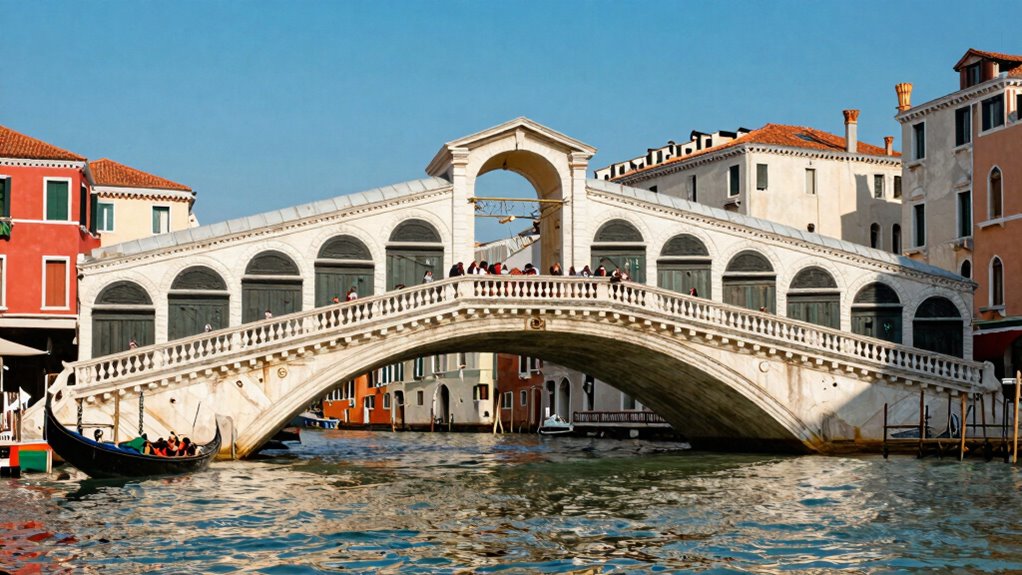
What makes Venice’s Rialto Bridge and Dorsoduro District so captivating for visitors? The Rialto Bridge is Venice’s oldest stone arch bridge, built in the late 16th century and designed by Antonio da Ponte. It’s a true Venice landmark, connecting the bustling markets and financial hub to quieter neighborhoods along the Grand Canal. Shops built into the bridge itself highlight Venice’s historic trade culture.
Across the canal, Dorsoduro offers a peaceful escape with charming canals, art galleries like the Accademia, and the Peggy Guggenheim Collection. Visitors often enjoy stunning sunset views over the Grand Canal from the Rialto area. They then explore nearby neighborhoods like San Marco and Dorsoduro for a richer Venice experience. These iconic sights blend history, culture, and scenic beauty, making them must-see landmarks.
7. Florence’s Uffizi Gallery and Michelangelo’s David
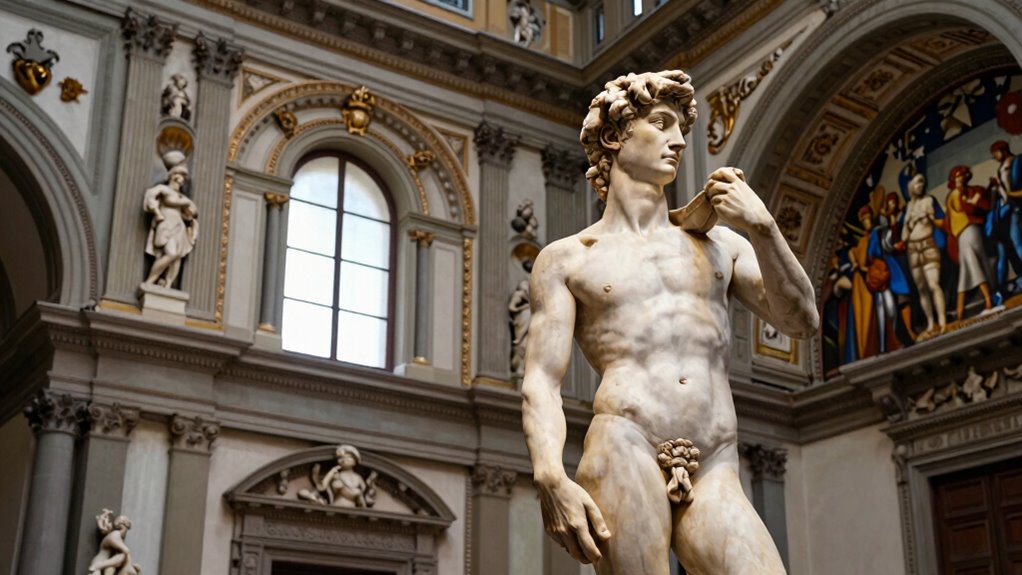
Have you ever wondered where some of the world’s most stunning Renaissance art is kept? The Uffizi Gallery in Florence is a must-visit for art lovers, showcasing masterpieces like Botticelli’s *Birth of Venus*. Originally built as offices for Florentine magistrates, it became a museum displaying Medici-era art, making it a hub for Renaissance art enthusiasts. Visitors often marvel at the grand architecture and impressive collection.
Here are four highlights:
- The Uffizi’s incredible Renaissance collection
- Prebooking tickets to avoid long waits
- The proximity to Florence’s other treasures, like the Duomo
- Michelangelo’s *David*, a symbol of artistic genius and strength
This combination makes Florence a top destination for art and history lovers alike.
8. Tips for Visiting Italy’s Iconic Landmarks and Making the Most of Your Trip
Ever wondered how to make the most of Italy’s famous landmarks without feeling overwhelmed by crowds or confusion? Visiting icons like the Pantheon, Colosseum, and Trevi Fountain can be rewarding, but planning is key. For the Pantheon, arrive early or late in the day to avoid busy times and appreciate its stunning architecture.
When exploring the Colosseum, pre-book tickets online to skip long lines and consider guided tours for richer history. At Trevi Fountain, visit during off-peak hours and take your time tossing coins. It’s said to ensure your return to Rome.