As an Amazon Associate, this website earns from qualifying purchases.
Rome’s ancient sites are a treasure trove for history lovers. The iconic Colosseum shows the gladiatorial battles that once captivated crowds. The Roman Forum and Palatine Hill reveal the city’s political and legendary origins. Temples in the Forum Boarium highlight Roman religious life and trade. The Pyramid of Cestius reflects Egyptian influence and Roman elite culture. Ostia Antica provides a lively glimpse of ancient port life. Exploring these landmarks sparks a deeper understanding—if you look further, more hidden stories await.
1. Discover the Iconic Colosseum and Its Gladiatorial Legacy
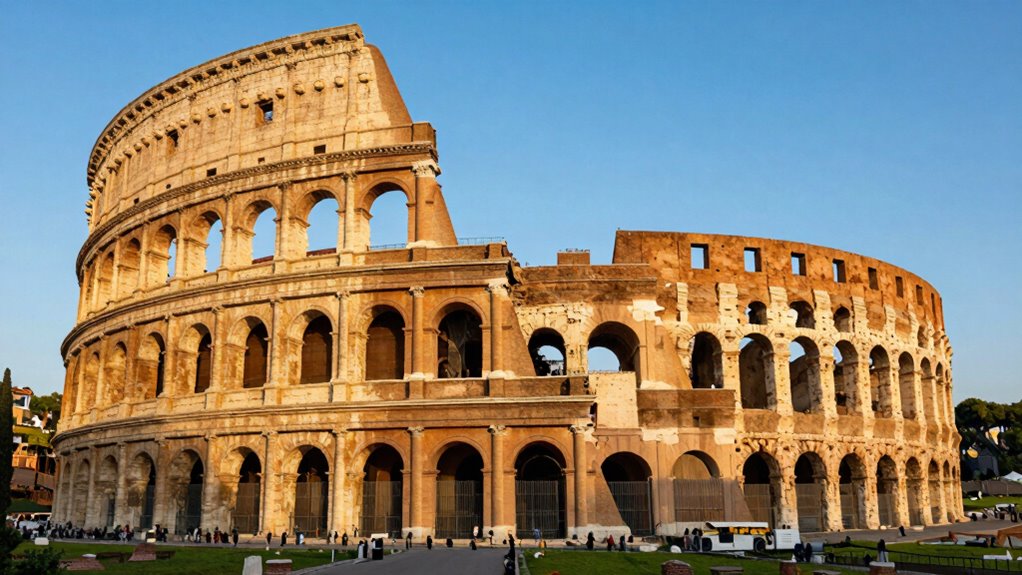
Have you ever wondered what it was like to witness the roar of thousands of spectators during a gladiatorial contest? The Colosseum, or Flavian Amphitheatre, was the grand stage of ancient Rome’s most spectacular events. This massive structure could hold about 50,000 viewers, all keen for battles between gladiators or even mock sea battles. Beneath the arena, the hypogeum, a complex underground network, housed gladiators and animals, waiting for their turn in the spotlight.
The amphitheatre’s impressive travertine exterior and soaring seating tiers symbolized Roman power and engineering skill. Today, visitors can explore this iconic site, gaining insight into the logistics behind these ancient spectacles. The Colosseum remains a testament to Rome’s grandeur and its rich gladiatorial legacy.
2. Explore the Temples of the Forum Boarium and Republican Religious Life
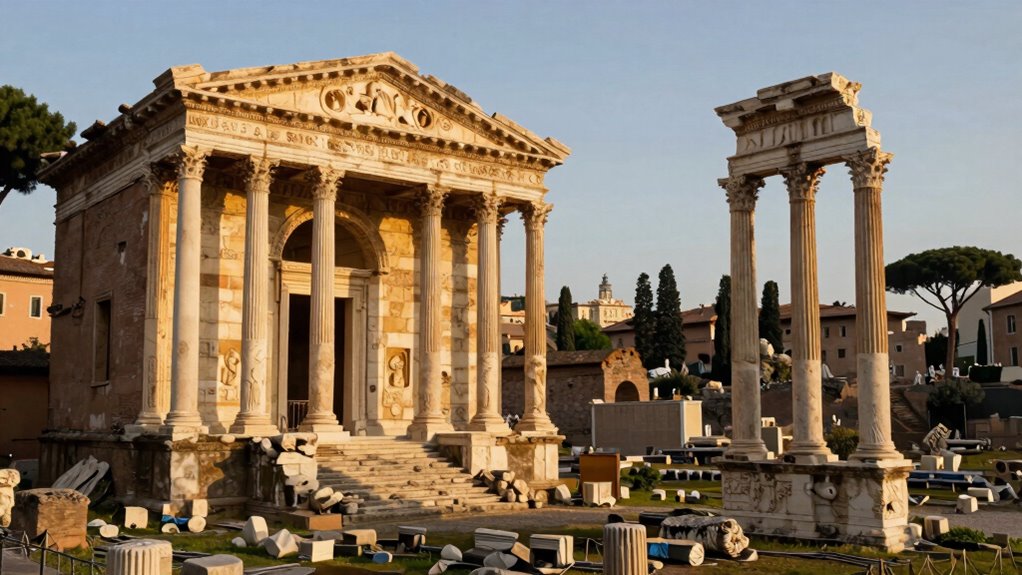
What can the temples of the Forum Boarium reveal about ancient Rome’s religious and social life? These well-preserved Republican-era temples, Hercules Victor and Portunus, offer a fascinating glimpse into early Roman religious practices. Located near the Tiber River, they show how religion was tightly linked to daily commerce and community life in the Forum Boarium, the ancient cattle market.
Hercules Victor’s small, square temple with a high podium reflects early Republican design, emphasizing strength and simplicity.
Portunus, with its blend of Ionic columns and Tuff stone, illustrates how Greek influences merged with local Roman styles.
Restorations in the 1990s have made these sites easier to explore, helping visitors understand how religion and trade intertwined during Rome’s formative years.
3. Visit the Pyramid of Cestius and Its Egyptian-Inspired Architecture
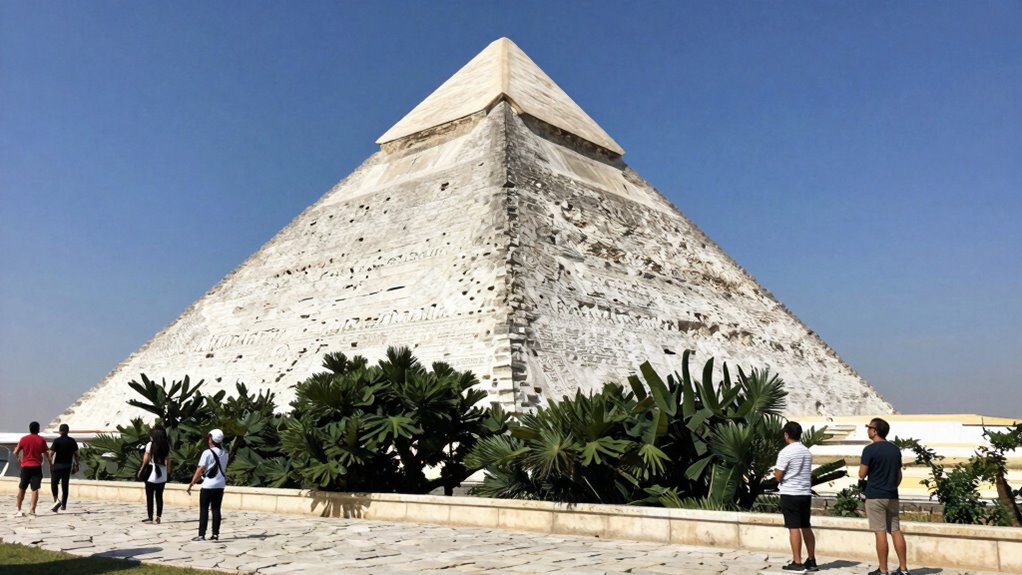
Why does the Pyramid of Cestius stand out among Rome’s many ancient monuments? Its striking Egyptian-inspired architecture makes it unique in a city filled with classical temples and ruins. Built in the 1st century BC, this pyramid served as a tomb for Caius Cestius, a wealthy Roman magistrate. Rising about 35 meters, it resembles the famous pyramids of Egypt but was designed as a private monument rather than a royal one.
Located in Testaccio, near the Porta San Paolo, it adds a distinctive touch to Rome’s landscape. Part of late Republican monuments, the pyramid reflects how Egyptian aesthetics influenced Roman elite culture. Its presence offers a fascinating glimpse into Rome’s eclectic architectural past, blending Egyptian style with Roman traditions.
4. Walk Through Palatine Hill and Uncover Rome’s Birthplace Legends
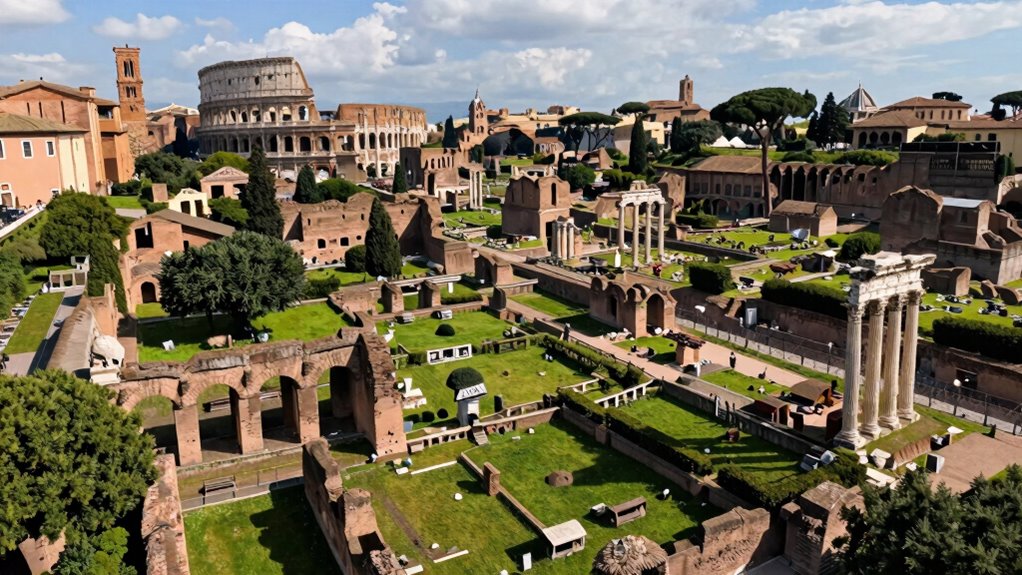
Rising above the Roman Forum, Palatine Hill stands as a quiet sentinel, whispering stories of Rome’s legendary beginnings. This site is widely regarded as the birthplace of Rome, linked to the famous legend of Romulus and Remus—twins raised by a she-wolf, who founded the city. Walking here, visitors can see ancient ruins that reveal centuries of history, from early huts to imperial residences built by Augustus, Tiberius, and Domitian.
The hill offers breathtaking views of the forum below, immersing visitors in the heart of early Roman civilization. Imagine layers of history beneath your feet, where political, residential, and ceremonial activities unfolded over time. The table below helps visualize this iconic site:
| Ancient Huts | Imperial Residences |
|---|---|
| Early settlement | Palaces of emperors |
| Legend of Romulus | Architectural grandeur |
| Birthplace of Rome | Power and prestige |
5. Step Into Ostia Antica and Imagine Rome’s Ancient Port Life
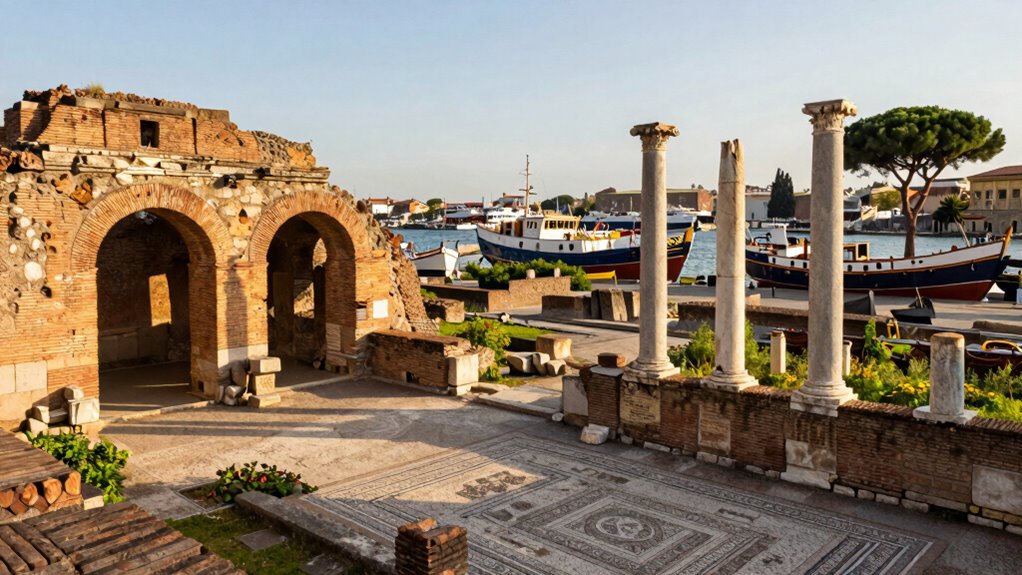
Have you ever wondered how ancient Rome managed to import so much from across the Mediterranean? Ostia Antica, the ancient port, was key to this. For centuries, it served as Rome’s gateway to the sea, handling grain, goods, and travelers. Its impressive remains include a well-preserved Roman theatre, where citizens watched performances, and the Baths of Neptune, reflecting the bathing culture.
The site also features temples, a bustling forum, and markets, revealing how urban planning supported commerce. Walking through these ruins, visitors can imagine the hustle of ships arriving and departing, fueling Rome’s imperial economy. Ostia Antica offers a vivid glimpse into the daily life of an ancient port, showing how this bustling hub kept Rome connected to the wider world.
6. Experience the Roman Forum and Its Central Role in Ancient Politics
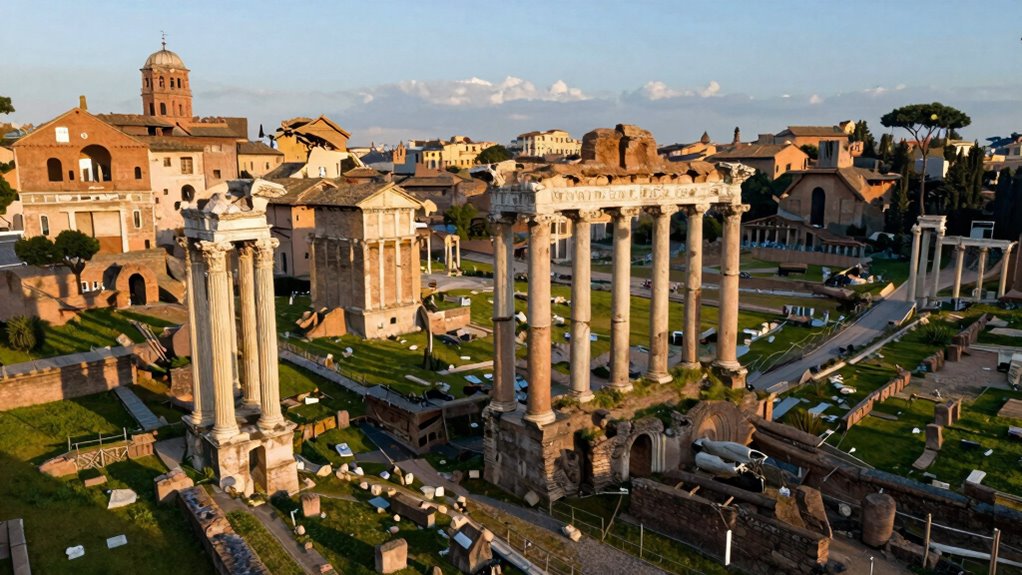
Ever wonder where the heart of ancient Roman politics beat? That place is the Roman Forum. This bustling area was the center of political life, hosting elections, speeches, trials, and religious events for over a thousand years. Walking along the Via Sacra, the main road, visitors could imagine triumphal processions led by famous figures like Caesar and Cicero.
Within the Forum stands the Curia Julia, the Senate house where leaders like Julius Caesar once debated important issues. Nearby, the Vestal Virgins cared for the sacred eternal flame, holding special civic rights. The Forum’s temples and public spaces reflected Rome’s evolving religious, military, and political roles.
Exploring this site offers a vivid glimpse into how ancient politics shaped one of history’s greatest civilizations.