As an Amazon Associate, this website earns from qualifying purchases.
Spain is full of stunning masterpieces worth exploring. In Madrid, visitors can see Picasso’s Guernica at Museo Reina Sofía and Goya’s The Third of May at the Prado, both powerful anti-war statements. Bosch’s The Garden of Earthly Delights and Velázquez’s Las Meninas also call Madrid home, showcasing surreal creativity and royal life. To experience El Greco’s divine Burial of the Count of Orgaz, visit Toledo’s church. Keep exploring for even more insights into Spain’s rich art heritage.
1. Why Pablo Picasso’s Guernica Is a Must-See in Madrid
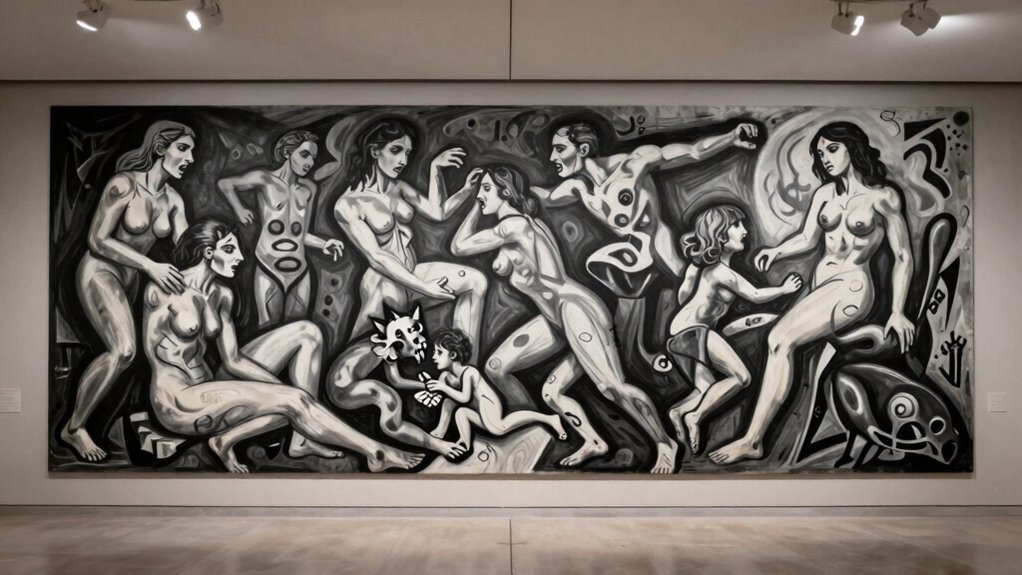
Why is Pablo Picasso’s Guernica considered a must-see when visiting Madrid? The answer lies in its powerful history and artistic significance.
Housed at the Museo Reina Sofía, Guernica captures the horror of the 1937 bombing of the Basque town during the Spanish Civil War. This iconic painting combines Picasso’s evolving Surrealist and Cubist styles to create an emotional, impactful scene of suffering and chaos.
Visiting Madrid to see Guernica offers more than just viewing a masterpiece. It provides insight into Spain’s turbulent past and modern art history. The Museo Reina Sofía’s collection of Picasso’s work, including Guernica, makes Madrid the essential destination for art enthusiasts eager to connect with this global symbol of anti-war resistance and human resilience.
2. Discover the Haunted Power of Goya’s The Third of May at the Prado
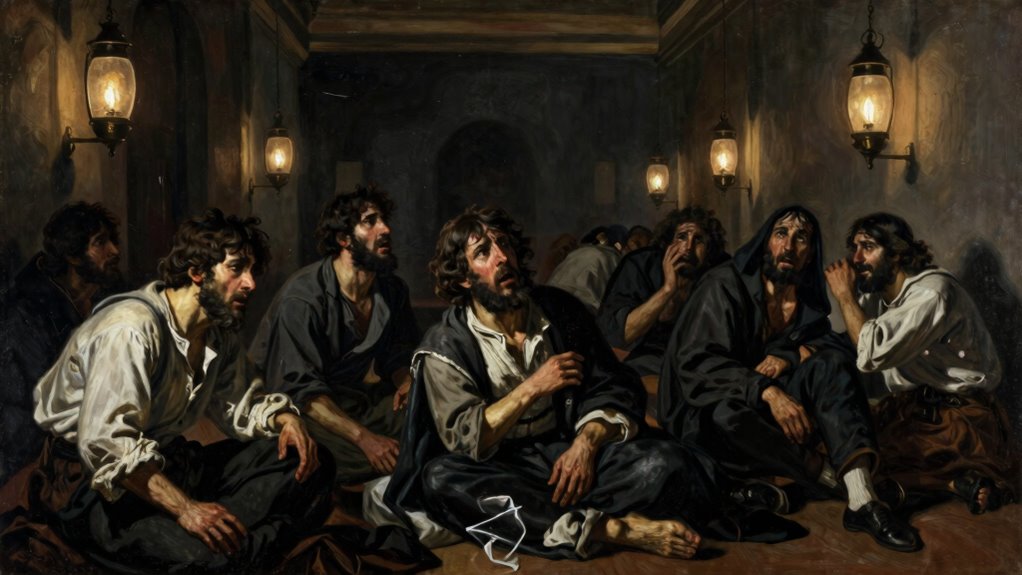
Have you ever wondered how a single painting can convey the raw, haunting power of war? Goya’s The Third of May 1808, housed at the Prado Museum, does just that. Painted in 1814, it shows Spanish patriots being executed by Napoleon’s soldiers, emphasizing honesty over heroism. The scene is dark, with a lantern illuminating a central figure in white—often seen as a martyr—while cold, gray soldiers stand in line. Goya’s use of stark contrast and intense emotion helped shape modern war imagery.
The painting’s moral contrast highlights innocence versus brutality. Goya’s colors evoke fear and sorrow. The powerful, simple composition draws viewers in. It’s a vital piece in Spain’s national art story.
3. Experience Bosch’s The Garden of Earthly Delights and Its Cultural Impact
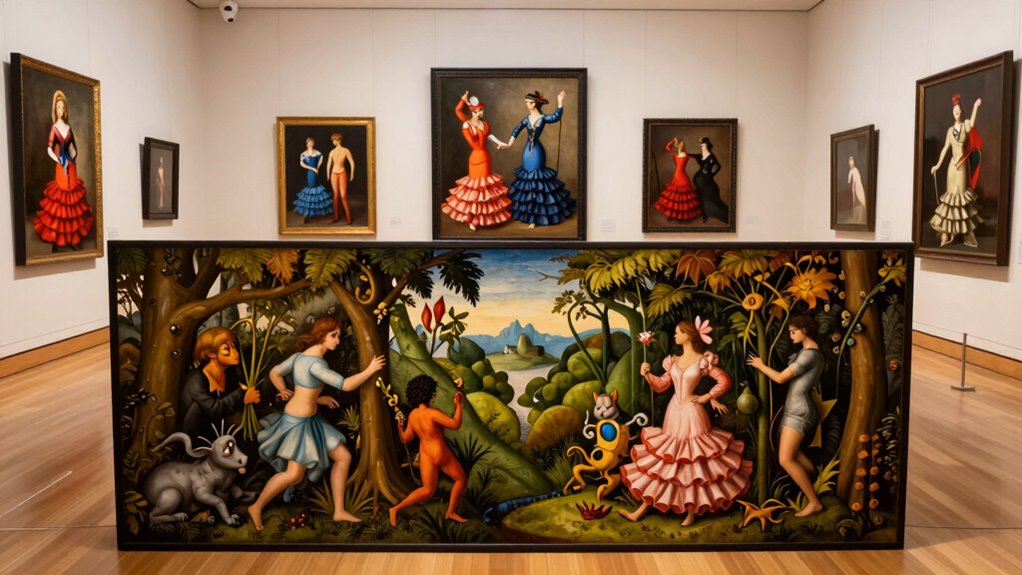
What makes Hieronymus Bosch’s The Garden of Earthly Delights such an enchanting masterpiece? This triptych captivates viewers with its vivid, detailed scenes across three panels. The central panel bursts with fantastical figures, blending moral, erotic, and surreal imagery—an imaginative universe that feels surprisingly modern despite being from the 1500s. Bosch’s use of luminous colors and crowded compositions invites multiple viewings, revealing new details each time.
The left panel depicts Paradise with God, Adam, and Eve, while the right shows a nightmarish Hell. Together, the triptych tells a powerful moral story, highlighting human pleasures and their consequences. Housed at the Prado in Madrid, Bosch’s Garden has deeply influenced art, literature, and popular culture, cementing its place as a symbol of otherworldly creativity.
4. Explore Velázquez’s Las Meninas and Its Reflection of Royal Spain
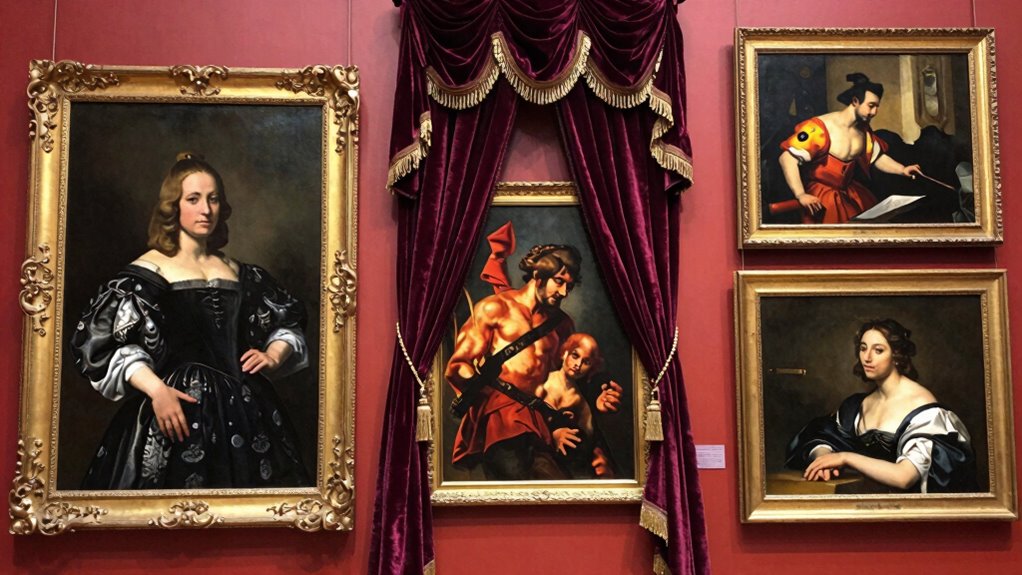
Velázquez’s Las Meninas invites viewers into a lively royal scene that feels both intimate and mysterious. The painting captures Infanta Margarita Teresa surrounded by her attendants, with Velázquez himself working on a portrait, adding a personal touch. Meanwhile, a mirror in the background reflects King Felipe IV and Queen Mariana, blurring the lines between the scene and reality.
This masterpiece from Velázquez offers a fascinating glimpse into the Royal Court of Spain in the 17th century. Its complex play of gaze, perspective, and light invites viewers to question what is real and what is painted. Las Meninas remains a symbol of Spain’s Golden Age, showcasing the power and grandeur of the monarchy while also exploring the role of art itself.
Royal court life is depicted with vibrant details. Velázquez’s self-portrait as an artist is prominently featured within the scene. The reflection of the king and queen in the mirror adds depth and intrigue. The playful illusions of perspective and space challenge viewers’ perceptions and invite deeper reflection on the nature of representation.
5. See El Greco’s Burial of the Count of Orgaz in Toledo’s Historic Church
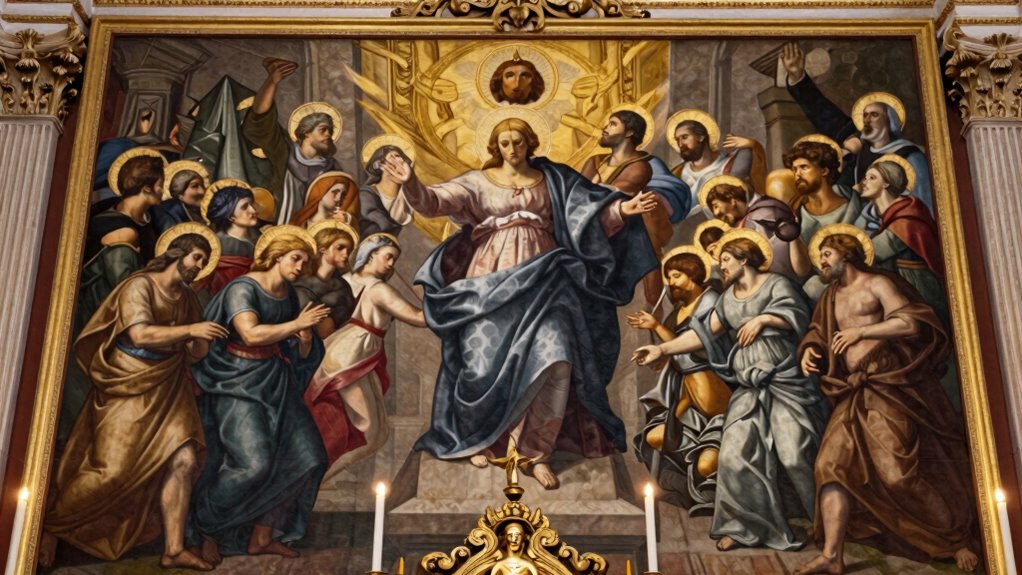
Imagine stepping inside Toledo’s historic Church of Santo Tomé, where one of Spain’s most stunning Renaissance masterpieces is displayed. This is the Burial of the Count of Orgaz, painted by El Greco during the late 16th century. It depicts a legendary scene where saints descend from heaven to honor Don Gonzalo Ruiz, the Count of Orgaz, known for his piety and charity. The painting showcases El Greco’s signature elongated figures and a dramatic, spiritual atmosphere, blending Greek, Italian, and Spanish influences. Its vertical composition guides viewers’ gaze upward, emphasizing the celestial realm.
| Aspect | Description | Significance |
|---|---|---|
| Artist | El Greco | Renowned for spiritual, elongated figures |
| Location | Toledo’s Church of Santo Tomé | Home to the masterpiece |
| Theme | Religious legend of the Count of Orgaz | Celebrates piety and charity |
| Style | Spanish Renaissance with Greek, Italian influences | Unique, dramatic, spiritual atmosphere |
| Impact | Known for sense of space and upward movement | Embodying divine transcendence |
6. Encounter Dali’s Surrealist Masterpiece The Persistence of Memory in Madrid
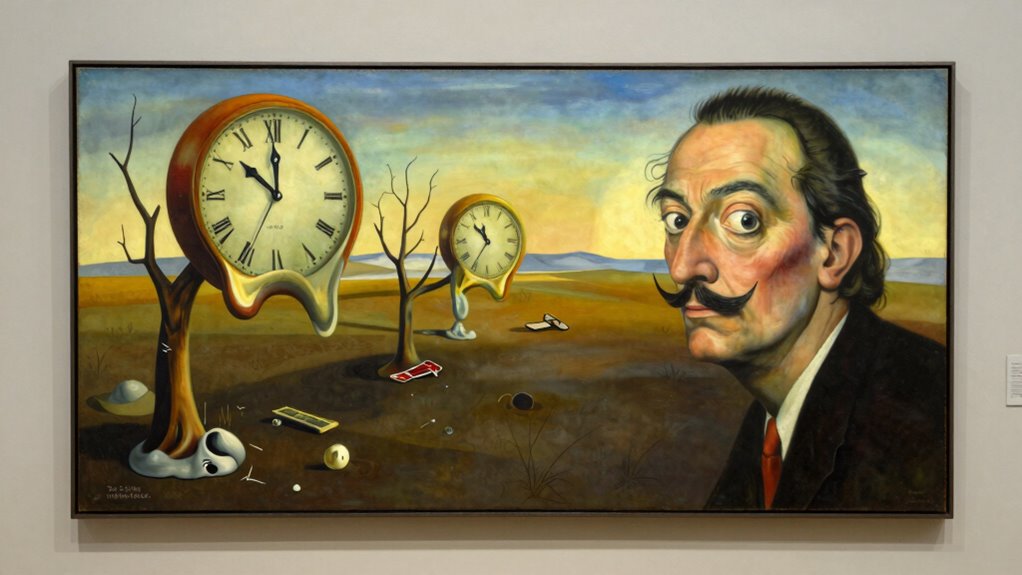
While exploring the rich world of Spanish art, one cannot overlook the surrealist genius of Salvador Dalí. His famous painting, *The Persistence of Memory*, created in 1931, shows melting clocks draped over objects in a dreamlike landscape, symbolizing the fluidity of time. Although many think it’s in Madrid, this masterpiece actually resides at the Salvador Dalí Theatre-Museum in Figueres, Catalonia.
Still, Dalí’s influence reaches Madrid through exhibitions and collections that highlight his surrealist vision. Visitors can learn how Dalí’s work helped popularize Surrealism, making him a key figure in 20th-century art. For those interested, understanding the symbolic nature of melting clocks and Dalí’s innovative style offers a deeper appreciation of his genius.
- Salvador Dalí’s surrealist style
- The dreamlike imagery of the painting
- The true location: Salvador Dalí Theatre-Museum in Figueres
- How Dalí shaped modern art and Surrealism
7. Find Out Where to View Picasso’s Early Work The Wait (Margot) in Barcelona
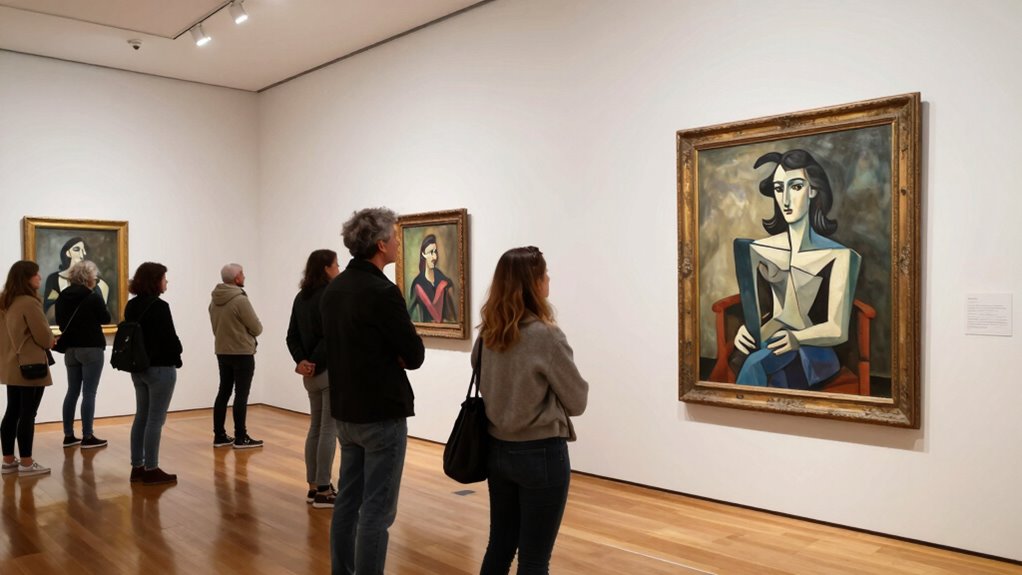
Have you ever wondered where you can see one of Picasso’s early, emotionally charged works, *The Wait (Margot)*, in person? Located at the Picasso Museum in Barcelona, this painting offers a fascinating glimpse into Picasso’s formative years. It features Margot with an intense gaze, painted with vibrant colors that reflect his developing personal and emotional style.
As an early work, *The Wait (Margot)* helps visitors understand Picasso’s shift toward more expressive, intimate studies. The painting also raises intriguing questions about Margot’s possible roles, including references to morphine use and sexuality. Viewing it in Barcelona provides special context, as the city played a key role in Picasso’s artistic growth. For anyone interested in Picasso’s evolution, this piece is a must-see.