As an Amazon Associate, this website earns from qualifying purchases.
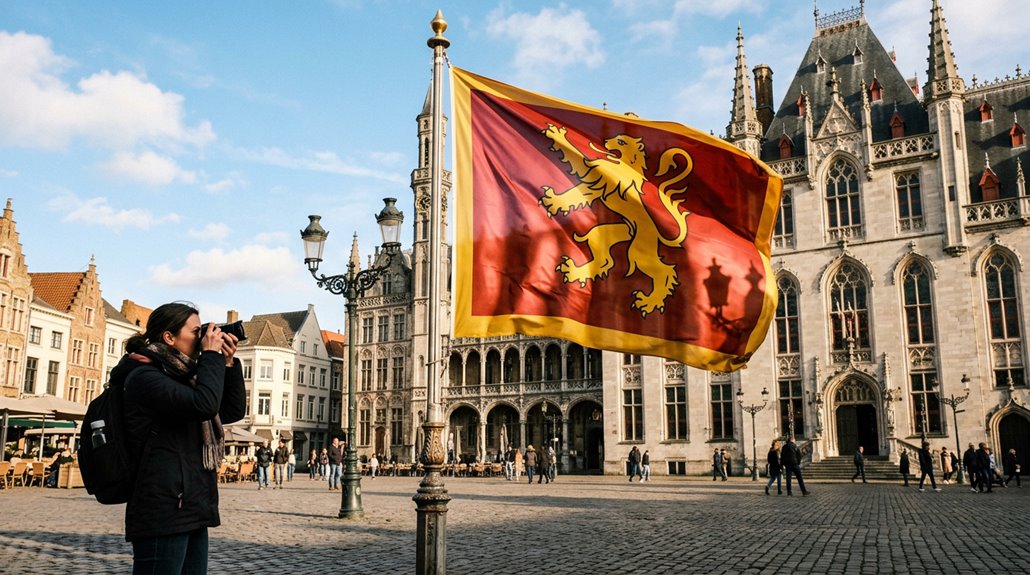
The European flag’s circle of twelve gold stars on a blue background symbolizes unity and perfection, making it a meaningful element in travel photography. Photographers can incorporate this motif by capturing wide shots of iconic landmarks, focusing on flag details, or creating compositions that frame horizons or doorways with the circle of stars. Texture, color harmony, and cultural moments further enhance the story, all while exploring how this powerful symbol unites countries across Europe. To discover more creative ideas, continue exploring these inspiring techniques.
Discover the Symbolism Behind the European Flag’s Design
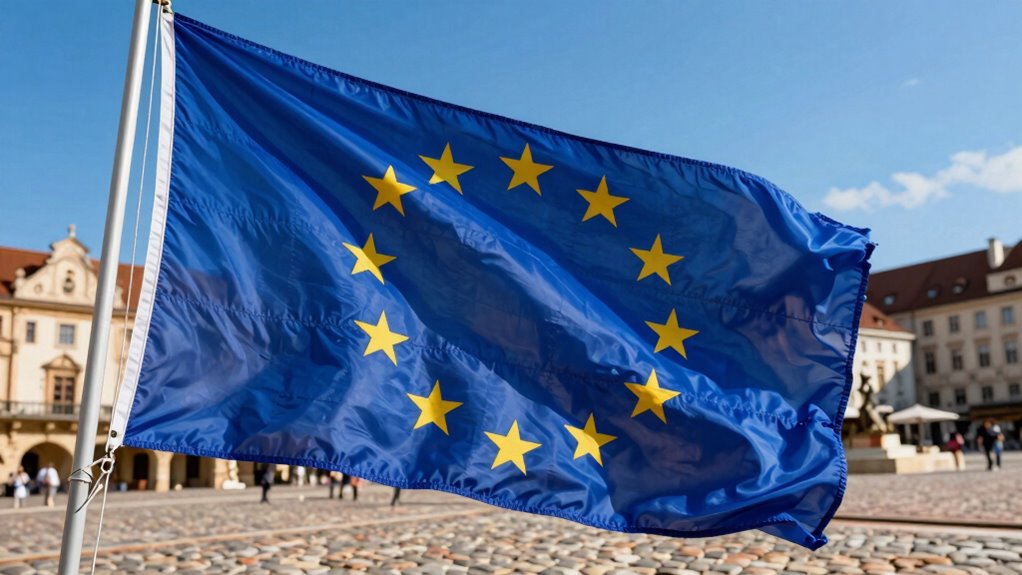
Ever wondered what the European flag’s design really means? The European flag symbolism centers around a circle of twelve gold stars on a blue field, representing unity and perfection. The circle’s shape signifies harmony among nations, with twelve stars symbolizing completeness—think of them as a universal number of wholeness. The blue field color reference is Pantone 287, giving the flag a vibrant yet calming tone that reflects stability and trust.
Intriguingly, the design originated from a proposal by Paul Lévy, emphasizing the idea of unity rather than representing individual countries. The choice of twelve stars, rather than more or fewer, was deliberate, symbolizing totality and perfection. This thoughtful symbolism makes the flag a powerful emblem of European identity and solidarity.
Explore the History of the European Flag’s Adoption and Evolution
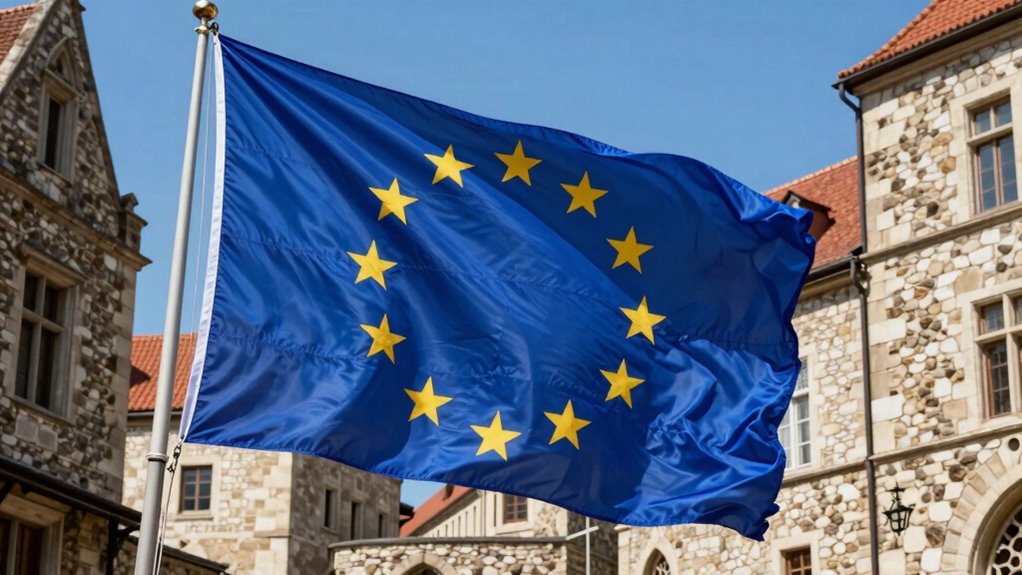
The story of the European flag’s adoption begins in the mid-20th century, a period marked by efforts to create a shared identity among increasingly interconnected nations. The Council of Europe flag, featuring twelve gold stars in a circle on a blue background, was officially adopted on December 8, 1955. Designed by Paul Lévy, the flag’s symbolism centers on unity, perfection, and wholeness. The blue represents the sky of the Western world, while the twelve stars symbolize Europe’s diverse peoples in harmony.
Although the European Union flag was never officially codified in treaties, it adopted a similar design inspired by the Council of Europe flag. Over time, the flag’s symbolism became a visual reminder of Europe’s collective identity, even if public recognition varies.
Learn How to Incorporate the European Flag in Travel Photography
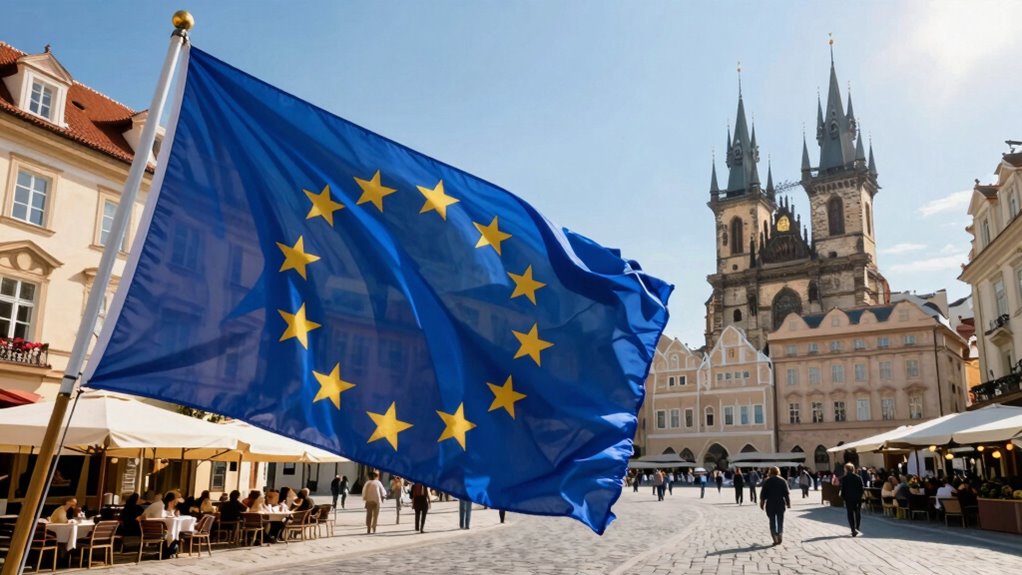
What’s the best way to include the European flag in travel photos? Incorporating the flag’s circular star motif can symbolize unity and continental identity. Photographers often capture wide shots of government buildings or public squares where the flag is displayed prominently.
When considering flag composition, note the European flag’s colors—Pantone Reflex Blue and Pantone Yellow—to harmonize your overall color palette during post-processing. To make your images stand out, focus on iconic moments like flag-raising ceremonies or flags against clear skies. Be mindful of local rules when photographing flags in public spaces, especially around official buildings or during events.
Here’s a quick guide:
| Tip | Explanation |
|---|---|
| Capture Iconic Moments | Flag-raising or crowds with insignia |
| Use Color Harmony | Match flag colors in your editing |
| Focus on Flag Details | Highlight stars or poles |
| Respect Regulations | Follow local rules |
Get Creative With Flag Compositions to Convey Unity and Identity
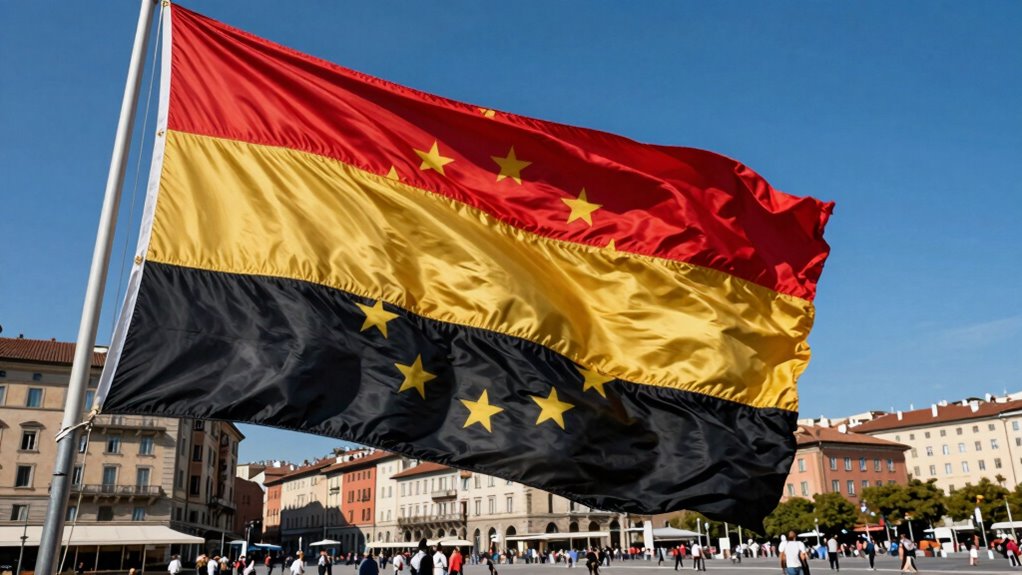
Have you ever thought about how the European flag’s precise design can be creatively used to express a sense of unity and shared identity in travel photos? European flag compositions allow photographers to leverage the flag’s symbolism—particularly the circle of twelve gold stars representing perfection and harmony. By positioning the flag’s circle to frame subjects like doorways or horizons, photographers can subtly emphasize unity symbolism, connecting people and places across the continent.
The travel photography palettes of blue and gold, Pantone Reflex Blue and Yellow, add vibrant accents or tie into iconic European landmarks, reinforcing the theme of shared identity. Thoughtful arrangements of the flag’s elements help tell stories of collective strength and belonging, making images not just beautiful but meaningful.
Use Flag Textures and Details to Add Depth to Your Shots
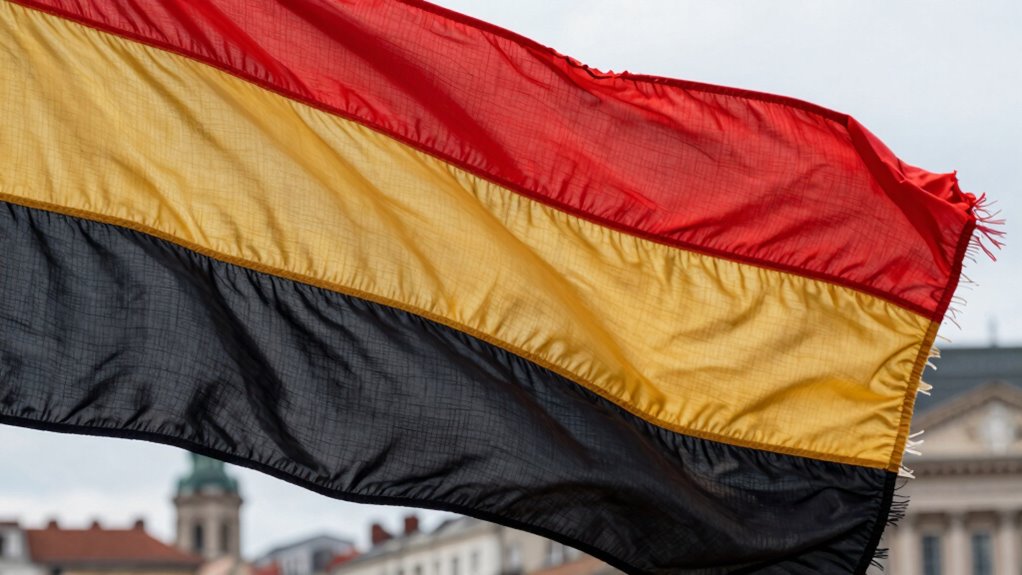
Focusing on the textures and intricate details of the European flag can bring a new level of depth and authenticity to travel photos. Flag textures—whether the fabric’s weave or the way light reflects off the stars—add visual interest that makes an image stand out. European flag details, like the twelve gold stars arranged in a circle and their precise size, can be highlighted by close-up shots or capturing the flag fluttering in the wind.
The blue field, often vibrant or muted depending on lighting, offers a strong background that emphasizes these details. For travel photography depth, photographers can experiment with angles, focus, and lighting to reveal the fabric’s texture and the metallic or matte finish of the stars. This approach creates captivating, textured images that tell a richer story.
Capture Cultural Interactions and Moments Featuring the European Flag
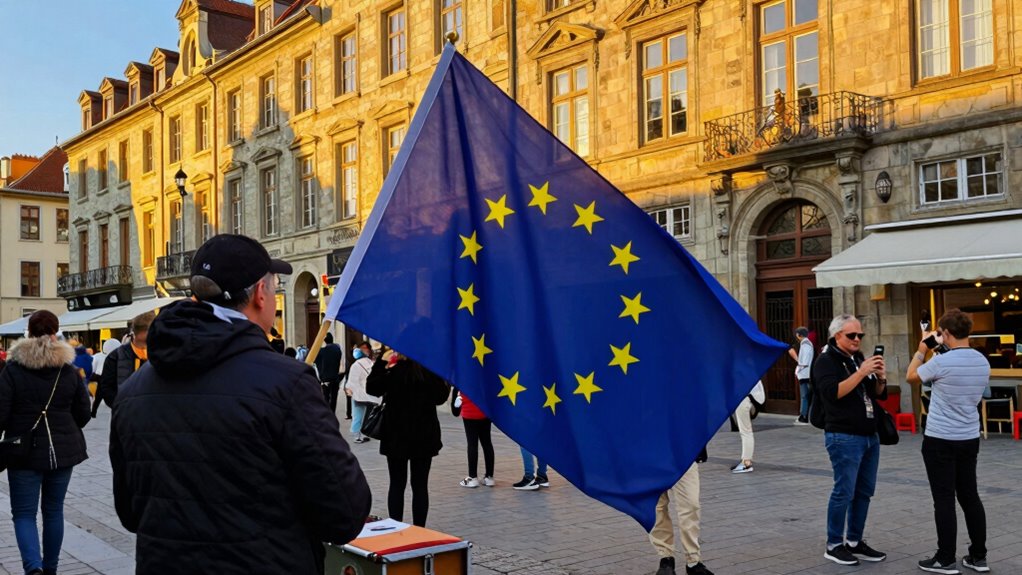
What moments naturally showcase the European flag as a symbol of unity and identity? Cultural interactions, festivals, and public gatherings are perfect opportunities for European flag photography. These scenes often feature the flag prominently, such as outside government buildings or during lively parades, highlighting shared European pride.
When capturing these moments, travel framing becomes essential: it helps tell a story by including local landmarks, signage in multiple languages, and crowd interactions that emphasize a Europe-wide experience. By focusing on the flag’s circle of twelve stars motif against a blue background, photographers evoke the Council of Europe’s symbolism.
Careful attention to lighting and color fidelity ensures the flag’s authentic Pantone Blue and Yellow stars shine true. Such images beautifully reflect collective identity across diverse cultural settings.