As an Amazon Associate, this website earns from qualifying purchases.
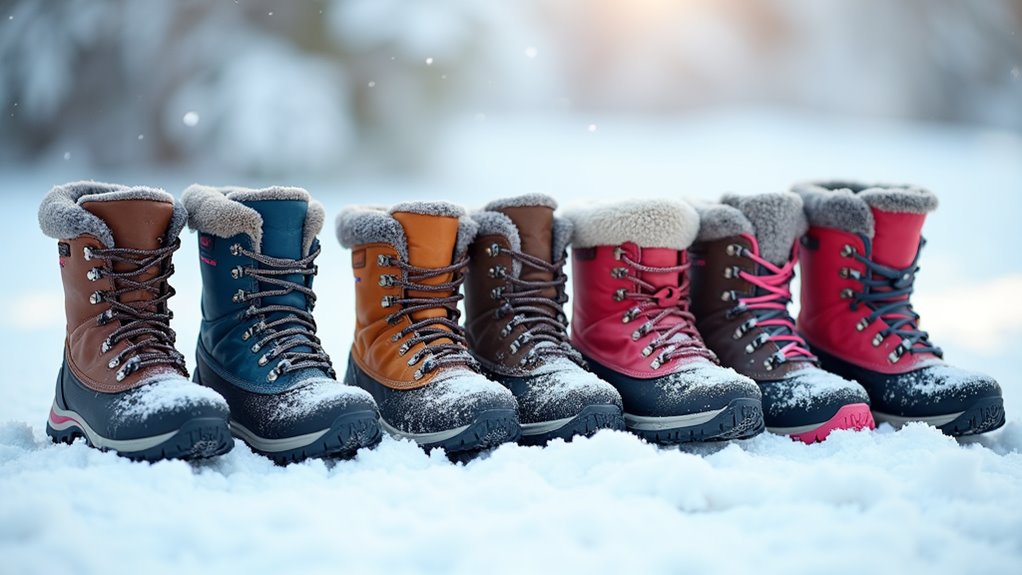
Discovering the best insulated winter hiking boots guarantees your feet stay warm and dry in harsh conditions. Top choices include the Columbia Men’s Bugaboot III and KEEN Men’s Anchorage III for excellent waterproofing and insulation. Value finds like the NORTIV 8 Men’s Waterproof Hiking Winter Snow Boots offer affordability. Consider the durability of traction, ease of fit, and cushioning for long treks. Learn how to keep your feet cozy and comfortable during winter adventures!
NORTIV 8 Mens Waterproof Hiking Winter Snow Boots
If you’re an avid winter hiker or simply someone who enjoys outdoor adventures in the cold, NORTIV 8 Men’s Waterproof Hiking Winter Snow Boots are a fantastic choice. These boots offer a waterproof design and are insulated with Thinsulate, ensuring warmth and dryness even in chilly conditions. At $46.99, they provide excellent value and are available in larger sizes, accommodating up to size 15 US. They’re easy to slip on and off, making them ideal for quick outings. Despite some critiques regarding their heavy design and limited arch support, their durability and cozy lining make them a reliable winter companion.
Best For: Winter hikers or outdoor enthusiasts looking for an affordable, warm, and waterproof boot option.
Pros:
- Waterproof design with Thinsulate insulation for warmth.
- Easy to slip on and off, ideal for quick outings.
- Available in large sizes, accommodating up to size 15 US.
Cons:
- Heavy and clunky design with limited fashion appeal.
- Minimal arch support and short Velcro strap.
- Concerns about slip-resistance and potential water leakage after extensive use.
Dryshod Arctic Storm Hi Winter Boot for Men (Black/Grey)
The Dryshod Arctic Storm Hi Winter Boot for Men in Black/Grey stands out as a top choice for those braving extreme cold conditions. With 12mm insulation, these boots keep your feet warm in temperatures as low as -50°F. The 100% waterproof construction and hand-laid natural rubber guarantee your feet stay dry, even in snow and slush. While some users noted a loose fit, adding insoles can enhance support. The roll-down calf pipes allow easy adjustments. Despite occasional dampness in prolonged wet use, their warmth and durability make them highly recommended for winter adventures. Overall, they’re a reliable companion for harsh weather.
Best For: Outdoor enthusiasts and workers facing extreme cold and wet conditions who need reliable warmth and waterproofing.
Pros:
- Excellent insulation with a comfort range down to -50°F.
- 100% waterproof construction keeps feet dry in snow and slush.
- Lightweight design with good traction for easy movement in snowy conditions.
Cons:
- Some users experience a loose fit, requiring additional insoles for support.
- Occasional dampness after prolonged exposure to wet conditions.
- Available sizes may not fit all foot sizes, with varied feedback on fit.
ROCKMARK Mens Winter Snow Boots, Waterproof & Non-Slip
Looking for reliable winter gear that combines comfort with functionality? The ROCKMARK Men’s Winter Snow Boots have you covered. Ordered in size 10, they fit perfectly with thick socks, offering comfort with a soft, warm lining. These boots are lightweight yet sturdy, providing excellent arch and ankle support. They keep your feet toasty down to -10°F, although some users noted dampness from sweat. With a well-made, water-repellent exterior and superior grip, they’re perfect for snow and rural carrier work. However, be cautious of potential seam tearing. Overall, they’re a worthwhile investment for those braving cold, wet conditions.
Best For: Outdoor enthusiasts and workers looking for comfortable, warm, and supportive boots suitable for cold and wet conditions.
Pros:
- Comfortable fit with room for thick socks and soft, warm lining.
- Effective insulation, keeping feet warm in temperatures as low as -10°F.
- Superior grip with durable, water-repellent material.
Cons:
- Some reports of seam tearing, affecting long-term durability.
- Instances of dampness due to sweat and questionable waterproof performance.
- Mixed experiences with customer service regarding product defects.
Merrell Mens Ontario Mid Waterproof Hiking Shoe
Merrell Men’s Ontario Mid Waterproof Hiking Shoe stands out with its waterproof full grain leather upper, making it an excellent choice for those who often find themselves trekking through unpredictable weather. You’ll appreciate the metal hooks and D-rings for secure lacing, while the bellows tongue keeps debris out. Its Merrell Air Cushion absorbs shock, adding stability, and a breathable mesh lining guarantees comfort. These boots offer good traction on wet surfaces, thanks to the Vibram Megagrip. They’re lightweight, making them ideal for long hikes or daily wear. While sizing might run large, this boot remains a favorite for comfort and style.
Best For: Casual hikers and individuals seeking a comfortable, lightweight, and stylish waterproof boot suitable for various activities and daily wear.
Pros:
- Waterproof full grain leather upper with secure lacing
- Lightweight design with excellent traction on wet surfaces
- Comfortable cushioning and breathable mesh lining
Cons:
- Waterproofing may not be effective in extreme moisture
- Sizing may run larger than expected, leading to potential discomfort
- Some users reported heel pain and blisters after extended use
KEEN Womens Revel 4 Mid Height Polar Insulated Waterproof Snow Boots
Designed for those who brave the elements, the KEEN Women’s Revel 4 Mid Height Polar Insulated Waterproof Snow Boots are perfect for outdoor enthusiasts seeking performance and protection in winter conditions. They offer a waterproof, breathable design with a thermal heat shield and Speed lace webbing system. You’ll appreciate the eco-friendly features like the PFC-free water repellent and eco Anti-Odor technology. These boots are durable, showing minimal wear even after rigorous use. For comfort, they provide a snug fit and wide toe box, accommodating various foot widths. While they’re great on snow, consider microspikes for icy terrain.
Best For: Outdoor enthusiasts seeking durable, insulated, and eco-friendly snow boots for winter activities.
Pros:
- Waterproof and breathable with exceptional insulation for subzero temperatures.
- Eco-friendly features including PFC-free water repellent and Eco Anti-Odor technology.
- Comfortable fit with a wide toe box, suitable for various foot widths.
Cons:
- May require additional grip like microspikes for icy conditions.
- Some users report sizing issues, recommending sizing up for thicker socks.
- Concerns about return policies with international purchases.
XPETI Men’s Crest Thermo Waterproof Hiking Boots
XPETI Men’s Crest Thermo Waterproof Hiking Boots are an excellent choice for those who need durable and warm footwear for winter adventures. They’re praised for outlasting brands like Redwings and Timberland Pro, often lasting 4-5 years. You’ll appreciate their slipper-like comfort, though consider sizing up for thicker socks. While they’re marketed as waterproof, prolonged water exposure might lead to dampness, but they excel in cold conditions. The quick lace system and flat sole guarantee good traction on ice and snow. With their affordability and quality, these boots offer great value without the hefty price tag of other brands.
Best For: Individuals seeking durable, comfortable, and affordable hiking boots for winter activities with excellent traction on ice and snow.
Pros:
- Praised for lasting longer than well-known brands such as Redwings and Timberland Pro, often 4-5 years.
- Slipper-like comfort and true-to-size fit with the option to size up for thicker socks.
- Lightweight design with a quick lace system and excellent traction on ice and snow.
Cons:
- Waterproofing may not hold up during prolonged exposure to water.
- The insoles may not suit everyone, leading some to opt for alternatives.
- Limited insulation effectiveness when standing in water for extended periods.
KEEN Mens Revel III Mid Height Waterproof Insulated Hiking Boot
The KEEN Mens Revel III Mid Height Waterproof Insulated Hiking Boot is perfect for outdoor enthusiasts seeking reliable performance in cold conditions. With waterproof, breathable protection and a thermal heat shield, your feet stay warm and dry. The speed lace system guarantees a quick and secure fit, while the wider form accommodates winter socks without feeling loose. Users often praise its comfort with minimal break-in time and roomy toe box. These boots excel in snow and ice, providing excellent traction. Though some find sizing larger than expected, trying them on guarantees the best fit for your winter adventures.
Best For: Outdoor enthusiasts seeking reliable and comfortable hiking boots for cold and wet conditions.
Pros:
- Waterproof and breathable with a thermal heat shield for warmth.
- Minimal break-in time and roomy toe box for added comfort.
- Excellent traction on snow and ice.
Cons:
- Sizing may run larger than expected.
- Regular re-tightening needed due to padding compression.
- Some concerns about quality control and construction consistency.
Columbia Mens Bugaboot III Snow Boot
Columbia Men’s Bugaboot III Snow Boot stands out for adventurers seeking reliable winter footwear. With its waterproof leather upper and 200g insulation, your feet stay warm and dry, even in harsh conditions. The cold-optimized tread provides excellent grip, ideal for snowy terrains like Colorado and Alaska. Although the boots excel in performance, sizing runs small, so it’s wise to order a size up. Some users found the forefoot and heel narrow, impacting comfort. Despite these sizing challenges, the boot’s durable construction, including metal loops and sturdy lacing, makes it a solid investment for winter hiking enthusiasts.
Best For: Adventurers seeking reliable winter footwear that excels in snowy and cold conditions.
Pros:
- Waterproof leather upper and 200g insulation for warmth and dryness.
- Cold-optimized tread providing excellent grip in snowy terrains.
- Durable construction with metal loops and sturdy lacing.
Cons:
- Sizing runs small, requiring ordering a size up.
- Narrow fit in the forefoot and heel, causing discomfort for some.
- Upper and tongue stiffness may jab the ankle during use.
KEEN Mens, Anchorage III Waterproof Boot
Experience the perfect blend of style and functionality with the KEEN Men’s Anchorage III Waterproof Boot. This versatile boot boasts premium waterproof leather, KEEN.WARM insulation, and a snow-friendly sole, making it ideal for both casual outings and formal occasions. The traditional wider fit provides comfort, especially with midweight socks, although some suggest sizing down. The KEEN.dry liner rivals GoreTex, ensuring your feet stay dry. While praised for comfort and grip on snow, durability remains mixed, with some reporting quick wear. Despite these concerns, many find the boots worth the price, thanks to their warmth and performance in wet conditions.
Best For: Those seeking a versatile, waterproof boot that combines style with functionality, ideal for casual and formal settings, especially in wet and snowy conditions.
Pros:
- Premium waterproof leather and KEEN.WARM insulation for warmth and dryness.
- Snow-friendly sole offering excellent grip on icy surfaces.
- Traditional wider fit providing comfort with midweight socks.
Cons:
- Mixed reviews on durability, with some experiencing quick wear.
- Variability in quality due to different manufacturing locations.
- Not ideal for demanding activities like mountain biking.
XPETI Men’s Crest Thermo High-Top Winter Hiking Boots Waterproof Insulated
If you’re seeking a reliable companion for winter hikes, XPETI Men’s Crest Thermo High-Top Winter Hiking Boots might be your perfect match. These boots boast waterproof insulation and a lightweight design, ideal for tackling light snow and ice. With good arch and ankle support, they guarantee comfort without a break-in period. Remember to order two sizes up, particularly if you’re using orthopedic insoles. They excel in warmth, keeping your feet cozy between 26 to 39 degrees Fahrenheit. Excellent grip on slippery surfaces and sturdy construction make them a top choice for outdoor adventures, though applying waterproof spray is recommended.
Best For: Outdoor enthusiasts seeking comfortable and insulated hiking boots for winter conditions including light snow and icy terrains.
Pros:
- Excellent insulation keeps feet warm in temperatures from 26 to 39 degrees Fahrenheit.
- Lightweight design with good arch and ankle support, eliminating the need for a break-in period.
- Effective grip on slippery surfaces, reducing the risk of slips and falls.
Cons:
- Requires ordering two sizes up for a comfortable fit, especially with orthopedic insoles.
- Minor leaks around the laces may occur, necessitating additional waterproofing spray.
- Some discomfort reported from lace hooks, and limited color options for men’s styles.
Factors to Consider When Choosing Winter Hiking Boots Insulated
When you’re choosing insulated winter hiking boots, think about the material and construction to guarantee durability and warmth. Insulation and waterproof features are essential for keeping your feet warm and dry in harsh conditions. Don’t forget to check the traction and grip for stability, and make certain the comfort and fit are just right for long treks.
Material and Construction
While selecting insulated winter hiking boots, focusing on material and construction is essential for ensuring both comfort and durability in harsh conditions. Opt for boots crafted from waterproof leather or synthetic fabrics to shield against moisture and cold. Seam-sealed designs and reinforced toe and heel areas enhance waterproofing and longevity, making them suitable for rugged terrains. A lightweight design increases comfort during long treks, while a sturdy build offers vital ankle support and stability on uneven surfaces. Look for breathable linings to allow perspiration to escape, preventing dampness inside the boots and reducing the risk of cold feet. Choose boots that balance these features for a dependable companion on your winter hiking adventures, keeping you warm and dry throughout your journey.
Insulation and Warmth
As you venture into the world of winter hiking, selecting boots with superior insulation and warmth should be a top priority. Insulation materials like Thinsulate or Densoprene foam are vital, as they help retain heat even in temperatures as low as -50°F. You’ll want boots that balance warmth with breathability, ensuring they keep you cozy during activity without causing excessive sweating. Look for features like a thermal heat shield, which enhances heat retention, ensuring your feet remain warm during extended cold exposure. A snug fit is essential; it prevents cold air from seeping in and accommodates thicker socks or liners. Prioritize boots that combine these insulation features for an ideal winter hiking experience, keeping your feet warm and comfortable.
Waterproof Features
Having explored the importance of insulation and warmth, let’s shift focus to another key factor in winter hiking boots: waterproof features. Keeping your feet dry in snow, slush, and wet conditions is essential for comfort and health. Look for boots with a fully waterproof construction, often achieved with materials like Gore-Tex or rubber. These materials prevent moisture from seeping in while still allowing your feet to breathe. Seam-sealed construction further enhances this by blocking water at critical junctions. Many boots also combine water-resistant membranes with insulation, offering both warmth and protection. To maintain these waterproof features, regularly apply waterproofing sprays. This upkeep guarantees your boots remain effective, extending their lifespan and keeping your feet happy on the trails.
Traction and Grip
When choosing insulated winter hiking boots, traction and grip are important considerations that directly impact your safety on the trails. Slips and falls on icy or snowy surfaces can be avoided with boots featuring deep lug patterns for better grip. Look for specialized rubber compounds that remain flexible in cold temperatures, ensuring peak performance across various terrains. Aggressive tread designs are essential, enhancing traction during both uphill and downhill movement and boosting stability. Boots with Vibram soles are highly recommended, known for their superior grip on slippery surfaces. Evaluating the traction performance is critical, especially in extreme weather conditions where ice and snow are common. Prioritize these features to confidently tackle any winter hiking adventure without compromising safety.
Comfort and Fit
Choosing the right insulated winter hiking boots isn’t just about warmth; comfort and fit are equally essential. Start by considering the fit: many find sizing up 1.5 to 2 sizes helpful to accommodate thick socks, ensuring comfort. Pay attention to the toe box width; a wider design prevents cramping and allows natural movement. Comfort varies, so look for boots with excellent cushioning and arch support to avoid heel pain or blisters. Insulation materials like Thinsulate or foam provide warmth without bulk, affecting fit and comfort. Some boots offer removable insoles, allowing you to customize for better support suited to your foot shape and arch height. Prioritizing these elements will enhance your winter hiking experience considerably.
Durability and Longevity
As you venture into the world of winter hiking, ensuring your boots are built for durability and longevity is essential. Look for boots made from durable materials like genuine rubber and reinforced seams, designed to withstand harsh conditions and rough terrain. Choose water-repellent boots with high-quality insulation that won’t degrade over time. Lightweight designs that maintain sturdiness reduce fatigue during long hikes, enhancing comfort and increasing the boots’ lifespan. A solid tread pattern with high traction improves grip on icy and snowy surfaces, reducing slip risks and potential boot damage. Regular maintenance is key—clean your boots and apply waterproof treatments to prevent material degradation, considerably extending their life. Prioritize these features to enjoy many seasons of warm, dry feet.
Price and Value
While shopping for insulated winter hiking boots, you’ll notice prices can vary widely, often ranging from $46.99 to over $200. It’s essential to assess the value by considering insulation, waterproofing, and durability. Higher-priced boots often excel in extreme conditions, providing better performance and longevity, which can save you money in the long run by reducing replacements. Monitoring discounts and promotions can help you snag premium boots at a more affordable rate. Evaluating customer reviews offers insight into whether a boot’s price reflects its overall value, especially regarding comfort, warmth, and functionality. By carefully considering these factors, you can make a well-informed decision, ensuring your investment keeps your feet warm, dry, and comfortable during winter hikes.
Frequently Asked Questions
How Do I Clean and Maintain Winter Hiking Boots?
Think of your boots as shields against the winter chill. Gently brush off dirt, then use a damp cloth for deeper cleaning. Apply waterproofing spray to maintain their defense. Store them dry and away from heat.
Are There Vegan-Friendly Insulated Winter Hiking Boots Available?
Yes, you can find vegan-friendly insulated winter hiking boots. Brands like Xero Shoes and Wills Vegan Store offer options that keep your feet warm and dry. Check materials and reviews to make sure they meet your insulation needs.
What Is the Average Lifespan of Insulated Winter Hiking Boots?
Imagine your boots as trusty steeds on snowy trails; they’ll last about 300-500 miles before showing wear. Treat them well, and they’ll carry you through many winters, reliably keeping your feet warm and dry.
Can I Wear These Boots for Other Activities Besides Hiking?
Yes, you can wear these boots for various activities. They’re great for snow shoveling, walking the dog, or any cold-weather outing. Their insulation and durability guarantee comfort and protection, making them versatile for more than just hiking.
How Do I Prevent Blisters While Wearing Winter Hiking Boots?
Preventing blisters requires the right socks and proper boot fit. Wear moisture-wicking socks, make certain your boots aren’t too tight, and use blister prevention tape on hotspots. Regularly check your feet and adjust as needed during hikes.