As an Amazon Associate, this website earns from qualifying purchases.
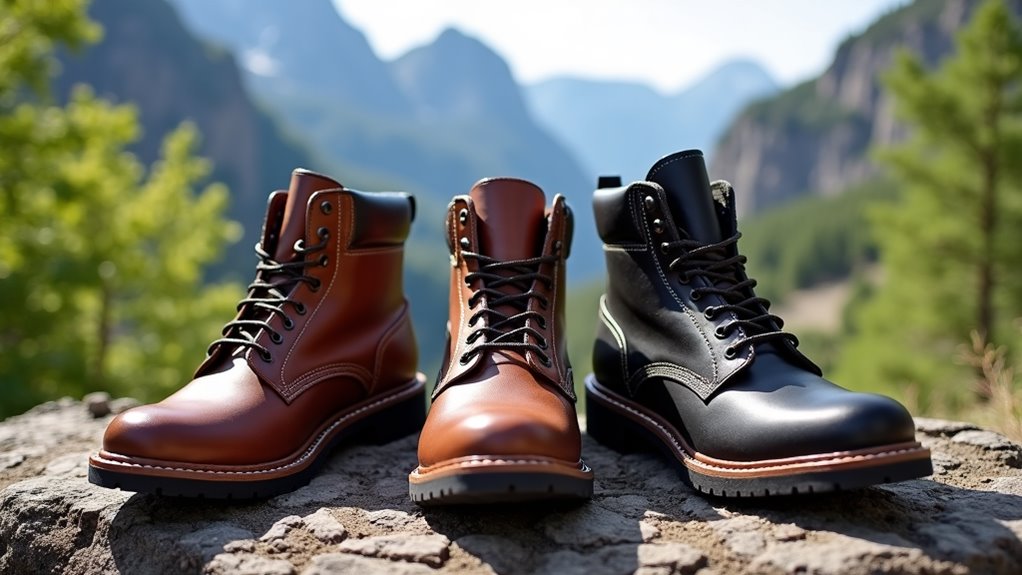
For your next adventure, consider the Men’s Military Tactical Boots, Timberland Men’s White Ledge Mid Waterproof Boots, and Timberland Men’s Anti-Fatigue Mt. Maddsen Boots. These options provide comfort, versatility, and waterproof protection. The Military Tactical Boots offer lightweight flexibility, while the White Ledge Boots excel in durability and wet conditions. Mt. Maddsen combines eco-friendliness with style and fatigue reduction. Explore further to uncover additional insights and benefits each pair brings to your outdoor experience.
Mens Military Tactical Boots for Outdoor and Hiking
If you’re looking for durable leather hiking boots that cater to outdoor enthusiasts with a penchant for versatility, the Men’s Military Tactical Boots are an excellent choice. These boots are lightweight and praised for comfort, making them ideal for long hikes or demanding outdoor activities. Compared to brands like Adidas Terrex and Columbia, they stand out for their comfort, even during all-day wear. However, keep in mind that they’re not waterproof, offering breathability instead. While most reviews are positive, some users report durability issues after a few months. Overall, they’re a solid option if comfort and versatility are your priorities.
Best For: Outdoor enthusiasts seeking comfortable and lightweight boots for hiking and other activities, with an emphasis on breathability over waterproofing.
Pros:
- Lightweight design suitable for long hikes and running.
- Highly praised for comfort, even for all-day wear.
- Versatility for various outdoor activities.
Cons:
- Not waterproof, which may limit use in wet conditions.
- Some users report durability issues after a few months.
- Material quality may not meet expectations for heavy use.
Timberland Mens White Ledge Mid Waterproof Hiking Boots
Timberland Men’s White Ledge Mid Waterproof Hiking Boots are ideal for outdoor enthusiasts seeking reliable protection and comfort. Made from 100% premium waterproof leather, they feature seam-sealed construction and rustproof hardware, ensuring durability. With a roomy toe box and true-to-size fit, these boots offer comfort, though breaking them in and using additional insoles improves the experience. They’re perfect for easy hikes and wet conditions but lack strong ankle support. For longevity, maintain their waterproofing by applying mink oil and air drying. Expect them to last, as users report enduring over three years of heavy use without significant wear.
Best For: Outdoor enthusiasts seeking durable, waterproof hiking boots for easy hikes and wet conditions.
Pros:
- Made from 100% premium waterproof leather with seam-sealed construction.
- Roomy toe box and true-to-size fit for added comfort.
- Proven durability with reports of lasting over three years of heavy use.
Cons:
- Limited ankle support for more challenging hikes.
- Requires a break-in period and may benefit from additional insoles.
- Needs consistent maintenance to preserve waterproofing and longevity.
Timberland Mens Anti-Fatigue Hiking Waterproof Leather Mt. Maddsen
Designed for rugged outdoor adventures, the Timberland Men’s Anti-Fatigue Hiking Waterproof Leather Mt. Maddsen boots offer premium 100% waterproof leather from an eco-conscious tannery. You’ll appreciate the TimberDry™ waterproof membrane and the comfort features like the anti-fatigue footbed and EVA midsole. These boots are lightweight, providing excellent grip and support across various terrains. They’re a stylish choice for both hiking and casual wear, with the Castle Rock color being a favorite. For ideal fit, consider the wide version if needed. Users rave about their durability, noting they clean up easily after muddy or snowy hikes. Enjoy your adventures!
Best For: Rugged outdoor enthusiasts who need durable and comfortable waterproof hiking boots suitable for both challenging terrains and casual wear.
Pros:
- Made from eco-conscious, 100% waterproof leather for effective protection against water.
- Features an anti-fatigue footbed and lightweight design for comfort during extended use.
- Stylish and versatile design that pairs well with hiking and casual outfits.
Cons:
- Some users may need a break-in period to achieve optimal comfort.
- Potential discrepancies in color based on product images may lead to unmet expectations.
- Individuals with wide feet may need to select the wide version for a better fit.
Factors to Consider When Choosing Durable Leather Hiking Boots
When you’re picking durable leather hiking boots, start by checking the material quality to guarantee they can handle rough terrains. Don’t forget to prioritize comfort and fit, as well as waterproofing capabilities to keep your feet dry. Also, evaluate the ankle support and consider the break-in period to avoid discomfort on your adventures.
Material Quality Assessment
While selecting durable leather hiking boots, it is vital to prioritize material quality. Opt for leather from reputable tanneries, like those with LWG Silver ratings, guaranteeing both durability and ethical production. Full-grain leather is your best bet for rugged trails, offering superior abrasion resistance over nubuck or suede. Waterproofing is important; choose boots with seam-sealed construction and eco-friendly waterproof membranes to keep your feet dry and the boots lasting longer.
Don’t overlook the maintenance required for high-quality leather. Regular conditioning and proper drying techniques will keep your boots durable and watertight. Pay attention to construction details like gusseted tongues and reinforced stitching, as they enhance the boot’s lifespan and performance in challenging environments. Prioritizing these factors guarantees your boots withstand the test of time.
Comfort and Fit
Choosing the right hiking boots is essential for comfort and fit. When selecting leather hiking boots, make sure they accommodate your foot shape. If you have broader feet, look for wider options to enhance comfort during long hikes. The toe box should have enough room to prevent blisters, while the heel should fit snugly to reduce slipping on uneven terrain. Don’t forget about breaking in your boots; some find comfort immediately, while others need a few outings. Long laces let you customize the fit, securing your ankle for extra support. Consider ordering a half size larger than usual to fit thicker socks comfortably and guarantee a more pleasant experience on those extended adventures. Your feet will thank you!
Waterproofing Capabilities
Waterproofing capabilities can make a significant difference in your hiking experience, keeping your feet dry and comfortable in wet conditions. When choosing durable leather hiking boots, look for ones with specialized waterproof membranes like TimberDry™. These membranes repel water while maintaining breathability, so moisture doesn’t build up inside. Seam-sealed construction and premium waterproof leather are also key features, effectively preventing water infiltration. To guarantee your boots last, regularly apply mink oil or other waterproof treatments; this maintenance is vital for preserving their waterproofing and longevity. Before committing to extensive outdoor use, test your boots in shallow water or wet environments. This gives you valuable insights into their performance and guarantees you’re prepared for any terrain.
Ankle Support Evaluation
A key factor to take into account when selecting durable leather hiking boots is ankle support, essential for preventing injuries on uneven or rugged terrains. You need boots with higher shafts as they provide increased support, reducing the risk of sprains by limiting excessive movement. A well-gusseted tongue not only keeps debris out but also guarantees a snug fit around your ankle, enhancing support. Pay attention to the materials used in the boot’s construction; stiffer, more supportive materials offer better stability. Don’t overlook the fit and adjustability of the lacing systems. A secure, customizable fit can greatly enhance overall ankle support during hikes. So, evaluate these features carefully to make sure your hiking boots offer the best possible protection for your adventures.
Break-In Period
When considering durable leather hiking boots, don’t overlook the break-in period, as it plays an essential role in your comfort during hikes. Some boots feel great right out of the box, but others need time to adapt. Initially, leather boots can feel stiff, so ease into wearing them. Try short walks or wear them around the house; this gradual use helps the leather mold to your foot’s shape without overexerting your feet.
Maintenance Requirements
Although durable leather hiking boots are built to withstand the elements, they require regular maintenance to guarantee longevity and performance. Start by cleaning mud and debris after each use to preserve the leather. Apply a waterproof treatment, like mink oil or specialized leather conditioners, to maintain waterproofing and shield against moisture damage. Proper drying techniques are essential—air dry the boots instead of using heat sources to prevent cracking and maintain the leather’s structural integrity. Regularly inspect your boots for signs of wear, such as cracks or loose stitching, to enable timely repairs and avoid further damage. Finally, store your boots in a cool, dry place away from direct sunlight to maintain their shape and prevent material breakdown.
Performance on Terrains
Choosing the right durable leather hiking boots involves considering several key factors to guarantee peak performance across diverse terrains. First, make sure your boots offer excellent grip and support on rocky paths, muddy sites, and smooth surfaces. Look for multi-directional lugs on the outsole to enhance traction and performance on slippery or uneven ground. A fully gusseted tongue design is vital to keep debris out, maintaining comfort and performance in rugged environments. Additionally, consider the boot’s weight; lighter boots improve agility and reduce fatigue over long distances, while still providing necessary support. Waterproof capabilities are essential too. Opt for models with eco-conscious waterproof membranes and seam-sealed constructions to stay dry and comfortable during hikes in wet conditions.
Style and Aesthetic
While functionality is essential, style and aesthetic play a significant role in selecting durable leather hiking boots. The right style can make your boots versatile, seamlessly shifting from rugged trails to casual settings. You’ll find that aesthetic appeal, like color and design patterns, can sway your choice, especially if you want boots that match both your outdoor gear and everyday wardrobe. The materials and craftsmanship used also influence both durability and visual appeal; premium leather offers a polished look many find attractive. It’s important to balance aesthetics with functionality—consider boots that maintain a rugged appearance while ensuring comfort and performance. Trends vary, so whether you prefer minimalist designs or intricate styles, your boots should reflect your taste and lifestyle.
Frequently Asked Questions
How Do I Properly Care for Leather Hiking Boots to Extend Their Lifespan?
To extend your leather hiking boots’ lifespan, clean them regularly with a damp cloth. Apply a leather conditioner to keep them supple. Store in a cool, dry place, and avoid direct sunlight. Don’t forget to waterproof them.
Are Leather Hiking Boots Suitable for All Weather Conditions?
Leather hiking boots aren’t ideal for all weather conditions. While they’re great in dry, cold, or mild wet conditions, they might struggle in heavy rain without treatment. Make certain you waterproof them regularly to enhance their weather resistance.
What Are the Benefits of Leather Hiking Boots Compared to Synthetic Materials?
You’ll find leather hiking boots offer superior durability and mold to your feet over time, providing comfort. They’re more water-resistant and breathable than synthetic options, ensuring your feet stay dry and comfortable on long adventures.
How Do Leather Hiking Boots Perform in Snowy or Icy Conditions?
Imagine trekking through snowy trails; your leather boots keep your feet warm and dry. They provide excellent grip on slippery surfaces, but you’ll need to treat them with waterproofing products to maintain their performance in icy conditions.
Can Leather Hiking Boots Be Resoled, and How Often Should This Be Done?
You can definitely resole your leather hiking boots. Typically, you’ll want to do this every 300-500 miles, depending on wear and tear. Regularly check the soles’ condition to prevent compromising your hiking adventures.