As an Amazon Associate, this website earns from qualifying purchases.
Capturing iconic NYC scenes can be truly rewarding when using creative framing techniques. Viewpoints like Washington Street offer perfect perspectives of the Brooklyn Bridge, while off-center landmarks add visual rhythm. Reflections on windows and shiny surfaces add depth and layered stories. Lighting across different times—from golden hours to night’s neon glow—brings scenes alive. Neighborhood characters and low-angle shots enhance the city’s lively spirit. Keep exploring, and you’ll discover even more ways to transform ordinary street scenes into compelling images.
1. Capture Iconic NYC Scenes With Unique Framing Techniques
Have you ever wondered how some photos of New York City seem to capture its spirit so perfectly? It’s often about clever framing techniques that highlight iconic landmarks. For example, shooting from Washington Street offers a perfect view of the Brooklyn Bridge, with the skyline peeking through gaps in gritty buildings. This framing emphasizes both the historic structure and the lively city around it.
Similarly, using architectural elements like off-center placements of landmarks such as Grand Central or the Chrysler Building adds rhythm and scale to a shot. These techniques help create a balanced composition that feels both dynamic and true to the city’s energy. By carefully choosing angles and backgrounds, photographers can craft images that truly represent the vibrant soul of NYC’s city streets.
2. Use Reflections and Urban Surfaces to Add Depth and Interest
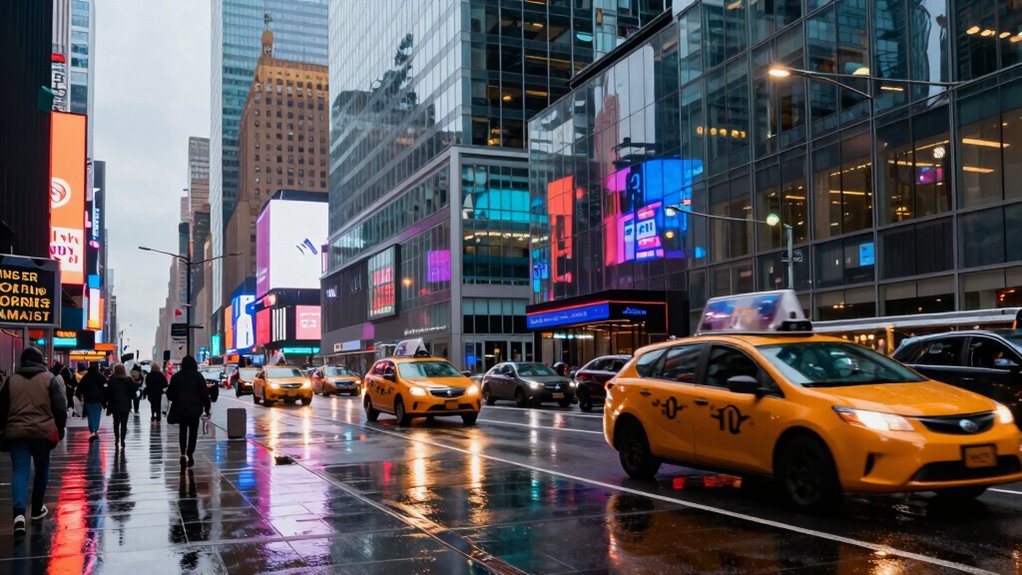
Is there a secret way to make city scenes feel more alive and three-dimensional? Using reflections and urban surfaces can do just that, adding fresh depth to photos of Brooklyn streets and beyond. The New York aesthetic thrives on layers, and reflections off storefront windows, glass skyscrapers, or shiny metal façades create a sense of multiple worlds in one shot.
Photographers can capture inverted cityscapes or juxtapose pedestrians with their reflected images for a dynamic story. Early or late light enhances these surfaces, highlighting textures on bricks, chrome, or polished stone. Positioning oneself to include both the reflection and real subjects adds a layered narrative—think subway entrances or rain-slick sidewalks.
Experimenting with gridlines and typography in reflections emphasizes the city’s visual chaos and urban character, making each shot uniquely city inspo.
3. Focus on Dynamic Light and Shadows During Different Times of Day
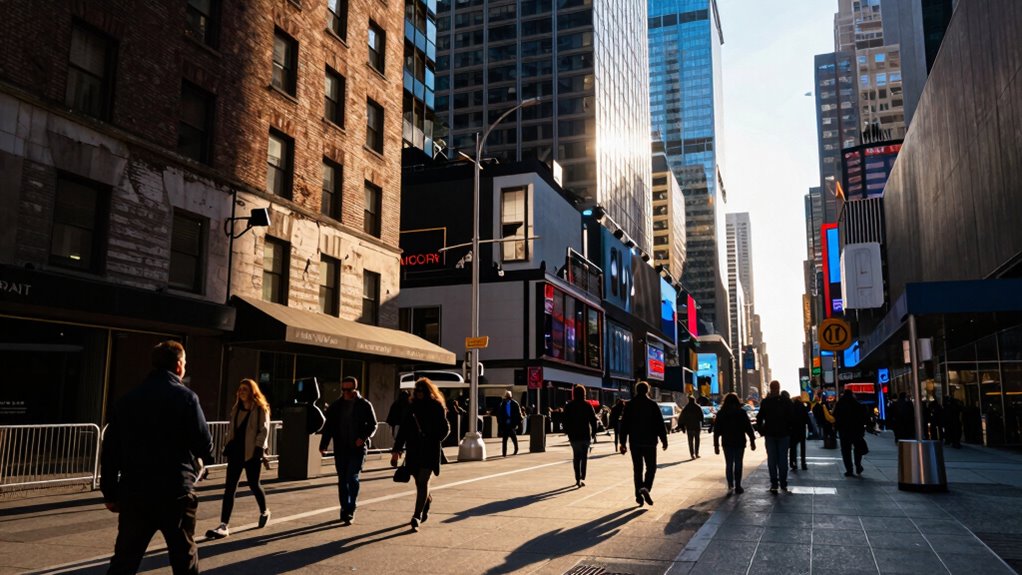
The changing qualities of light throughout the day transform the city into a living canvas, especially in a place like New York where towering buildings create dramatic shadows and pools of sunlight. During golden hours—about an hour after sunrise and before sunset—photographers can capture warm, directional light that emphasizes textures and shapes.
When the sun is lower, shadows stretch long and create striking patterns along streets and alleyways. At midday, the bright sun produces stark contrasts and highlights, perfect for bold silhouettes. Night scenes come alive with reflections from storefront windows, neon signs, and street lamps, which add layers and vibrant colors.
To make the most of these dynamic lighting moments, photographers can:
- Use side lighting during golden hours
- Capture reflections to add depth
- Embrace silhouettes when shadows are bold
4. Incorporate Neighborhood Characters and Local Flavors Into Your Shots
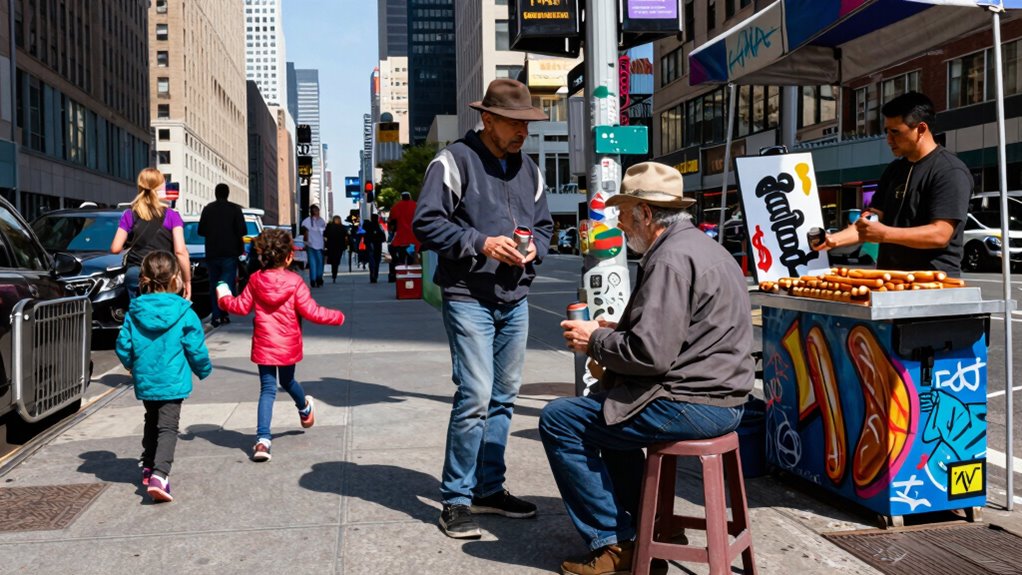
What makes a neighborhood come alive through a camera lens? It’s the people, their routines, and the unique atmosphere that define each area. In NYC, neighborhoods like SoHo with its cast-iron buildings, Chinatown’s vibrant streets, and the West Village’s charming facades all offer rich character.
Capturing buskers at Washington Square Park or chess players in Columbus Park showcases local energy and interactions. Busy corners form a lively “ballet” of pedestrians, perfect for framing overlapping gestures. Incorporating storefronts, vendor stands, and window displays adds cultural depth. Night scenes with neon signs and storefront lighting reveal neighborhood personality.
Here’s a visual guide to these characters and flavors:
| Neighborhood | Local Characters | Unique Features |
|---|---|---|
| SoHo | Artists, shoppers | Cast-iron facades |
| Chinatown | Vendors, night owls | Neon signs, colorful streets |
| East Village | Musicians, students | Eclectic vibe |
| West Village | Curbside charm, locals | Historic townhouses |
| Downtown | Nightlife, street performers | Bright neon, bustling streets |
5. Experiment With Lower Angles and Skyward Perspectives for Dramatic Effects
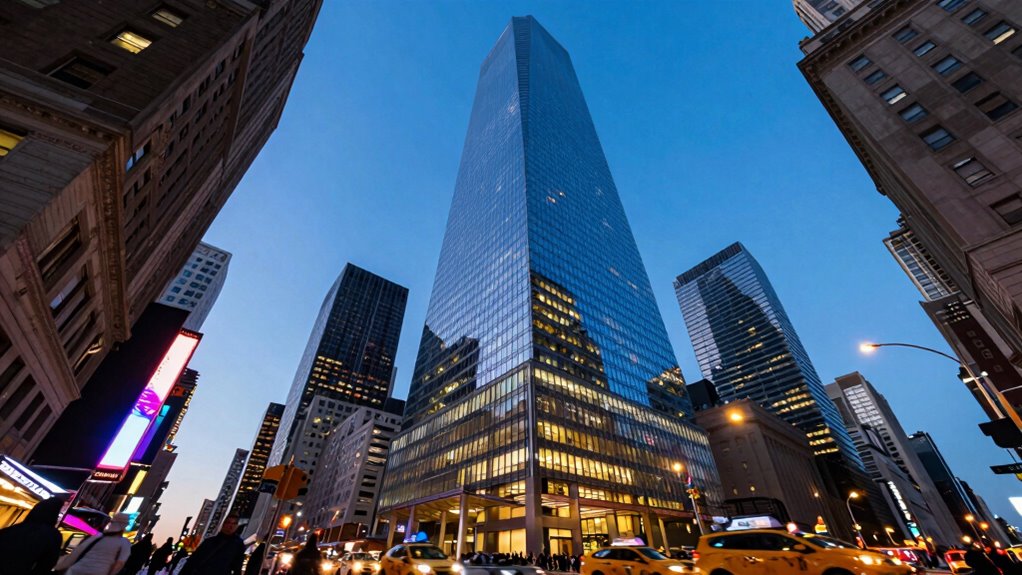
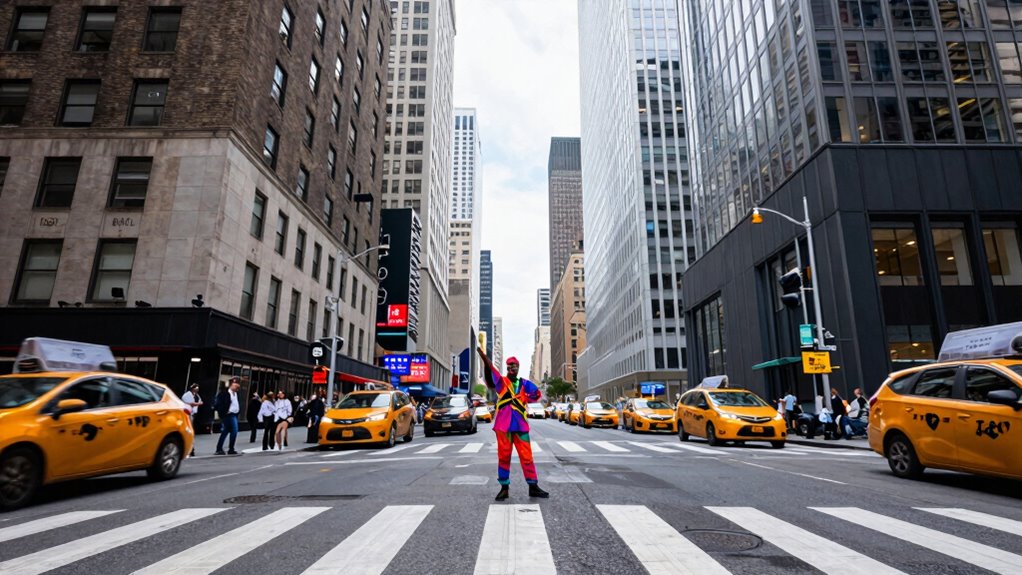
To add drama and depth to street scenes, experimenting with lower angles and skyward perspectives can make a big difference. By kneeling or shooting from curb height, photographers can emphasize street activity and create striking foreshortening of tall buildings, making them seem even more imposing. Combining these angles with architectural elements like fire escapes or bridge arches highlights the city’s impressive height and scale.
Using wide-angle lenses, around 16–35mm, from a low position captures vast skies and narrow, canyon-like streets. Timing shots during golden hour or when shadows stretch across the ground adds contrast and visual interest. For dynamic compositions, shooting around street corners or beneath elevated trains frames lines pointing skyward, giving photos a cinematic, energetic feel.
6. Seek Out Murals, Street Art, and Typography for Bold Visuals
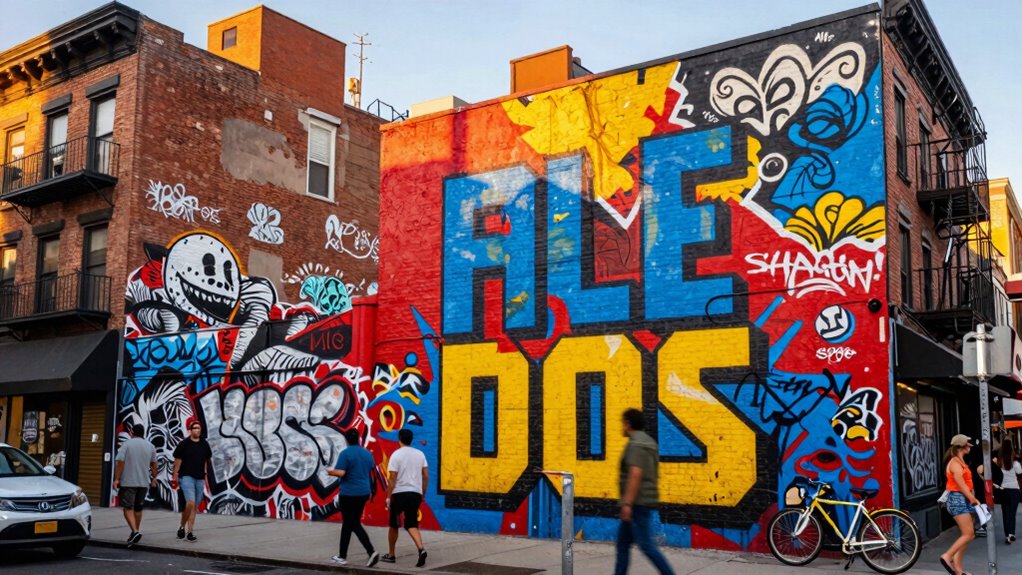
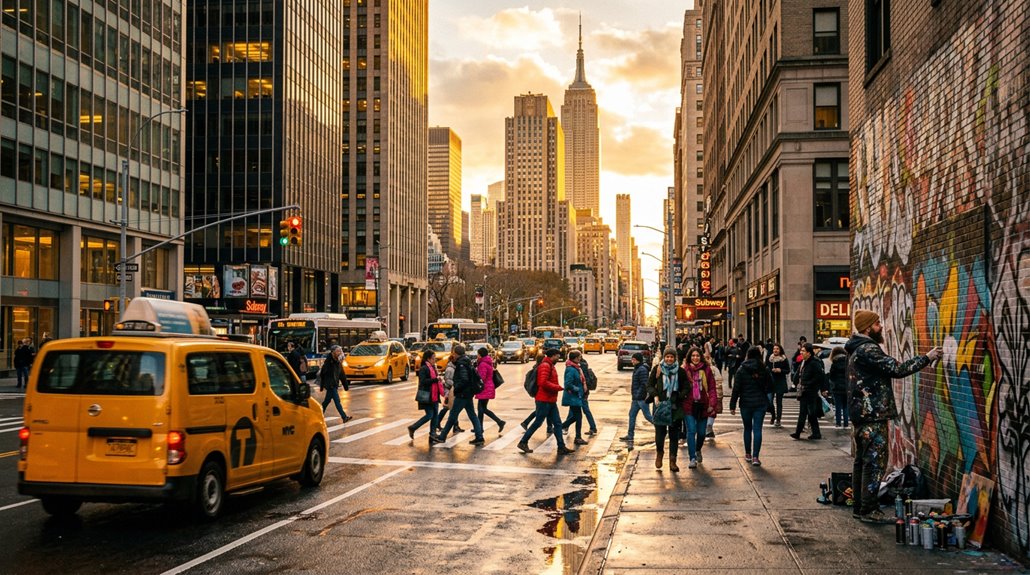
Have you ever noticed how murals and street art add a burst of color and character to New York City streets? These bold visuals, like Eduardo Kobra’s Immigrants or the David Bowie mural on Jersey Avenue, serve as striking focal points in street photography. Photographers can use murals as framing devices by including passersby, creating a sense of scale and storytelling. Visiting murals at different times of day reveals unique lighting, reflections, and textures that make colors pop.
Additionally, street art often interacts with typography—think billboards, shop signs, or window displays—adding layered depth to images. Treat murals as anchors for photo essays, pairing them with nearby vendors, graffiti details, or architectural elements, and craft a visual narrative that captures the city’s vibrant energy.
7. Capture Quiet Moments and Candid Interactions in Bustling Places
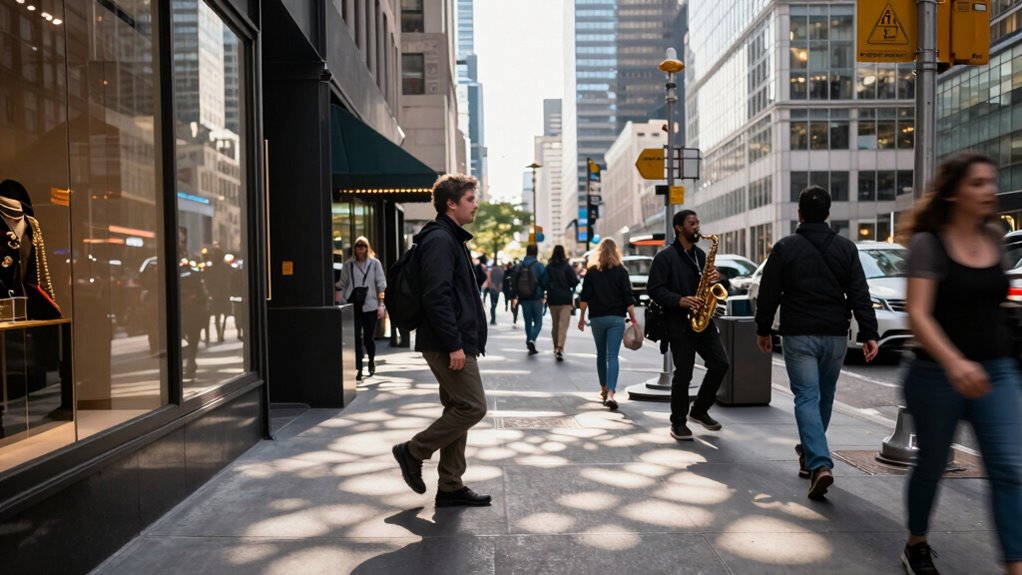
In the midst of NYC’s lively streets, capturing quiet moments and candid interactions offers a different perspective on city life—one that reveals genuine human stories behind the hustle and bustle. Waiting at a corner or busy intersection allows spontaneous exchanges to unfold naturally, providing authentic shots. Using a near-distance approach—focusing closely over time—helps capture subtle expressions and gestures that tell a story. To blend seamlessly, photographers should avoid direct eye contact, instead shooting as if observing background details and quick snapshots before moving on.
Focus on everyday interactions, like vendors chatting or passersby sharing a quick smile. Shooting in iconic spots with bright storefronts, neon signs, or crowded sidewalks increases chances of capturing these candid moments. This approach turns everyday scenes into powerful city stories.