As an Amazon Associate, this website earns from qualifying purchases.
A Nara day trip offers a mix of ancient temples, peaceful deer-filled parks, and charming gardens. Visitors should arrive early to avoid crowds and explore highlights like Todai-ji with its giant Buddha and Kasugataisha Shrine nearby. The sacred deer in Nara Park are friendly and eager for crackers, making for memorable photos. For a calming break, stroll through Isuien or Yoshikien Gardens, and enjoy stunning views from Mt. Wakakusa. Keep exploring to uncover more hidden gems and practical tips.
How to Plan Your Nara Day Trip: Essential Tips and Timing
Are you wondering how to make the most of a day in Nara without feeling rushed or missing out on its best sights? Planning your Nara day trip timing is key to a smooth experience. To start, arrive by 8 am to avoid crowds, especially at popular spots.
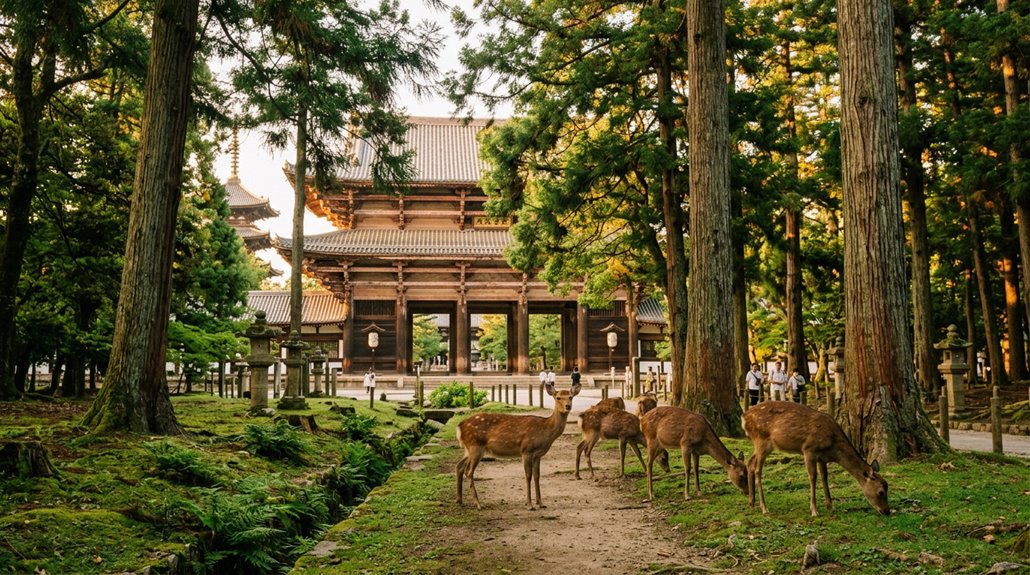
Begin a self-guided walk from the west end near JR Nara Station, heading toward Todai-ji Daibutsuden, which houses a towering bronze Buddha statue. Along the way, visit Nara Park, famous for its friendly deer. Here, you can feed them with shika senbei crackers costing around ¥200 and watch as deer bow politely requesting food.
Afterward, plan to explore Nara Park deer feeding and the Todai-ji Daibutsuden, making sure to enjoy the tranquil atmosphere without feeling hurried.
Navigating Nara: Best Ways to Reach and Explore the Park
Getting around Nara is straightforward and offers several convenient options to explore the city’s famous sights. For easy access to Nara Park and its attractions, most visitors arrive at Kintetsu-Nara Station, which is close to the park’s entrance. Arriving around 8 am helps avoid the crowds that grow after 10 am. Inside the station, luggage storage is available, and nearby Rokumei Coffee opens early for a quick caffeine boost.
Travelers can also consider the Aoniyoshi sightseeing train between Osaka, Nara, and Kyoto, which requires a reservation and costs about $6 plus fare. If arriving at JR Nara Station, it’s about a 20-minute walk to the park. Buses and taxis circle the park’s edges, making exploration flexible and easy. Todai-ji’s hours vary seasonally, so checking times ahead is recommended.
Top Must-See Temples and Shrines in Nara
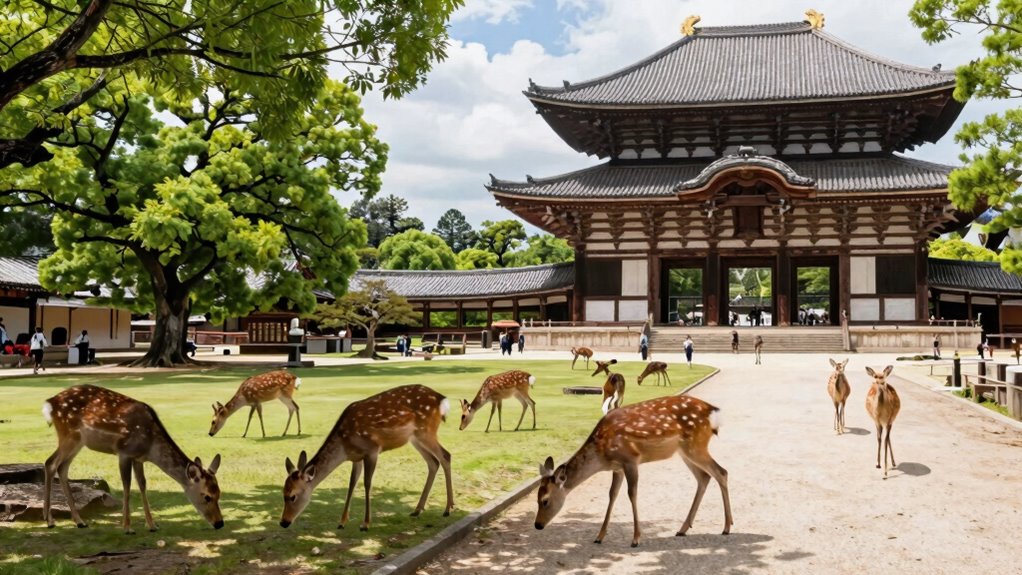
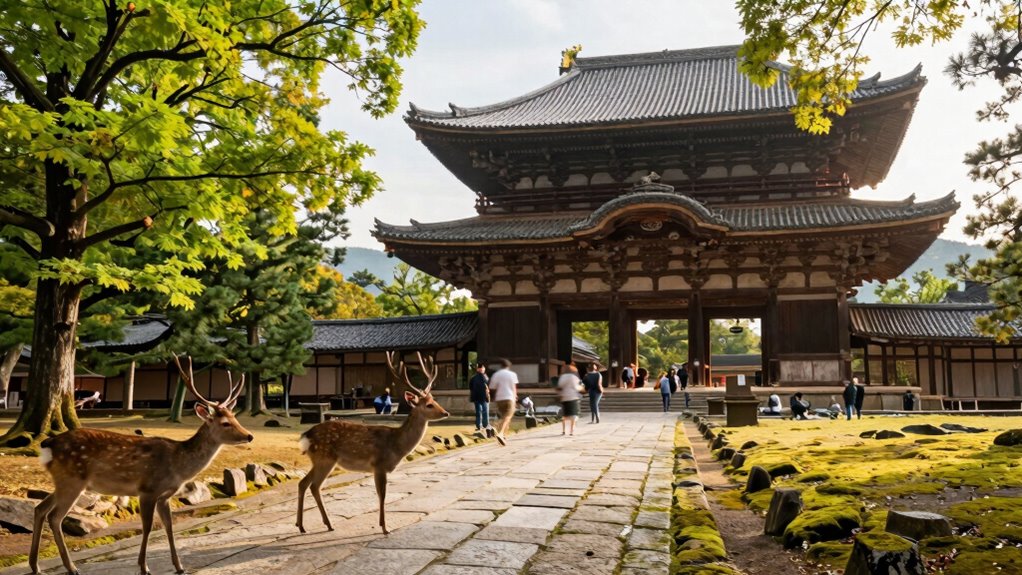
Nara is dotted with stunning temples and shrines that showcase Japan’s rich spiritual history, making them essential stops on any visit. Among these, Todai-ji stands out for its massive Great Buddha (Daibutsu), a 15-meter-tall bronze statue housed in the Great Buddha Hall, rebuilt in 1709. As visitors approach, the impressive Nandaimon Gate greets them with two towering guardian figures, protecting the complex.
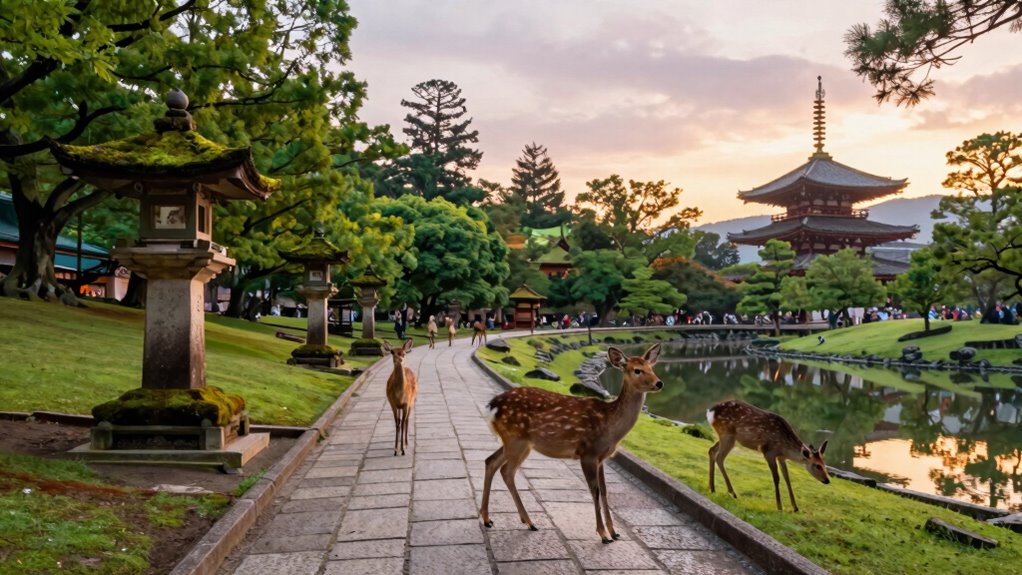
Nearby, Nara Park provides a peaceful setting for reflection and strolls. Across the park, Kasugataisha Shrine enchants visitors with its brass lanterns and beautiful wisteria in spring. These sites offer a glimpse into Nara’s sacred heritage, blending history, architecture, and natural beauty into an unforgettable experience.
Encountering Nara’s Sacred Deer: Feeding and Photo Tips
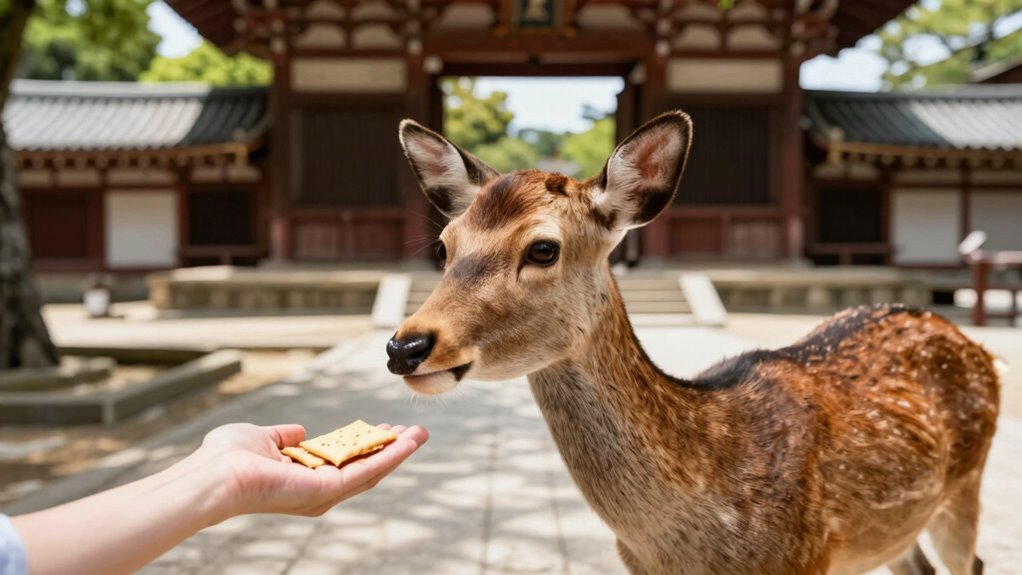
Have you ever wondered why the deer in Nara are so friendly and enthusiastic to interact with visitors? The Nara deer are considered sacred, often called “messengers of the gods,” and their tame behavior makes encounters memorable.
To make the most of these interactions, follow these tips: Purchase deer crackers from vendors, usually around ¥200, and keep them hidden until feeding time. Approach the deer calmly and watch for their polite bow. These bowing deer are requesting crackers in a charming gesture.
When offering crackers, do so gently and avoid turning your back to prevent startling them. Capture the moment with photos, as these friendly Nara deer often mingle along sidewalks and near major sights, creating perfect photo opportunities.
Enjoy the magical experience of feeding and photographing Nara’s sacred deer!
Exploring Nara’s Iconic Landmarks: Todai-ji and Kofuku-ji
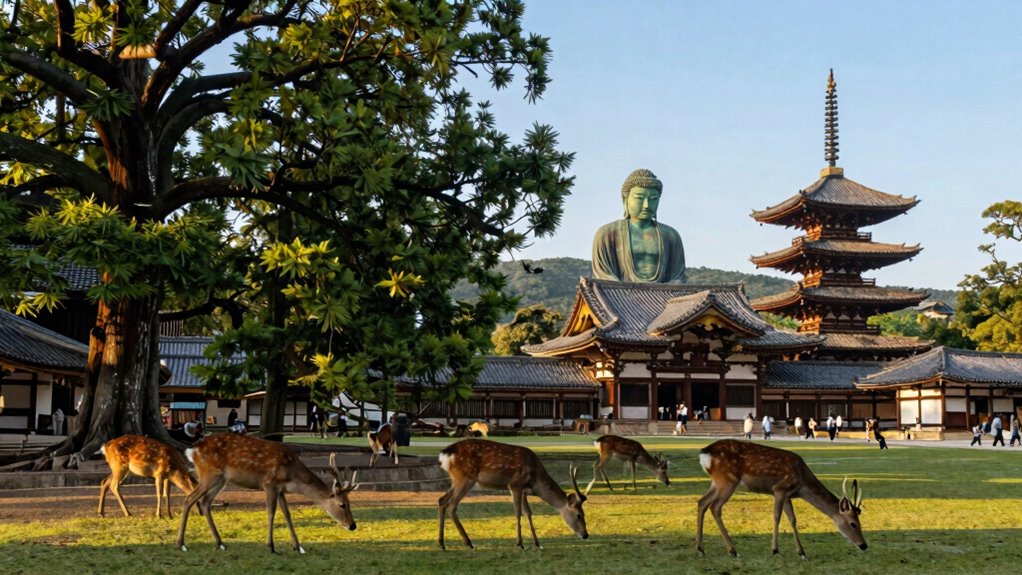
Ever wondered what makes Nara’s main temples so enthralling? Todai-ji and Kofuku-ji are two of the most iconic landmarks in the city, deeply rooted in history and culture. Todai-ji houses the Great Buddha (Daibutsu), a towering 15-meter statue in the Great Buddha Hall (Daibutsuden), rebuilt in 1709 after fires. Visitors enter through Nandaimon Gate, passing guardian figures that seem to watch over the site.
Nearby, Kofuku-ji, founded in 669, features an elegant five-storied pagoda, Japan’s second tallest at 50.1 meters, and beautiful octagonal halls. Both temples are nestled within Nara Park, a sprawling area filled with deer and scenic spots. Exploring these landmarks offers a rich glimpse into Japan’s spiritual heritage and architectural marvels.
Discovering Beautiful Gardens and Cultural Spots in Nara
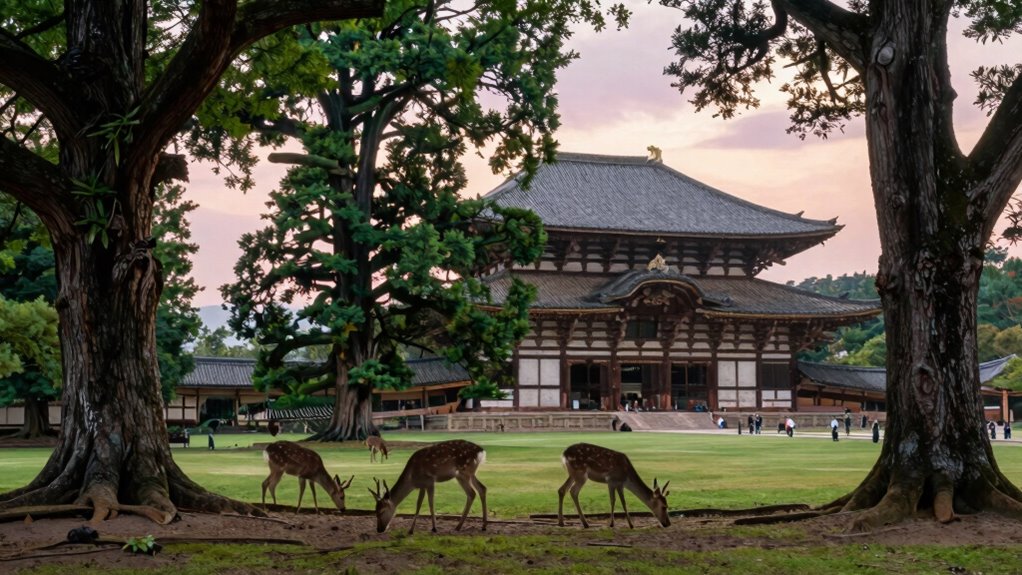
After exploring the impressive temples of Todai-ji and Kofuku-ji, visitors often find themselves drawn to the peaceful beauty of Nara’s traditional gardens and cultural spots.
- Nara Park is a favorite, where wandering deer add charm and serenity.
- Isuien Garden offers a beautiful stroll with stepping stones and borrowed scenery, blending formal and natural design.
Near Isuien, the Kohfukuji Temple complex features the iconic five-storied pagoda, Japan’s second tallest wooden structure. It is still under renovation until March 2031.
Yoshikien Garden nearby provides three distinct garden types—pond, moss, and tea ceremony gardens—free to explore and perfect for a peaceful break.
These gardens and cultural spots provide a tranquil retreat, deepening the appreciation of Nara’s rich heritage.
Enjoying Panoramic Views: Best Lookouts and Forest Trails
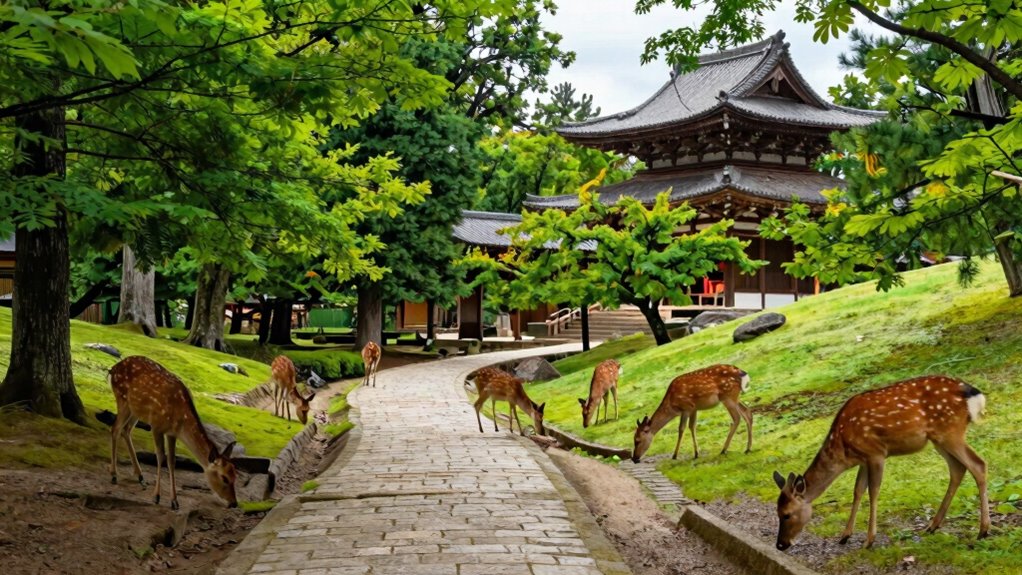
What better way to appreciate Nara’s stunning landscape than by exploring its best lookout points and forest trails? Mt. Wakakusa offers breathtaking panoramic views, with its grassy hill overlooking Nara Park and beyond. From here, visitors can see the entire city and Mount Kasuga in the distance, making it a perfect spot for photography or just soaking in the scenery.
The Mt. Kasuga Primeval Forest provides sacred trails that wind through ancient woodland habitats, offering peaceful walks near historic temples.
For a reflective moment, Nigatsudo Hall at Todai-ji presents a balcony view over Nara Park, especially beautiful at sunset.
The pathways around Kasugataisha Shrine, lit by lanterns in certain seasons, also provide elevated viewpoints, blending nature, spirituality, and spectacular vistas seamlessly.
Savoring Local Delicacies and Shopping in Nara’s Old Town
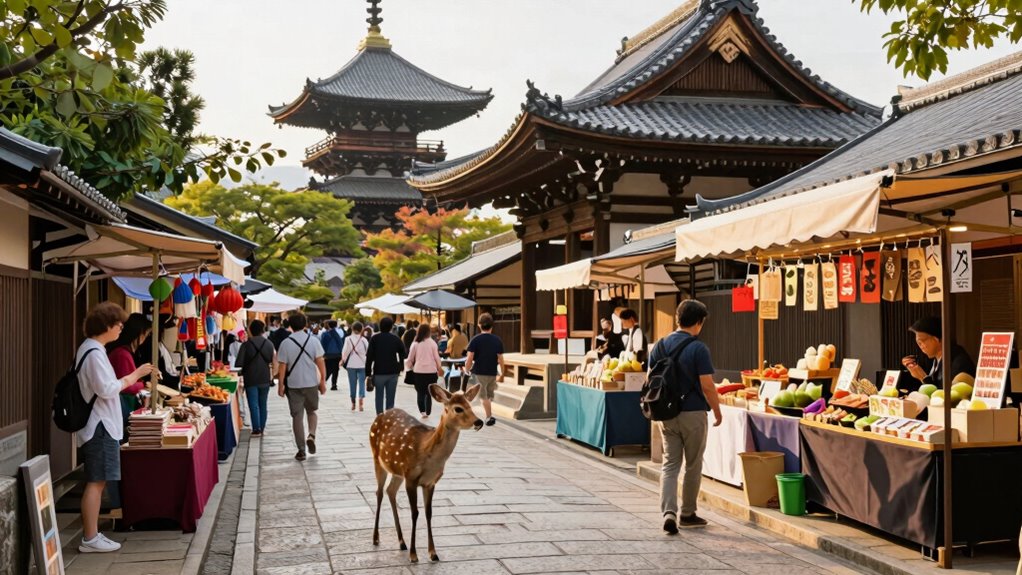
Have visitors ever wondered where to find authentic local flavors and unique shopping experiences in Nara? The Nara old town offers delightful options. For sweet treats, Kakisuga Main Shop specializes in persimmon treats infused with yuzu; tastings are available, and most treats keep for about a week.
The Mochiidonocho shopping district is perfect for a leisurely stroll, featuring vendors, cafes, and the Nakagawa Masashichi flagship store upstairs. After temple visits, Higashimuki Shopping Street provides a covered arcade with shops and restaurants, ideal for casual wandering.
Lastly, visitors can enjoy traditional tea ceremonies at Salon Naramachi or watch mochi-pounding demonstrations at Nakatanidou. Both spots are popular and add flavor to a day exploring Nara’s vibrant old town.
Practical Tips for a Smooth and Memorable Nara Day Trip
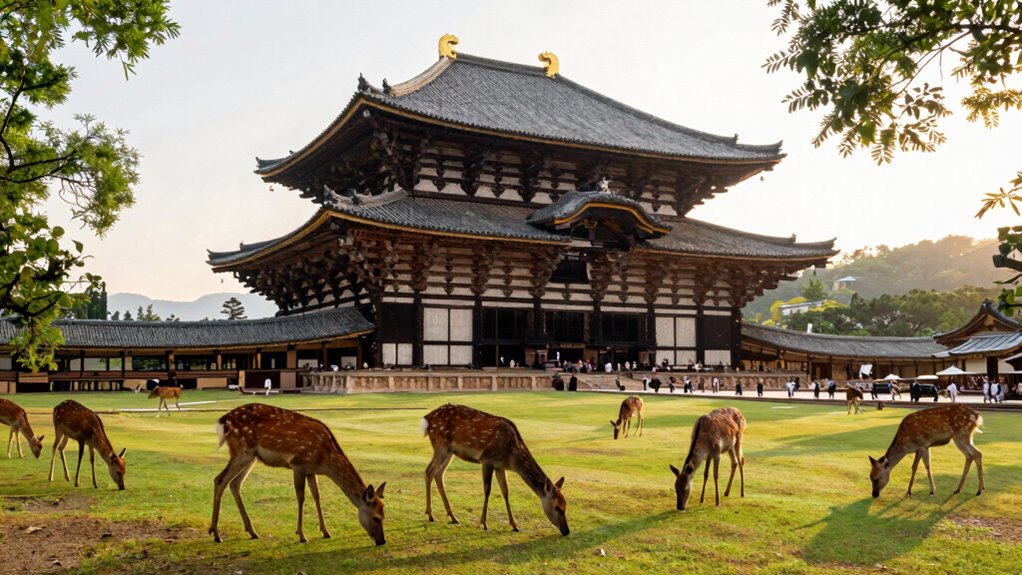
Ever wondered how to make a trip to Nara as smooth and enjoyable as possible? Starting at Nara Station is a smart move, as it provides easy access to major sights like Nara Deer Park and Todai-ji. The station offers luggage storage, so travelers can explore comfortably, while coffee shops like Rokumei Coffee open early at 8 am for a quick boost.
To avoid crowds, plan your visit between 8 and 10 am when the park and temples are quieter. When feeding the deer, buy shika senbei (deer crackers) for about ¥200. Wait for them to bow before offering treats, and keep crackers hidden to prevent surprises.
For transportation, consider the Aoniyoshi sightseeing train, which offers a convenient and affordable way to explore Nara’s highlights.