As an Amazon Associate, this website earns from qualifying purchases.
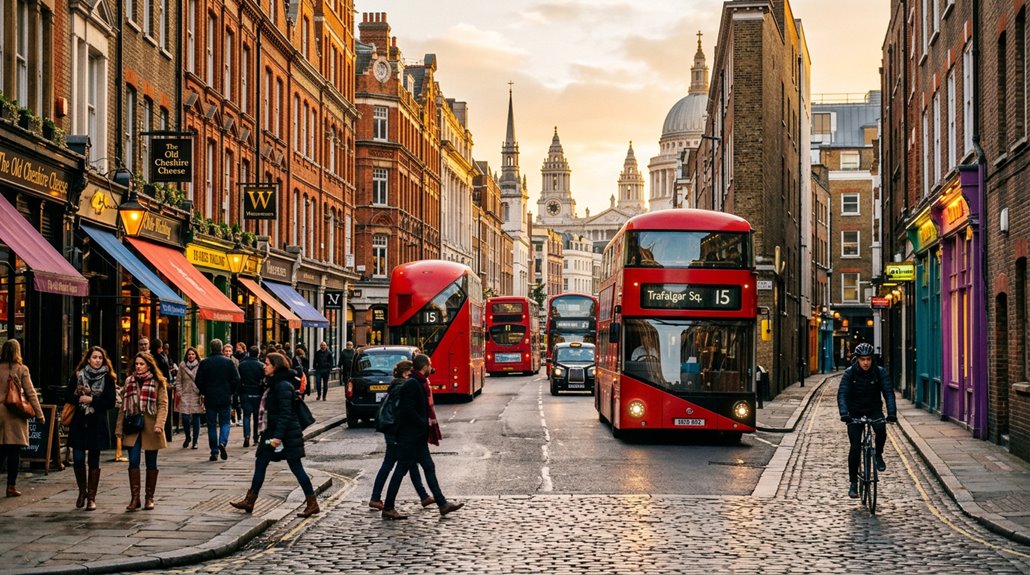
London’s lively streets offer many great spots for photography. Brick Lane showcases colorful markets and diverse crowds, perfect for candid shots. South Bank stands out for geometric patterns and reflections, ideal for bold compositions. Camden Town bursts with energy around its markets and waterways. Iconic landmarks like Tower Bridge and St Paul’s provide stunning backdrops, while hidden spots like Lovat Lane offer unique perspectives. Techniques such as using leading lines or playing with light and shadows can add drama. To capture authentic moments respectfully, choose discreet gear and observe the scene carefully. Exploring these tips and locations will uncover even more ways to tell London’s story through your lens.
1. Discover the Best London Locations for Capturing Street Life
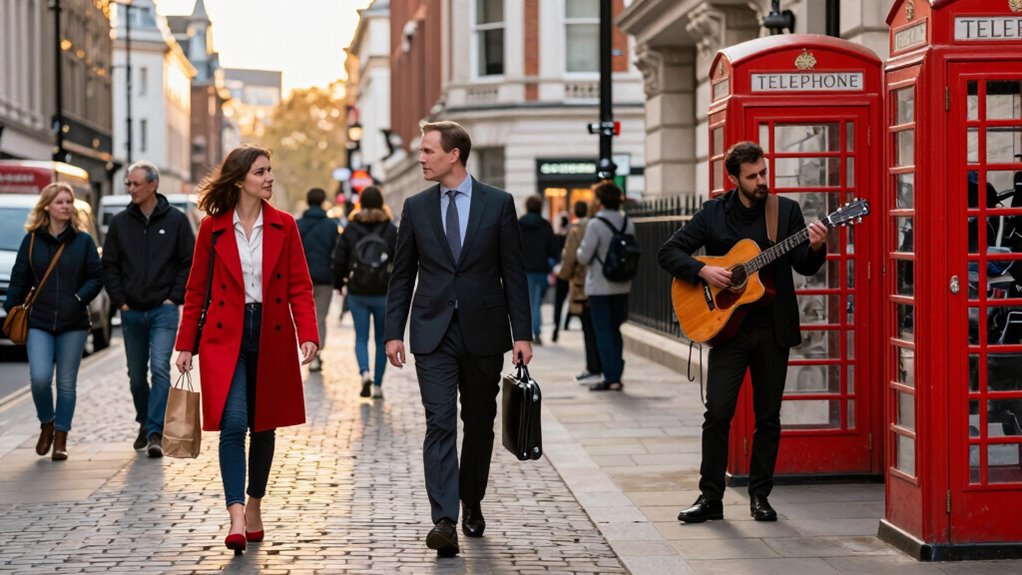
Have you ever wondered where the best spots are to capture London’s lively street scenes? For those interested in London street photography, areas like Brick Lane in East London are perfect. Brick Lane street photography showcases diverse urban life, with colorful markets and characterful locals who often welcome photographers.
Meanwhile, the South Bank offers striking opportunities with its high-contrast, geometric compositions created by light wells and tunnels—best on bright sunny days. Camden Town is another lively location, especially around the markets and Camden Lock. Shooting early in the day helps avoid crowds.
These spots provide a variety of scenes, from bustling markets to scenic river views, making them ideal for capturing London’s vibrant street life. Each location offers unique moments waiting to be photographed.
2. Master Composition Techniques to Elevate Your London Street Photos
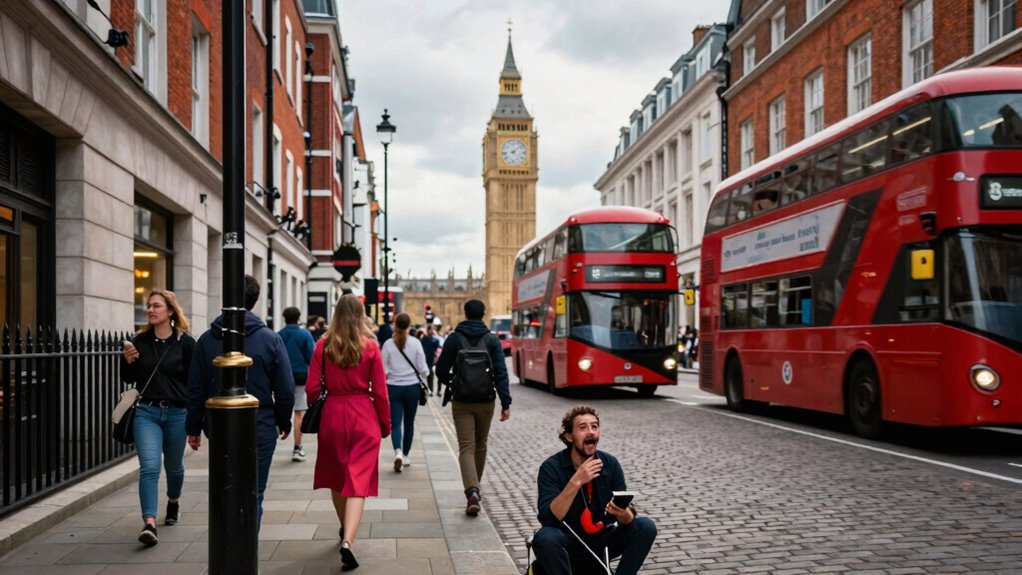
Great street photos often hinge on strong composition—how elements are arranged within the frame to tell a story or evoke a mood. In historical London street photography, using geometric lines from landmarks like the Barbican or Bank of England creates striking contrast with negative space, drawing the viewer’s eye. Lead-in lines, such as yellow lanes on Watling Street or rails in Westminster, help guide the viewer through the scene naturally.
Pairing iconic backdrops like St Paul’s or Tower Bridge with foreground stories—pedestrians, reflections, market stalls—adds depth and narrative. During bright sunny days, sharp shadows highlight architecture, while rain or after-dark scenes reveal reflective surfaces and vibrant street life. Exploring hidden viewpoints at Lovat Lane or rooftops at One New Change offers fresh perspectives that elevate any London street photo.
3. How to Use Light and Shadows to Create Dramatic London Street Images
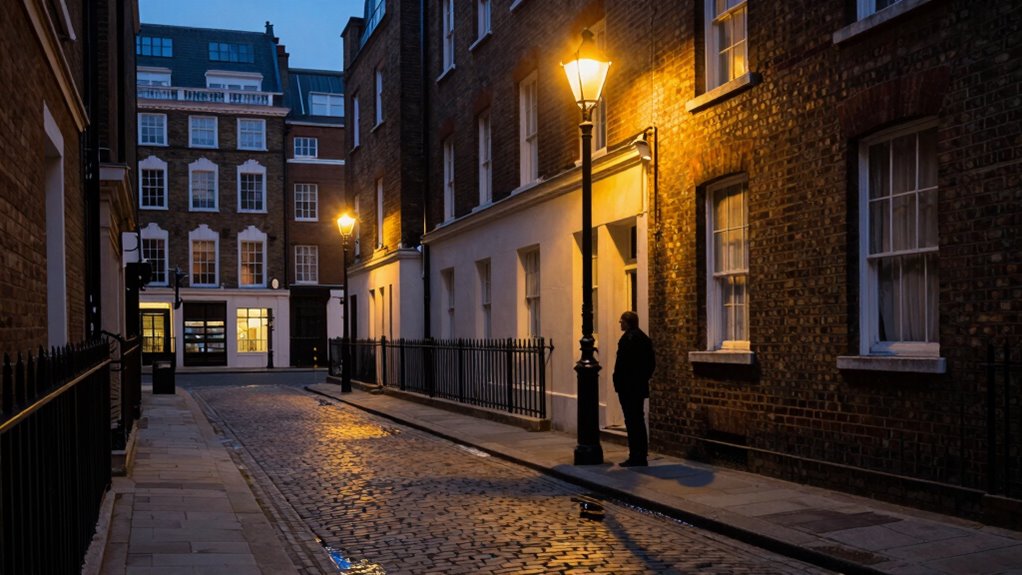
Ever wondered how light and shadows can turn a simple street scene into a dramatic photograph? Using natural light creatively can dramatically enhance your images. For example, on bright sunny days, high-contrast shadows highlight architectural lines, especially at structures like the National Theatre or the Barbican.
To make the most of shadows, consider:
- Shooting during early mornings when long shadows stretch across the streets, adding depth.
- Using light wells, tunnels, and reflections, like wet cobbles near the Tower of London, to create striking geometric shapes.
- Choosing black and white photography to emphasize stark shadows and dramatic contrasts.
- Seeking negative space, like the South Bank walk, to balance massive buildings with minimal clutter.
These techniques help transform ordinary scenes into captivating, mood-rich photographs.
4. Tips for Approaching and Photographing People in London Streets
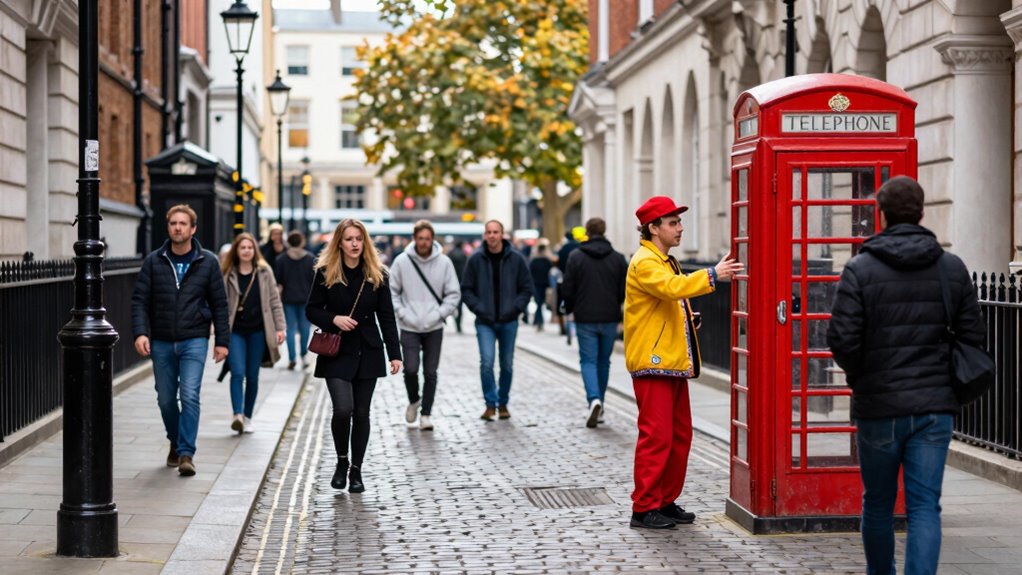
What’s the best way to capture genuine moments of people on the busy streets of London? The key is to be discreet: blend in, observe the flow of crowds, and wait patiently for natural interactions. Approaching people directly can feel intrusive, so building rapport first is helpful. When someone catches your eye and you want a portrait, politely ask for permission; most will appreciate your respect.
Using a longer lens, like 85mm or 135mm, allows you to take candid shots from a respectful distance, reducing discomfort. Pay attention to your background—minimize clutter and look for reactions or gestures that reveal authentic emotion. Lastly, learn local etiquette: avoid photographing children without permission and respect private property boundaries, ensuring your street photography remains respectful and enjoyable.
5. Capture London’s Iconic Architecture and Unique Urban Textures
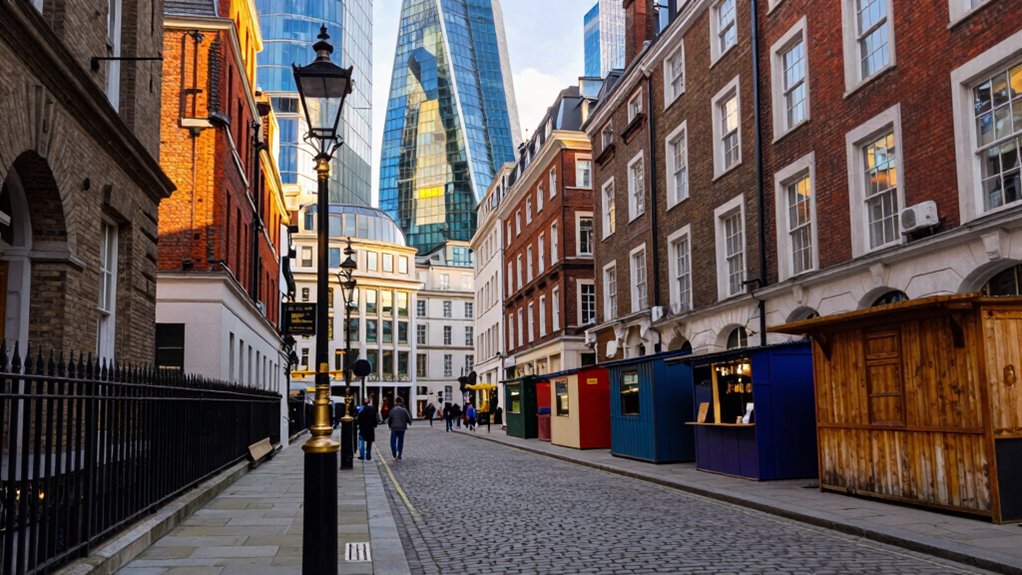
London’s streets are a living canvas of architecture and textures, offering endless opportunities for engaging photos. From historic buildings to modern marvels, the city’s diverse structures create fascinating scenes. To capture this, consider these tips:
- Focus on landmarks like St Paul’s Cathedral or One New Change for striking backdrops.
- Explore areas like Bank of England and cobbled lanes, where textures and shadows tell stories.
- Visit the Barbican to photograph bold geometric shapes and deep shadows in brutalist design.
- Use the sunlight at Paternoster Square to cast dramatic shadows with its large columns.
6. Find Hidden Spots and Unique Perspectives in Popular London Areas
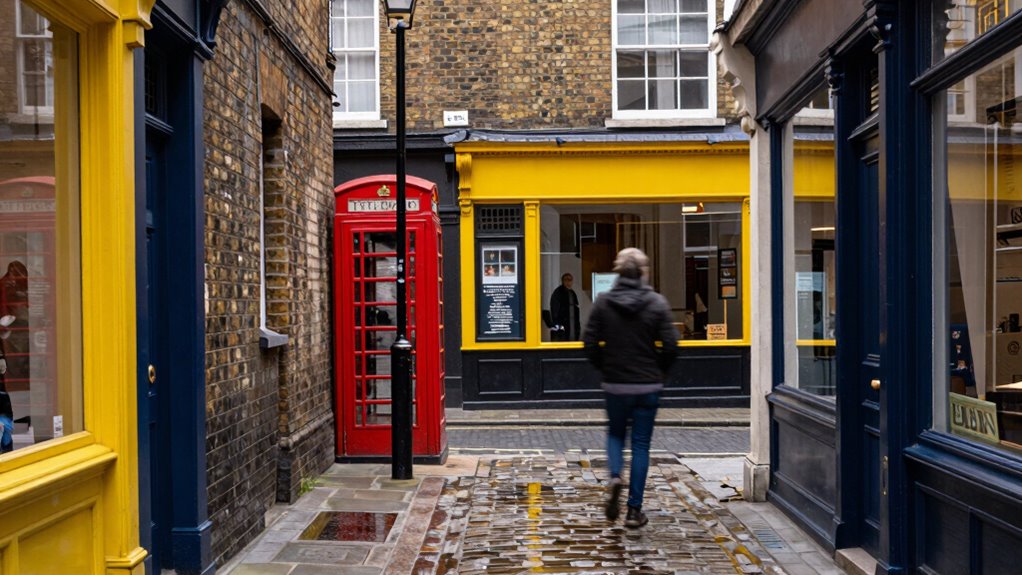
Finding hidden spots and distinctive perspectives in popular London areas can transform a standard cityscape into a captivating story. Lovat Lane offers a charming cobblestone foreground that frames a view of the Shard, blending old street textures with the sleek modern skyline. Exploring backstreets here reveals framing opportunities often missed.
Watling Street is another gem, where surrounding buildings naturally frame St. Paul’s Cathedral, and yellow painted lines serve as lead-in lines, guiding the eye through the urban scene.
Meanwhile, St Helen’s Place, tucked away among tall skyscrapers, provides a quiet view of The Gherkin, mixing historic architecture with contemporary design. These lesser-known spots show that even in popular areas, exploring small alleys and side streets can lead to striking compositions and fresh perspectives.
7. Practical Gear and Settings Tips for Successful London Street Photography
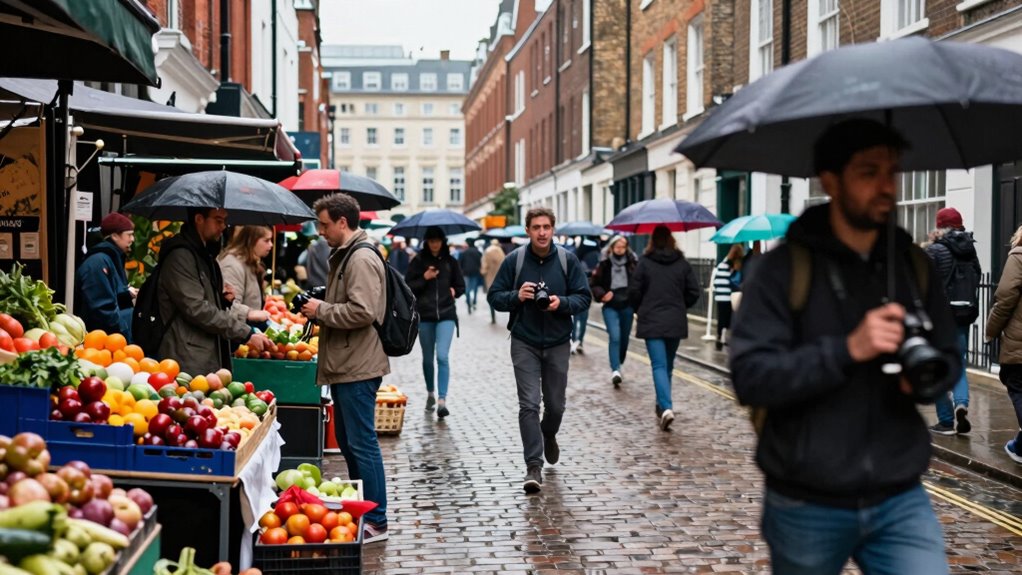
Have you ever wondered what gear works best for capturing the lively streets of London without drawing too much attention? The key lies in choosing discreet, versatile equipment. First, a compact camera with a quiet shutter and a small size helps avoid startling passersby. Second, using a 35mm f/1.4 lens allows plenty of light to enter in dim areas like underground tunnels.
Third, adjusting settings thoughtfully is essential. On overcast days, increase ISO and use faster primes to keep shots sharp. Fourth, when filming in busy spots, prioritize calm, quiet gear and avoid tripods unless permitted, as they can be bulky and draw attention. Overall, blending discretion with appropriate gear and settings creates a smoother, more natural street photography experience in London.