As an Amazon Associate, this website earns from qualifying purchases.
Greek-inspired design combines timeless features like arched doorways, whitewashed walls, and natural textures such as limestone and terracotta. Soft color palettes, including blues, sands, and greens, evoke the Mediterranean coast. Incorporating warm olive wood furniture and ceramic tiles adds authenticity and warmth. Outdoor spaces with stone benches, wrought-iron details, and Mediterranean plants complete the look. If these ideas catch your interest, exploring further reveals more tips for creating a harmonious Greek-modern space.
1. What Are the Key Elements of Greek Interior Design in Modern Mediterranean Spaces
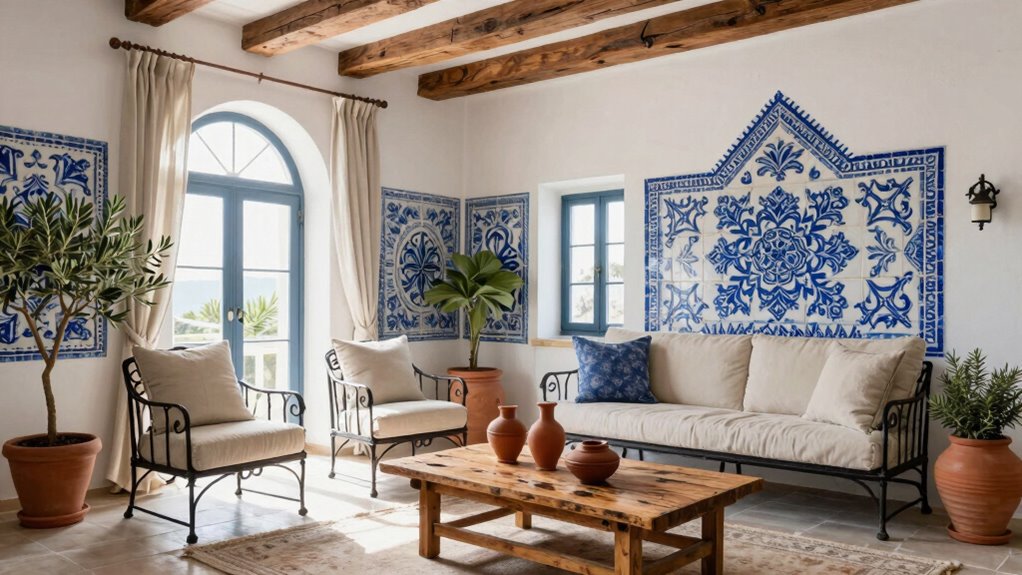
What are the key elements that make Greek interior design stand out in modern Mediterranean spaces? Central to this style are whitewashed surfaces, which reflect sunlight and create a bright, airy atmosphere. These surfaces are often combined with natural textures like stone, terracotta, and aged wood, adding warmth and tactile interest.
Arched doorways are another hallmark, offering a graceful, timeless touch that visually expands spaces and adds character. Alongside these features, soft neutral tones such as blues, sands, and greens evoke the calming beauty of the Mediterranean landscape. This combination of whitewashed walls, organic materials, and architectural details like arches forms a harmonious, relaxed environment that celebrates simplicity while highlighting natural beauty.
Together, these elements create a space that feels both elegant and inviting.
2. How to Incorporate Traditional Greek Architectural Features Into Your Home
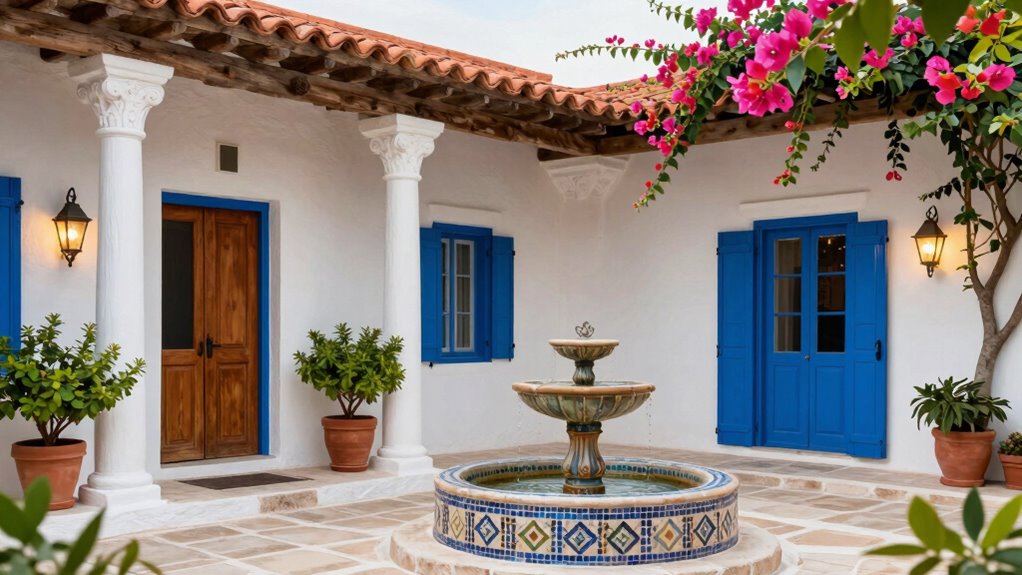
Incorporating traditional Greek architectural features into a home can transform a space into a Mediterranean retreat full of charm and history. One of the most striking elements is the use of arched doorways and windows, which evoke classic Greek design and add elegance to any room.
Pair these with whitewashed walls, creating a bright, airy backdrop that reflects the Aegean light and enhances natural brightness.
Using natural materials such as limestone, stone walls, olive wood furniture, and terracotta tiles helps mirror authentic Greek interiors while adding texture and warmth.
Built-in seating and benches with linen cushions blend seamlessly into the architecture, offering cozy spots that feel both functional and inviting.
These simple yet impactful features bring a genuine Greek ambiance into modern homes effortlessly.
3. Choosing Authentic Materials for a Greek-Inspired Mediterranean Look
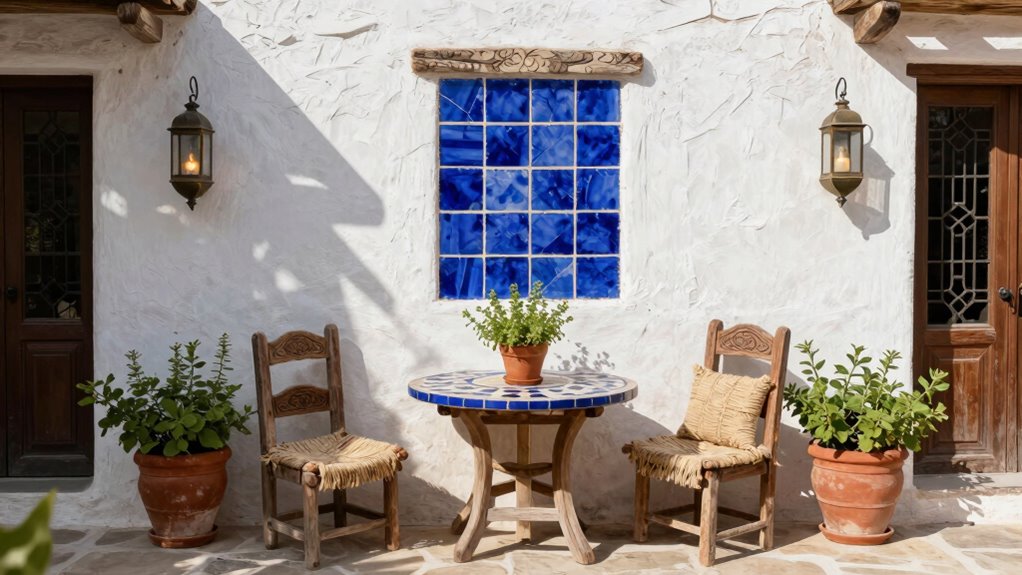
Finding the right materials is key to capturing that genuine Greek-inspired Mediterranean vibe. Natural, locally sourced materials like limewashed plaster walls create a soft, textured backdrop reminiscent of traditional Greek homes. Olive wood, known for its warm tones and durability, is perfect for furniture and accents, adding an authentic touch. Ceramic tiles with subtle geometric or meander patterns serve as decorative accents, bringing in classic Greek details.
The following table highlights some essential materials:
| Material | Description | Usage |
|---|---|---|
| Limewashed plaster | Soft, textured walls that reflect Greek tradition | Walls and ceilings |
| Olive wood | Warm, durable wood for furniture and decor | Furniture and accents |
| Ceramic tiles | Patterned tiles for floors and backsplashes | Floors and walls |
These elements work together to create a space that feels both authentic and inviting.
4. Using Color Palettes That Reflect Greek Coastal Charm
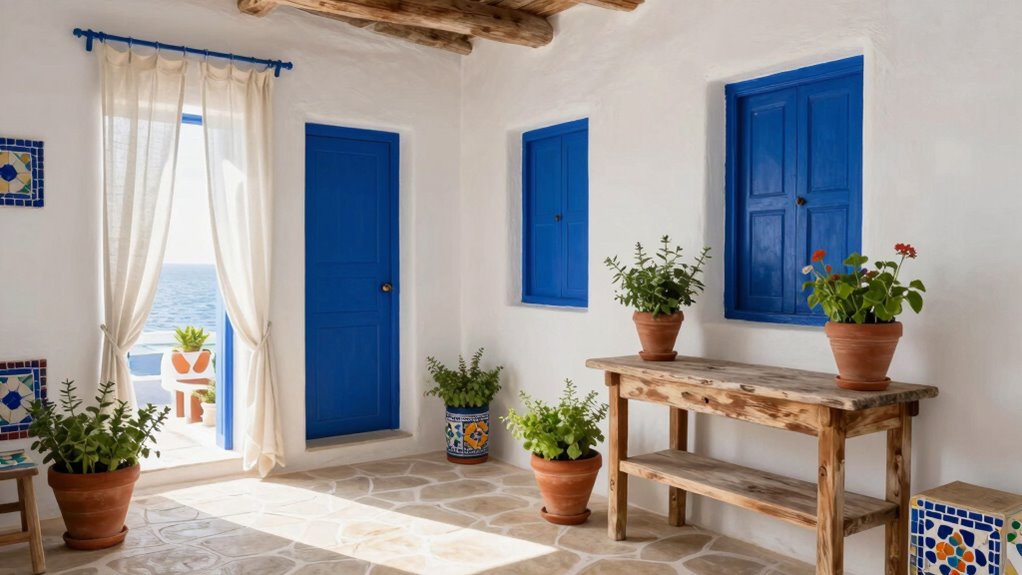
Color choices play an essential role in capturing the relaxed, breezy feel of Greek coastal living. The Greek color palette often features classic white and deep blue, inspired by seaside scenery and the Greek flag, creating a layered coastal look. A neutral base, such as white or cream, reflects Greek light and enhances the space’s brightness.
Accents in terracotta, olive green, and aquamarine mimic the Aegean Sea, adding warmth and freshness. Soft blues—like spa blue or sky blue—are used in textiles or tiles to evoke the Mediterranean’s calming waters. Additionally, botanical accents such as olive or rosemary plants complement the blue-and-white scheme, reinforcing the coastal charm. These color choices bring sunlit warmth and timeless elegance to modern Greek-inspired interiors.
5. Styling Furniture and Decor With a Greek Touch for a Timeless Feel
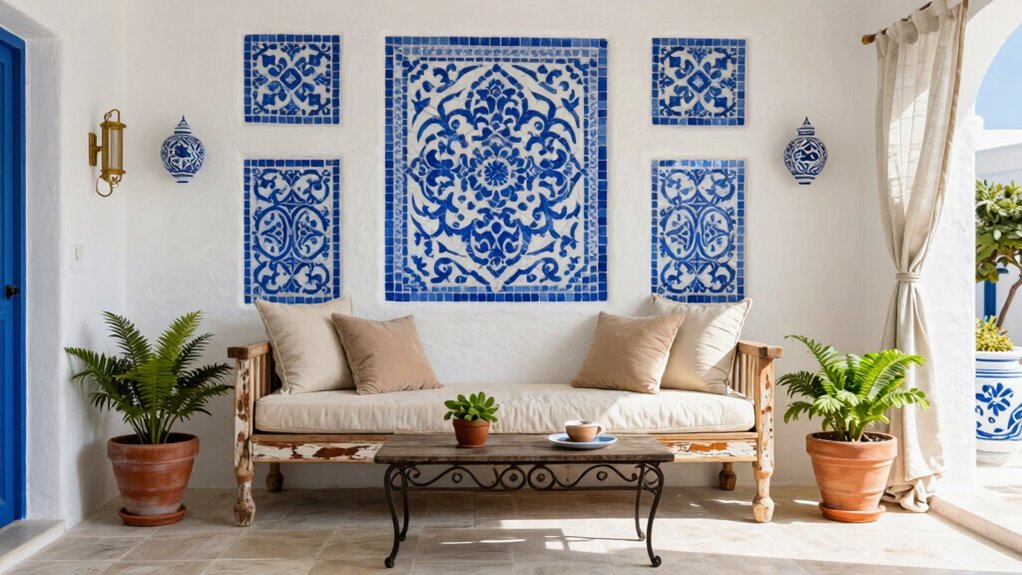
Ever wondered how to give furniture and decor a true Greek-inspired look that feels both timeless and inviting? Incorporating Greek pattern design into a space adds a subtle yet distinctive touch. Pair clean-lined furniture with marble-topped tables or carved legs to evoke classic Greek elegance. Using natural materials like limestone, whitewashed wood, and terracotta helps reflect Greek coastal textures and warmth.
Light-neutral textiles, such as linen or cotton upholstery, provide a calm backdrop, while accents in blues, greens, and sun-washed yellows mirror the Aegean light. To keep the look balanced, incorporate sculpture, ceramics, and carved motifs sparingly. Let a few statement pieces stand out. Built-in seating or low-profile benches with linen cushions enhance the serene, open feel characteristic of Greek design.
6. Creating Outdoor Spaces Inspired by Greek Courtyards and Terraces
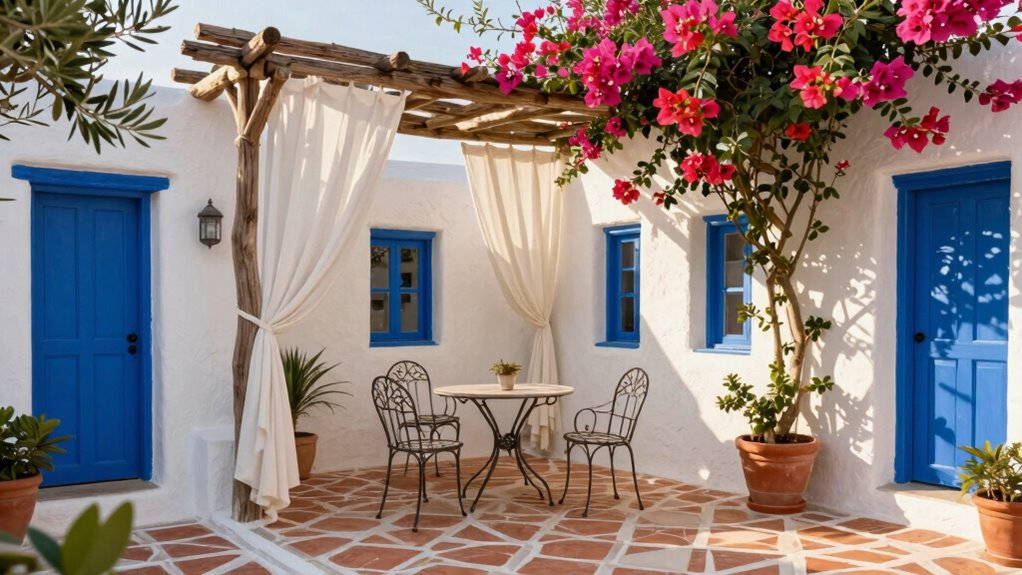
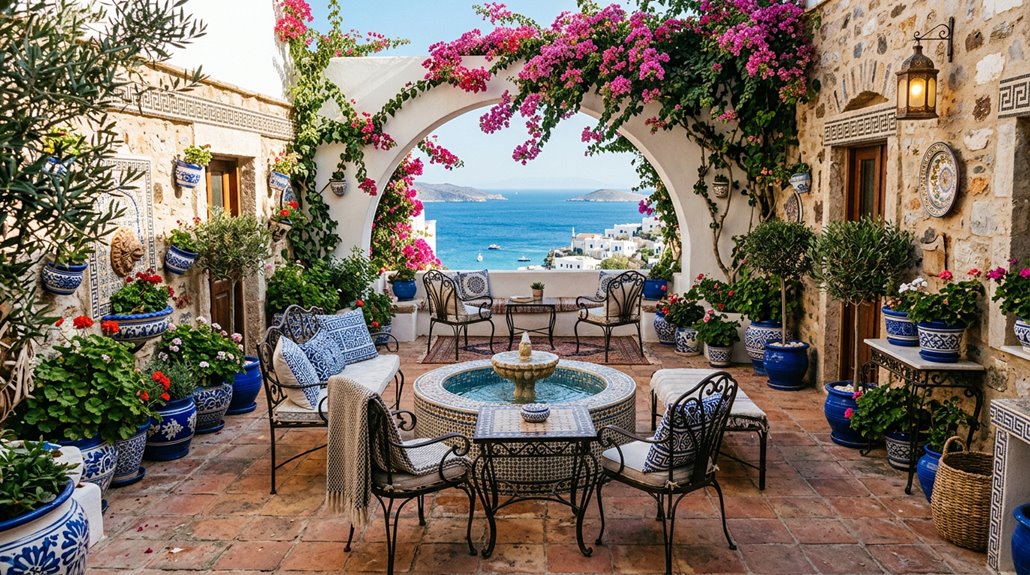
Greek-inspired outdoor spaces often draw from the charm of traditional courtyards and terraces, creating inviting areas that blur the line between indoors and outdoors. These spaces emphasize natural materials like lime-washed stone, whitewashed walls, and natural wood, helping surfaces stay cool under the sun.
To evoke a Greek design vibe, features such as arched openings, stone benches, and wrought-iron details are key. Plant choices lean toward Mediterranean favorites like olive trees, rosemary, and lemon trees, offering fragrance and low maintenance. Color accents in soft blues, warm terracotta, and neutral tones mirror coastal Greece. These elements enhance the Greece poster aesthetic, coming together to craft outdoor areas that feel both timeless and relaxed.
They are perfect for enjoying warm Mediterranean breezes in style.
7. Tips for Achieving a Balanced Mix of Ancient Elegance and Modern Comfort
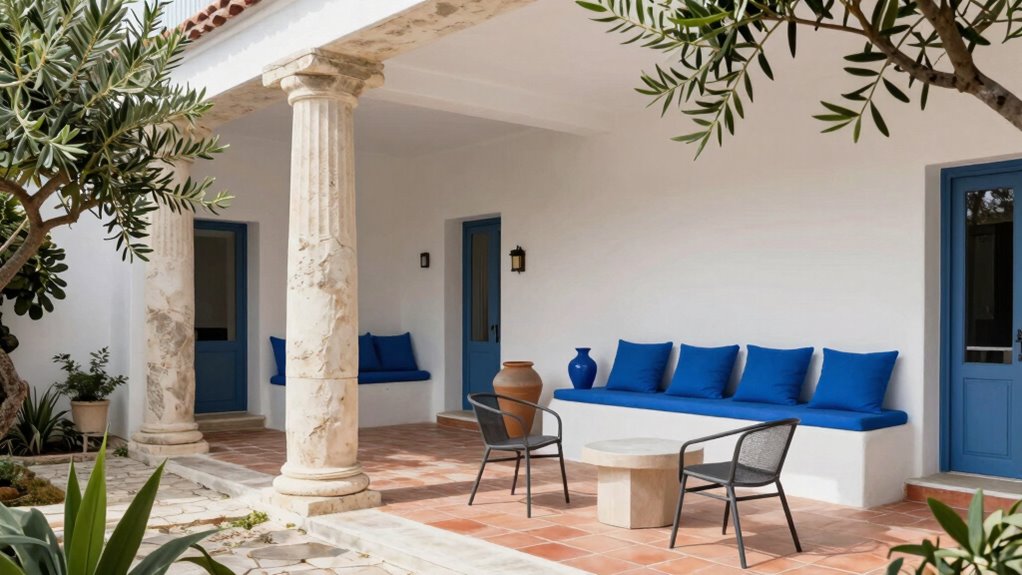
Have you ever wondered how to combine the timeless elegance of ancient Greek design with the comfort of modern living? Achieving this balance involves blending traditional and contemporary elements seamlessly. Using whitewashed walls with neutral tones and sky-blue accents captures Greek light while keeping the look fresh and modern. Natural materials like plaster, linen, and light wood create texture and warmth, paired with sleek, clean-lined furniture for comfort.
Architectural touches such as arched doorways or niches should be subtle, favoring built-in storage and minimalist details. To emphasize this balance, consider this table:
| Ancient Elements | Modern Adaptations |
|---|---|
| Arched doorways | Minimalist frames |
| Sculptures | One statement piece |
| Traditional textures | Sleek finishes |
| Sky-blue accents | Soft, neutral palette |
| Built-in storage | Clean lines |
This approach ensures a space that feels both timeless and inviting.
8. Practical Ideas for Adding Greek Cultural Details to Your Interior Design
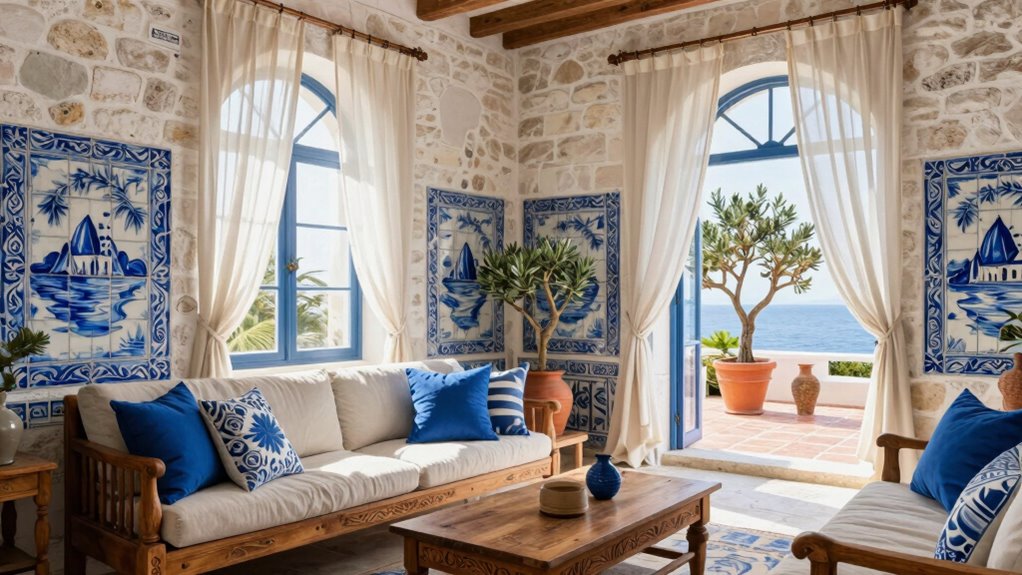
Adding Greek cultural details to interior design can transform a space into a lively, textured environment that celebrates history while feeling fresh. Incorporating classic art pieces, like busts or figurines, instantly evokes Hellenic influence—think of these as tiny windows into Greece’s rich past. Using whitewashed walls with arched doorways or niches reflects ancient Greek architecture, adding elegance and authenticity.
Natural materials like plaster, stone, linen, and light wood bring a tactile feel, mimicking Greece’s love for texture. Finally, choosing minimal, built-in furniture with clean lines and restrained ornamentation balances heritage with modern simplicity. To enhance the bright, airy vibe, maximize natural light through open layouts, light fabrics, and mirrors strategically placed to bounce sunlight around the room, making it feel warm and inviting.