As an Amazon Associate, this website earns from qualifying purchases.
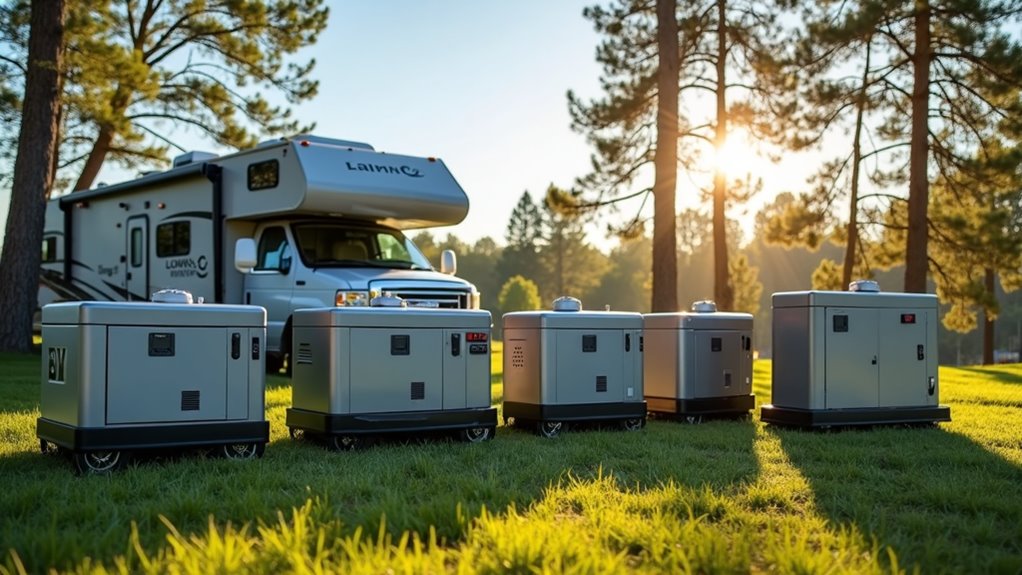
You’ll love the WEN DF360iX and DF480iX generators, offering dual-fuel capability and eco-mode efficiency. The Westinghouse iGen2550DFc is lightweight and RV-ready, while the Westinghouse 5000 Peak Watt model provides powerful, quiet operation. Don’t overlook the Westinghouse 6500 Watt generator for its longevity and reliable performance. These options blend power and portability perfectly for RV adventurers. Discover how these generators can enhance your on-the-road experience effortlessly.
WEN Portable Inverter Generator (DF360iX)
The WEN Quiet and Lightweight 3600-Watt Dual Fuel RV-Ready Portable Inverter Generator (DF360iX) is an excellent choice for RV enthusiasts seeking versatility and reliability. Weighing just 49 pounds, it’s easy to transport and set up. With 3600 surge watts on gasoline and 3500 on propane, you’ll have plenty of power. It runs quietly at 65 decibels, so it won’t disturb your peace. The dual-fuel capability offers flexibility, and its eco-mode optimizes fuel efficiency. Safety features like the CO Shutdown Sensor and low-oil shutdown provide peace of mind. You’ll appreciate its user-friendly design and strong customer feedback.
Best For: RV enthusiasts and outdoor adventurers looking for a portable, dual-fuel generator with reliable power and quiet operation.
Pros:
- Dual-fuel capability offers flexibility with gasoline and propane options.
- Lightweight design at 49 pounds makes it easy to transport.
- Produces clean power, safe for sensitive electronics.
Cons:
- Some users report rough running during the initial break-in period.
- Propane attachments may require modifications for convenience.
- May not be suitable for very high-demand power needs.
Westinghouse Dual Fuel Portable Inverter Generator (5000 Peak Watt)
For RV enthusiasts seeking versatility and efficiency, the Westinghouse Dual Fuel Portable Inverter Generator (5000 Peak Watt) stands out with its dual-fuel capability. You can use gasoline or propane, ensuring flexibility in different situations. The generator offers 5000 peak watts and 3900 rated watts, running up to 18 hours on a 3.4-gallon tank. Its noise level is impressively low at 52 dBA, making it ideal for quiet environments. With features like a remote electric start and an LED Data Center, you’ll find it user-friendly. Its portability, with wheels and a telescoping handle, enhances convenience for your RV adventures.
Best For: RV enthusiasts and individuals seeking versatile and efficient power solutions for recreational or emergency backup needs.
Pros:
- Dual-fuel capability allows use with gasoline or propane for flexibility.
- Quiet operation at 52 dBA, ideal for noise-sensitive environments.
- Features like remote electric start and LED Data Center enhance user convenience.
Cons:
- Some users reported issues with initial oil changes and gas cap durability.
- Mixed experiences with customer service and repair times.
- The generator’s weight at 122.7 pounds may be cumbersome for some users despite its portability features.
Westinghouse Portable Inverter Generator, Gas and Propane Powered
Looking for a reliable power source for your RV adventures? The Westinghouse iGen2550DFc Dual Fuel Portable Inverter Generator’s got you covered. It boasts 2550 peak watts, offering clean, stable power for sensitive electronics. You’ll love the flexibility of using either gas or propane, ideal for emergencies. Weighing just 42.4 lbs, it’s easy to transport. Plus, it’s RV-ready with a TT-30R outlet. Enjoy up to 12 hours of runtime on gasoline and quiet operation at 52 dBA. Safety features like automatic low oil and CO shutdown guarantee peace of mind. Rated 4.5 stars, it’s a dependable choice for power on the go.
Best For: Those seeking a reliable and portable power source for RV adventures, camping trips, and home backup during power outages.
Pros:
- Dual fuel capability allows flexibility with gasoline or propane.
- Lightweight and portable design with a built-in carrying handle.
- Quiet operation at 52 dBA, ideal for residential use.
Cons:
- Limited power output may not support heavy-duty appliances.
- Requires regular maintenance to ensure optimal performance.
- Propane runtime specifics not detailed, making planning difficult.
WEN Portable Inverter Generator (DF480iX)
Imagine you’re on an RV adventure and need reliable, versatile power—WEN’s DF480iX generator is your go-to solution. With 4800 surge watts on gasoline and 4320 on propane, it delivers seamless power for your gadgets and appliances. Thanks to its 224cc dual-fuel engine, you can choose between gasoline and propane, offering flexibility on the road. The keyless electric start makes powering up a breeze, while its eco-mode optimizes fuel use. Weighing just 78.5 pounds, it’s easy to transport with built-in wheels and a telescoping handle. Plus, a quiet 62-decibel operation guarantees a peaceful camping experience.
Best For: RV enthusiasts and campers who need a reliable, dual-fuel portable power source for their gadgets and appliances during adventures.
Pros:
- Quiet operation at 62 decibels ensures minimal noise disruption.
- Dual-fuel capability provides flexibility with gasoline and propane options.
- Eco-mode automatically adjusts fuel consumption for efficiency.
Cons:
- Relatively heavy at 78.5 pounds, which may be cumbersome for some users without built-in wheels.
- Limited tank volume of 1.9 gallons may require frequent refueling for extended use.
- Could be considered expensive compared to single-fuel generators of similar output.
Westinghouse 6500 Watt Dual Fuel Portable Generator
The Westinghouse 6500 Watt Dual Fuel Portable Generator is perfect for RV enthusiasts who need reliable power on the go. It delivers 5300 running watts on gasoline and 4800 on propane. With a large 4.7-gallon tank, it runs up to 14.5 hours. This model is RV-ready with an intuitive control panel featuring RV and transfer switch-ready outlets. Setup is a breeze with its plug-and-play design and never-flat wheels. The generator is highly rated for its reliability and ease of use, although some have noted delivery issues. Its 3-year warranty and EPA compliance make it an excellent choice for RV trips.
Best For: RV enthusiasts and homeowners looking for a reliable power source during trips and power outages.
Pros:
- Dual fuel capability offers flexibility with gasoline and propane options.
- Easy setup with plug-and-play design and never-flat wheels for maneuverability.
- Long runtime of up to 14.5 hours on a full tank.
Cons:
- Some customers have reported initial damage upon delivery.
- Customer service responsiveness can be inconsistent.
- Heavier weight may make transport challenging for some users.
Factors to Consider When Choosing Dual-Fuel Generators for RV Use
When you’re choosing a dual-fuel generator for your RV, consider key factors like power output and capacity to guarantee it meets your needs. Think about portability and weight, as you’ll want something easy to move and store. Don’t forget to check noise levels, fuel efficiency, runtime, and essential safety features for a hassle-free experience.
Power Output and Capacity
As you consider dual-fuel generators for your RV, focus on power output and capacity to meet your needs effectively. Look for a generator with running wattage between 2,550 and 5,300 watts to guarantee it can handle your essential appliances. Surge wattage is vital too; a minimum of 3,600 watts is needed for high-demand devices like air conditioners. Check the fuel capacity and runtime—larger tanks (up to 4.7 gallons) can provide up to 18 hours of operation on gasoline, minimizing refueling stops. Confirm the total harmonic distortion (THD) is below 3% for safe power to sensitive electronics. With dual-fuel capability, you have the flexibility of using gasoline or propane, which enhances convenience during extended trips.
Portability and Weight
While power output and capacity are essential in choosing a dual-fuel generator for your RV, portability and weight also play a significant role. You’ll want a generator that’s easy to transport and store. Lightweight models, like the WEN DF360iX at 49 pounds, are easier to handle, especially when loading and unloading. Compact designs, such as those measuring around 18L x 11.63W x 19.68H inches, fit well in limited RV storage spaces. Look for generators with built-in wheels and handles for easier movement at campsites. If you need more power, consider models that support parallel connections. This feature allows you to combine units and increase power without transporting multiple heavy generators, striking a perfect balance between portability and power needs.
Noise Level Considerations
How important is noise level when choosing a dual-fuel generator for your RV? It’s vital, especially if you’re spending time in campgrounds or residential areas. Generators with lower decibel ratings, such as 52 dBA, won’t disturb the peace, operating at noise levels similar to normal conversations. If you’re in serene outdoor settings, even a generator running at 65 dBA can interrupt the tranquility, so prioritizing noise reduction is essential for comfort.
Running your generator in Eco-Mode or at lower capacities can greatly reduce noise, enhancing your camping experience. Additionally, models with low total harmonic distortion (THD) produce cleaner power and generate less noise. Don’t forget to check local noise regulations, as many campgrounds require generators to operate under 60 dBA.
Fuel Efficiency and Runtime
When choosing a dual-fuel generator for your RV, consider fuel efficiency and runtime as key factors. Dual-fuel generators offer the flexibility of operating on gasoline or propane, allowing you to choose the more economical or available option. This adaptability can greatly enhance fuel efficiency. Some models can run up to 18 hours on gasoline, while propane can extend the runtime to about 20 hours with a standard 20-pound tank. Utilizing eco-mode settings on these generators can maximize fuel consumption by adjusting based on the load, improving economy. Additionally, a larger fuel tank means longer operation without frequent refueling—ideal for extended trips or outages. Low total harmonic distortion rates assure efficient operation of sensitive electronics, maintaining peak fuel use.
Safety and Protection Features
Choosing a dual-fuel generator for your RV means prioritizing safety and protection features that guarantee reliable operation. Look for models with automatic low-oil shutdown, which prevents engine damage by turning off the generator when oil levels drop too low. Carbon monoxide (CO) sensors are essential, shutting down the generator if hazardous CO levels are detected, keeping you safe. Overload protection is important, automatically turning off the generator to avoid damage when the load is too high. Automatic voltage regulation guarantees stable power output, safeguarding delicate electronics. Additionally, fuel shut-off valves help maintain your generator by using remaining fuel before shutdown, reducing upkeep. These features are critical for guaranteeing both safety and durability in your RV power solution.
Budget and Value
While safety and protection features are essential, balancing budget and value is equally important when selecting a dual-fuel generator for your RV. You’ll want to take into account generators priced between $150 and $500, based on power output and features. Assess the wattage needs of your RV appliances, noting that options range from 3600 surge watts to 5000 peak watts. Evaluate the runtime on gasoline or propane; models offering up to 18 hours enhance convenience on long trips. Look for features like parallel connection capability or electric start, which can improve usability and justify a higher price. Finally, check for warranty and customer support options, as a longer warranty guarantees better value by protecting your investment over time.
Frequently Asked Questions
What Is the Average Lifespan of a Dual-Fuel Generator?
You’re wondering about a dual-fuel generator’s lifespan, right? Typically, they last 10-15 years with proper maintenance. Guarantee regular oil changes, clean filters, and timely repairs. Taking good care will maximize your generator’s longevity and reliability.
Are Dual-Fuel Generators Safe to Use in All Weather Conditions?
You might worry about weather issues, but dual-fuel generators are safe in most conditions. Make sure you follow safety guidelines, like keeping them dry and ventilated. Don’t let rain or snow stop your adventures. They’re reliable companions.
How Often Should Maintenance Be Performed on Dual-Fuel Generators?
You’ve got to perform maintenance on your dual-fuel generator every 100 hours or annually, whichever comes first. Check oil levels, clean air filters, and inspect spark plugs regularly to guarantee peak performance and prolong its lifespan.
Can Dual-Fuel Generators Be Used in National Parks?
Imagine setting up camp with towering trees around. Yes, you can use dual-fuel generators in national parks, but check specific park regulations first. Always prioritize safety and enjoy the serene sounds of nature while powering your adventure.
What Are the Typical Noise Levels of Dual-Fuel Generators?
When you use a dual-fuel generator, expect noise levels around 60 to 75 decibels. It’s similar to a normal conversation or a vacuum cleaner, so consider your surroundings to maintain peace and quiet.