Our top 2 picks
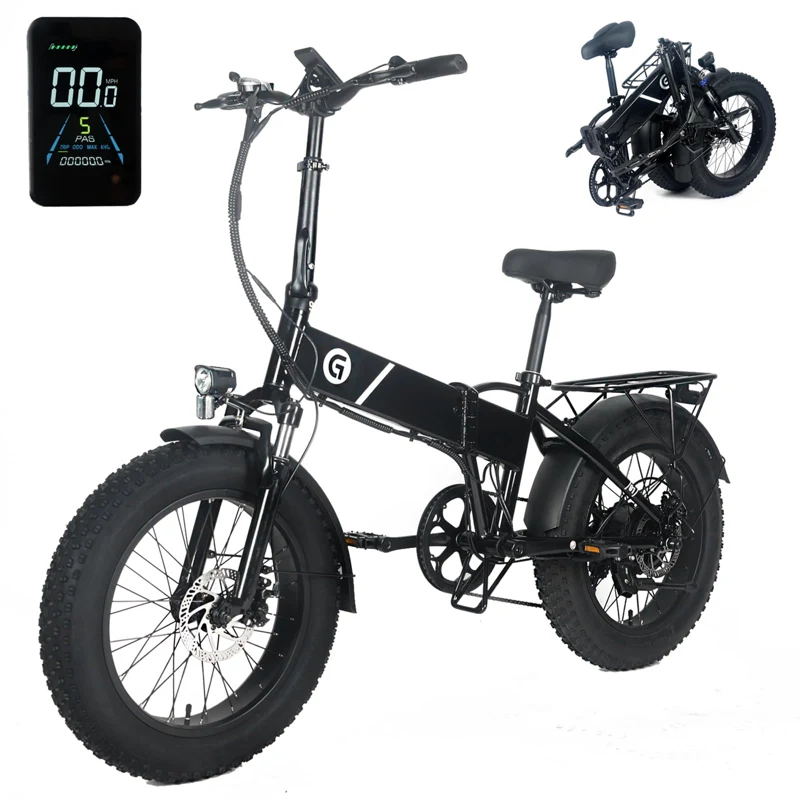
GARVEE G-A1
- Split design for storage
- 500Wh removable pack
- 20-inch wheels
Use coupon code SAS8 for 8% off. Ends 30 Apr.
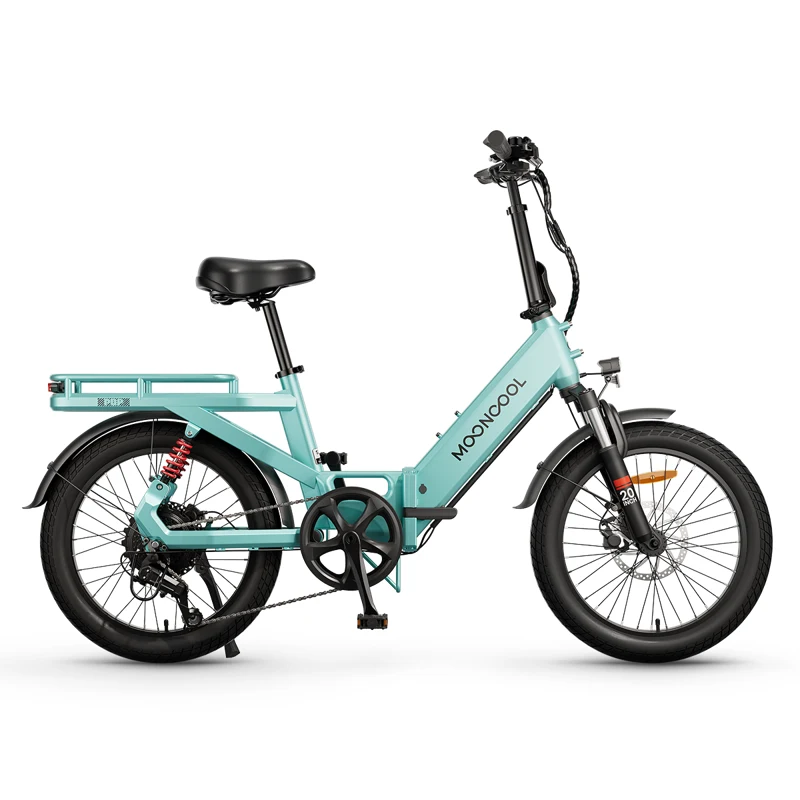
Mooncool POP
- Switchable assistance sensing
- Published folded dimensions
- 20 by 3-inch wheels
The short answer
Choose the G-A1 for storage or the POP for switchable sensing. These commuter choices differ in lifting load, configuration and fit. For Black Friday 2026, compare the exact version and final amount before paying.
1. GARVEE G-A1: folding storage choice
GARVEE G-A1
Folding storage choice
Who it suits: People with limited floor space who can manage a heavy folded load.
- 500W motor; 750W peak
- 25 to 40-mile claimed range
- About 78.6 lb listed mass
Pros: The joint reduces its stored outline.
Keep in mind: At about 78.6 lb, a small footprint does not mean a light carry.
Our verdict: A storage-led choice when lifting weight is manageable.
View Product DetailsUse coupon code SAS8 for 8% off. Ends 30 Apr.
The G-A1 is the choice for an office corner, garage shelf or vehicle boot where a fixed-length cycle gets in the way. GARVEE identifies the series by that model name in its specification section. The storage joint is the reason for its place here; the stock code in the web address is not the product name.
The maker specifies a 500W brushless motor and a removable 500Wh pack. Its headline also refers to 750W peak output. Those figures describe different kinds of output and should not be treated as conflicting measures of continuous power. Compare like with like when reading another shop's listing.
The published range claim is 25 to 40 miles per charge. It may cover short return rides. For a route with several climbs, allow extra margin and an alternative way home.
Twenty-inch wheels, four-inch tires and an aluminum-alloy structure make up the core design. The maker gives a weight of about 78.6 lb. Collapsing it reduces its footprint; it does not make that load lightweight. Measure the space where it will sit and consider who will lift it into a car.
The listed seven-speed system uses a Shimano RD-TY200 derailleur. GARVEE also describes four operating modes, including assistance and throttle operation. These are controls to understand before a weekend ride. They do not turn one model into four different kinds of vehicle or establish access to a shared path.
The G-A1 is best approached as a space-saving choice for riders who can manage its mass. Its motor output is less useful to the buying decision than the width of the folded package, the height of the lifting point and the need to carry it. If a seller has not supplied a dimension needed for a cupboard or boot, request that measurement before payment.
The range in the listing is conditional. A cold morning, a heavy bag or repeated stops can change the distance achieved. Choose a charging plan that leaves spare capacity after the return leg. Do not plan an essential journey around the final mile of an advertised maximum.
2. Mooncool POP: compact wheel choice
Mooncool POP
Compact wheel choice
Who it suits: People comparing small-wheel designs and documented folded dimensions.
- 750W motor; 1,200W peak
- 48V 13.6Ah battery
- Hydraulic 180mm rotors
Pros: Choice of torque or cadence sensing and published fit dimensions.
Keep in mind: A listed 67 lb net mass still needs a realistic lifting plan.
Our verdict: A useful compact comparison with selectable sensing.
View Product DetailsThe POP gives the compact-wheel group a different set of controls. Mooncool publishes both a torque sensor and a cadence sensor, with a switchable setting. A torque sensor responds to pressure at the pedals; cadence sensing responds to their rotation. Riders who want to choose how assistance starts has a concrete reason to compare this model.
Mooncool lists a 750W motor, with peak output of 1,200W, and a 48V 13.6Ah pack. The specification table gives 30 miles on the throttle and up to 60 miles on the lowest assistance setting. Those are separate claims. Mixing the longer distance with continuous throttle use would give a false picture of the commute.
The product table specifies 20 by 3-inch wheels. That is narrower than the four-inch rubber used on the other small-wheel option here. The published folded size is 34.6 by 16.9 by 29.5 inches. Take those three measurements to the actual storage area; a brochure photo cannot show whether a doorway or cupboard will work.
A listed net mass of 67 lb still deserves care when lifting. The built-in handle may give a useful grip, but it does not remove the need to lift the load. For a home with stairs, compare the carry route as closely as the journey outside. A ground-level parking spot changes that decision.
The POP includes front and rear suspension and hydraulic disc hardware with 180mm rotors. Those are published equipment differences, not a measured stopping-distance comparison. Actual stopping also depends on setup, surface, load and maintenance. Ask how replacement pads and other wear parts can be sourced.
Its stated load limit is 330 lb, with a separate rear-carrier allowance in the maker's table. The lower limit governing a particular accessory still matters. Add the person, luggage and fittings before deciding what to carry. A large-looking rear platform does not make a passenger seat appropriate.
The specification table lists a 20 mph setting and describes the supplied configuration as Class 2. Confirm the delivered configuration and the rules for the planned route rather than relying on a reviewer mentioning a different speed. The table, not a testimonial, supplies the figures used in this comparison.
Choose the POP for its documented folded dimensions, switchable sensing and smaller footprint. The trade-off is that compact storage and a lower listed mass come with a different distance claim, so the best option depends on the journey.
Factors to consider when choosing a commuter e-bike
Start with the route, not the motor
A commuter purchase starts with the trip that must be completed twice a day. Write down the distance, steepest section, junctions and parking arrangements. Include the return leg and any detour used when a path is shut. A map distance alone leaves out the parts that tend to make a purchase awkward.
For a short, flat journey, a powerful headline specification may add little to the decision. Motor output should be considered alongside permitted operation, carrying load and the ease of controlling assistance at low pace. A bike that fits the home and route is more useful than an impressive machine that cannot be parked securely.
For city riding, think about repeated stops. Mounting height, reach and the place where a foot touches down all matter. An upright cruiser shape can feel different from a tall step-over design. The right fit is the one that allows controlled starts and stops while carrying the bags used on ordinary days.
Read battery range as a conditional claim
Manufacturers' maximum distances are not interchangeable results from one shared test. Their assumptions may differ. Assistance setting, hills, temperature, total load and tire pressure can all affect the outcome. Leave a margin rather than treating the battery range ceiling as the exact distance available on every ride.
Stored energy in watt-hours provides another useful point of comparison. It describes a pack, not the distance a particular person will cover. A larger battery figure may be useful for fewer battery stops, while a smaller removable unit may suit short city rides with an outlet at each end. Neither number decides fit or handling.
Plan where charging will happen before delivery. The CPSC's micromobility guidance says to remain present during charging, use the supplied charger and follow the maker's instructions. Do not leave charging equipment running while asleep. A convenient indoor space is part of choosing the product, rather than an afterthought.
Compare suspension, brakes and service access
Front-only cushioning and full suspension are different arrangements. More moving parts also mean more items to inspect and service. Consider the surfaces actually used, rather than paying attention only to trail photos. Smooth paved routes may place a greater value on simpler upkeep and useful carrying fittings.
Mechanical and hydraulic brakes have different service requirements. The label alone does not establish which example will stop sooner in real conditions. Setup and upkeep matter. Find a workshop near the home that will accept the exact electrical system, and ask where replacement pads, tubes and control parts come from.
A torque sensor is another feature to compare where the maker documents it. Do not assume that every model with several assistance levels has one. The POP's selectable sensing is an explicit specification. For the other bike, ask for documentation if that distinction is essential to the buying decision.
Think about weight before choosing storage features
A collapsible design saves floor area, but collapsing does not reduce mass. Lift height matters too. A car boot, raised storage shelf and upstairs flat each present a different problem. Allow space for the handlebar, pedals and any fitted accessories in addition to the central structure.
Check the hinge latch and storage instructions in the supplied manual. Set the package down where it cannot tip into a passage. A person who wants a lightweight option for several daily stair carries should look beyond a small wheel size. Compact and easy to carry are separate claims.
Review frame fit, cargo and everyday equipment
Begin with the manufacturer's height span, then ask about standover and reach. The minimum seat setting does not show how far the hands must stretch. Allow for footwear and the bags used for the journey. Fit details matter more than choosing a colour because it looks good in an image.
A rear rack can help move shopping away from the shoulders. Its own allowance is separate from the total-load rating. Add the person, lock, bags and contents. A commuter carrying bulky items needs to know how panniers attach and whether they clear the heels. An electric cargo bike is a separate category when ordinary carriers cannot handle the task.
Confirm what comes in the selected package. Lights, fenders and a kickstand may be shown in a picture but should also appear in the description or order details. Optional parts can change the total. Make a short list of the required equipment before comparing one sale against another.
Black Friday deals: compare the complete price
For e bike Black Friday deals, the useful figure is the amount charged for the exact specification and delivery address. A crossed-out regular price does not show the final cost. Consider the sale price after any accepted coupon, shipping and necessary parts. Save the written order details for later reference.
A Black Friday e bike sale may group several versions on one page. View the selected specification again after applying a code. An ebike with a different pack or motor is a different comparison, even if the main product heading stays the same. A discount does not compensate for buying the wrong configuration.
Available coded offers appear beside the relevant actions above. Verify the accepted total before payment. No reduction is assumed for a code whose amount is not stated.
The best value may be the plain version that meets the trip, rather than a premium bundle filled with parts that will not be used. Save a copy of the selected components and contact details. A free item only helps if it fits the planned use and does not replace something essential.
Full ownership cost and local support
Budget for secure parking, routine service and wear parts over time. A purchase can look attractive at first and become awkward if the seller cannot supply a replacement controller or matching charger. Ask about support for the exact model and what evidence is required for a warranty claim.
Online reviews can help identify questions to ask, but they are not a substitute for the manufacturer's current specification. Product pages change. Match the details recorded in the order with the machine delivered, and resolve discrepancies before use. A short first outing in an appropriate area can reveal adjustment requirements before an essential work trip.
Frequently asked questions
What is the best commuter ebike for short city rides?
The best choice depends on fit and storage. The G-A1 favors a split design, while the POP publishes compact folded dimensions and selectable sensing. Select the smallest package that meets the real journey, load and access requirements.
How should Black Friday deals be compared?
Assess the selected version and the complete checkout total. Save the order summary and any stated support terms. A low headline amount is useful only when the chosen equipment, storage requirements and return journey all fit.
What is a folding electric bike?
It is an electric bike with joints designed to reduce its stored outline. The G-A1 and POP use this approach. Their folded sizes and lifting loads differ, so a hinge alone does not establish suitability for a train, small car or upstairs home.
What is a fat tire ebike?
The term usually refers to a design with wide rubber rather than a thin road setup. Width influences space and handling. It does not prove access to every surface. Use the exact dimensions and the planned conditions when weighing designs instead of treating the category name as a performance guarantee.
How does pedal assist differ from a throttle?
Assistance adds help while the pedals turn. A throttle requests output through a separate control. The supported modes and permitted settings depend on the product and location. Learn the controls before regular riding and confirm that the chosen route allows that configuration.
What should be confirmed before a city commute?
Confirm permitted operation, fit, stopping setup, visibility, locking and a realistic return distance. Inspect the delivered instructions and arrange maintenance. Arrange an alternative ride home during the first few trips, rather than making an essential appointment depend on an unfamiliar vehicle.
Should a commuter choose a mid-drive system?
A mid-drive motor sits near the cranks, while a hub design places drive at a wheel. Layout alone does not determine which purchase is suitable. Assess the complete machine, service support and intended terrain. This shortlist focuses on the documented models above rather than making a claim about every drive layout.
How should the price be judged after the offers end?
Assess the same specification and required equipment again. The product sections remain useful after a code ends because fit, lifting, controls and storage still determine suitability. An expired offer should have no role in the final decision. Buy only when the complete package matches the planned use.